 St. Petersburg Roofing
 Coquina Key sits on a canal-laced peninsula in southeast St. Petersburg, with water on nearly every side and a lot of homes built close enough to a seawall or canal bank that salt air isn't an occasional visitor — it's a daily condition. Any siding installed here has to survive that exposure year-round, not just get through one storm season looking good. This page covers what fiber cement siding needs to do in Coquina Key specifically, what a correct installation involves in a waterfront Pinellas County neighborhood, and why we install only James Hardie fiber cement rather than the wider range of siding products on the market.
What Coquina Key's Waterfront Climate Actually Does to Siding
Every coastal St. Petersburg neighborhood deals with heat, humidity, and hurricane risk, but a canal-front community like Coquina Key adds a layer most inland Pinellas homes don't face as constantly: salt-laden air moving off the water and settling on exterior surfaces, day after day. Combine that with three other stressors that never really let up in this part of Florida, and you get a fairly demanding environment for any exterior material.
- Salt air corrosion: Airborne salt accelerates the breakdown of fasteners, coatings, and low-grade trim faster than it would a few miles inland, and it's relentless on a peninsula where water surrounds the neighborhood on multiple sides.
- Year-round UV load: St. Petersburg gets intense sun exposure nearly every month of the year, which fades paint, chalks cheap coatings, and dries out organic siding materials over time.
- Wind-driven rain: Tropical downpours don't fall straight down here — they get pushed sideways by wind, which means siding, trim, and flashing details have to shed water that's actively being driven into seams and joints, not just running off a wall.
- Hurricane-force wind loads: Coquina Key's open water exposure means storm winds arrive with less obstruction than they would in a more sheltered inland neighborhood, putting real load on fastener schedules and panel attachment.
None of these factors are unique to Coquina Key in isolation, but the combination — constant salt exposure plus open wind fetch off the water — is more aggressive here than in most of the city's interior neighborhoods, and it's the reason product choice and installation quality matter more, not less, on a job like this.
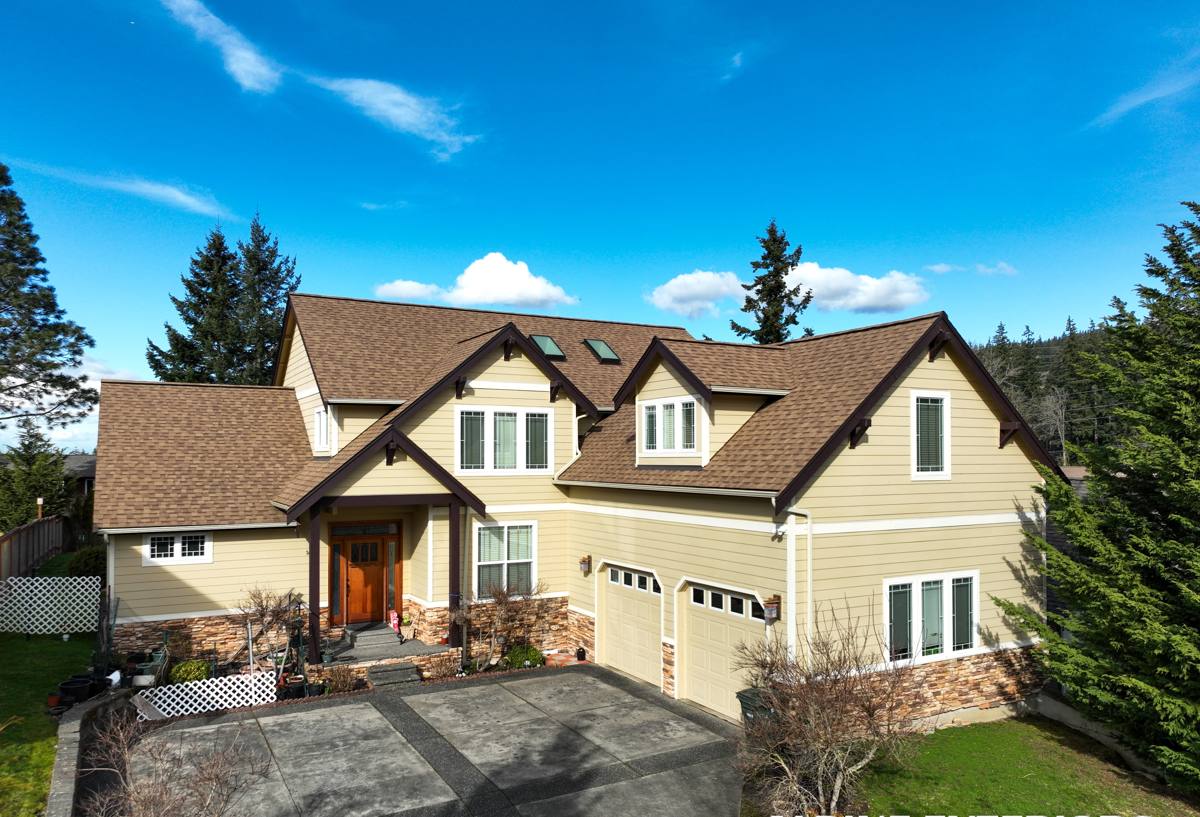
Why a Concrete Block Neighborhood Still Needs Good Siding
Most of Coquina Key was built with concrete block and stucco construction, which is standard for St. Petersburg homes of that era and holds up well structurally in a hurricane zone. That leads some homeowners to assume siding isn't relevant to their house. In practice, fiber cement siding shows up on Coquina Key homes in several specific situations:
Where Siding Actually Gets Used
- Second-story additions or pop-tops built in wood frame over an original block first floor
- Gable ends, dormers, and other roofline features framed in wood rather than block
- Rear additions, Florida rooms, and lanai conversions built as frame construction
- Accent siding sections used to break up large stucco walls on renovated homes
- Detached structures like garages, workshops, or boat storage buildings
In every one of these cases, the siding is doing the same job stucco does on the rest of the house — keeping water and salt air out of the wall assembly — but it's doing it with a different material that has its own installation requirements. Getting that transition between stucco and siding detailed correctly, especially at rooflines and water-facing walls, is where a lot of substandard work shows up.
Why We Only Install James Hardie in This Climate
We don't install LP SmartSide, vinyl siding, Cemplank, Allura, or primed wood siding, and Coquina Key's environment is a good example of why. James Hardie is engineered specifically for high-humidity, high-UV, storm-prone climates through its HardieZone system, which assigns products to zones based on regional moisture and climate exposure. Gulf Coast Florida, including Pinellas County, falls into the most demanding HZ10 zone, and Hardie's HZ10 product formulations are built to resist moisture-related damage in exactly that kind of environment.
What That Means on a Coquina Key House
Fiber cement itself is non-combustible and doesn't absorb moisture the way wood-based products do, which matters directly for salt-air exposure and wind-driven rain. James Hardie's ColorPlus factory finish is baked on under controlled conditions rather than field-applied, which gives it more consistent UV and fade resistance than a job-site paint job — a real advantage under St. Petersburg's sun load. And because Hardie is a matched system — boards, trim, and touch-up materials engineered to age together — you avoid the mismatched wear patterns that show up when different products or brands get combined on the same wall over time. That system consistency, backed by a strong transferable warranty, is why we standardized on one manufacturer instead of choosing among several.
What Correct Installation Requires Near the Water
Fiber cement siding fails prematurely almost exclusively because of installation mistakes, not the material itself — and those mistakes get punished faster in a canal-front, high-wind environment than they would inland.
| Detail | Why It Matters in Coquina Key |
|---|---|
| Fastener grade and placement | Salt air corrodes standard fasteners faster; correct fastener type, spacing, and embedment depth also matter for wind uplift resistance |
| Clearance from grade, decks, and pool areas | Canal-front lots often have decks, seawalls, or pool decks close to the house; siding needs proper clearance to avoid constant moisture wicking |
| Flashing at windows, doors, and roof transitions | Wind-driven rain finds any gap in flashing; this is the single most common source of hidden water damage behind siding |
| Panel and joint caulking | Improper or skipped caulking at butt joints lets salt-laden moisture into seams that should stay sealed |
| Transition detailing at stucco walls | Where siding meets block-and-stucco construction, the water management detail has to work for two different wall systems, not just one |
Every one of these details is spelled out in James Hardie's installation instructions, and following them precisely — not approximately — is what determines whether a siding job holds up through hurricane seasons or starts showing problems within a few years.
Our Process for a Coquina Key Siding Job
- On-site inspection of the affected wall areas, substrate condition, and existing water damage or rot
- Product and color selection from James Hardie's lines, including ColorPlus factory-finish options
- Measurement, material estimate, and a written scope covering flashing, trim, and fastening details
- Permitting through the appropriate local building department, accounting for St. Petersburg's wind zone requirements
- Removal of damaged or failing existing material and inspection of the sheathing underneath
- Installation to Hardie's published specifications, including proper fastener schedule and flashing at every penetration
- Final walkthrough and cleanup
On canal-front and peninsula lots, we also account for tighter site access, boat equipment, docks, and seawalls when planning material staging and scheduling — logistics that differ from a typical interior-neighborhood job.
Signs Your Coquina Key Home May Need Siding Attention
- Soft or spongy spots when you press on siding near the base of a wall
- Visible gaps, cracking, or separation at trim and butt joints
- Paint that's peeling, bubbling, or chalking heavily, especially on water-facing walls
- Discoloration or staining that tracks with the direction of prevailing wind and rain
- Rust streaking from fasteners or trim hardware
- Any visible daylight or gapping where siding meets a window, door, or roofline
What Affects Cost on a Job Like This
| Factor | Why It Moves the Price |
|---|---|
| Square footage and wall complexity | More surface area and more corners, gables, or dormers mean more material and labor |
| Substrate condition | Rotted sheathing or hidden water damage found during tear-off adds repair work before siding goes on |
| Site access | Canal lots with limited staging space, docks, or landscaping can slow material handling |
| Trim and finish selection | Factory ColorPlus finishes and custom trim profiles cost more than base-level options |
| Scope of work | A full re-side costs more than replacing a single addition, gable, or accent wall |
Why Hiring a Crew That Already Works This Neighborhood Matters
Coquina Key isn't a typical inland subdivision. Canal-front lots, mixed block-and-frame construction, tighter site access, and consistent salt exposure all shape how a siding job should be planned and installed. A crew that already works this part of St. Petersburg knows to check fastener corrosion resistance without being asked, understands how to detail a stucco-to-siding transition correctly, and doesn't treat a waterfront lot's site logistics as an afterthought. That local familiarity, paired with installing only one manufacturer's system to spec, is what keeps a siding job performing through Pinellas County's storm seasons instead of needing rework a few years in.
If you're weighing a siding project on a Coquina Key home — whether it's a full addition, a gable accent, or a detached structure — we're glad to take a look and walk you through what your specific house needs. Reach out for a free, no-pressure estimate using the form below.