 St. Petersburg Roofing
 Siding Repair Built for Coquina Key's Waterfront Conditions
Coquina Key sits on a peninsula surrounded by water on nearly every side, which means homes here take on a version of Florida weather that's more concentrated than what you'll find a few miles inland. Salt-laden air moves off the surrounding bays with almost every breeze, humidity stays high for most of the year, and afternoon storms roll through with wind-driven rain that finds its way into any gap in a home's exterior. When siding fails here, it's rarely from one dramatic event — it's usually the slow accumulation of moisture, UV exposure, and salt working on a material that wasn't built to handle all three at once.
We work on siding repair calls throughout St. Petersburg and Pinellas County, and Coquina Key homes show a fairly consistent pattern: damage concentrated on the sides facing open water or prevailing wind, softer material at the bottom courses near grade, and finish failure showing up years before the manufacturer's warranty would suggest it should. Understanding why that happens is the first step to fixing it correctly instead of just patching over the symptom.
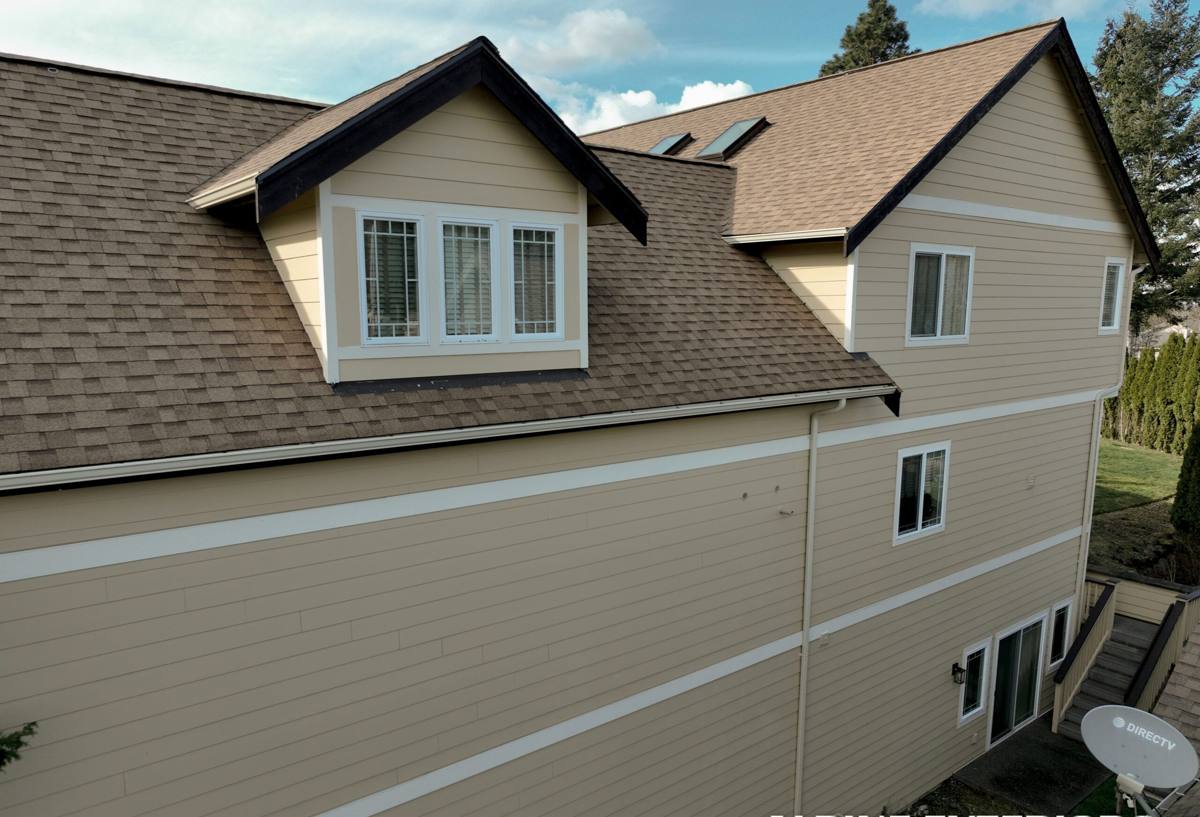
What's Actually Wearing Out Your Siding
Salt Air and Coastal Humidity
Airborne salt is corrosive to metal fasteners and hardware, and it also holds moisture against a home's exterior longer than dry inland air would. On a waterfront-adjacent street, that combination accelerates whatever weaknesses already exist in the siding material — swollen edges, soft spots, or a finish that's started to chalk and crack.
Hurricane-Force Wind Events
Pinellas County sits squarely in a hurricane-prone stretch of the Gulf Coast, and even storms that don't make direct landfall here can bring sustained wind and gusts strong enough to flex siding panels, pop fasteners, or drive rain sideways under laps and trim. Once wind opens a seam, every subsequent rain event pushes more water behind the cladding.
Year-Round, High-Angle UV
St. Petersburg gets far more direct sun exposure across the calendar year than most of the country. UV breaks down pigments and resins in lower-grade siding finishes, which is why paint-grade or unprotected products here tend to fade, chalk, and need repainting on a much shorter cycle than the same product would in a milder climate.
Wind-Driven Rain Intrusion
Florida rain rarely falls straight down during a real storm. It comes in at an angle, which means it finds horizontal laps, trim joints, and penetrations (hose bibs, light fixtures, vents) that would stay dry in a gentler climate. Once water gets behind siding, the sheathing and framing underneath are what actually suffer.
What a Correct Siding Repair Actually Involves
A repair that only addresses the visible crack or gap is a temporary fix. A repair done right starts with figuring out how water is getting in and whether it's already reached the wall assembly behind the cladding.
- Diagnose the water path. We trace damage back to its source — a failed caulk joint, a fastener that backed out, a lap that's opened up, or flashing that was installed incorrectly the first time.
- Check what's behind the siding. Damaged siding is often a symptom, not the whole problem. We look at the house wrap or weather barrier and the sheathing underneath for soft spots, staining, or rot before we close anything back up.
- Match or replace the affected sections. Depending on the material and how localized the damage is, that means replacing individual boards or panels, not resurfacing over compromised material.
- Rebuild the water management details. Flashing, house wrap laps, and caulk joints get redone to code and to manufacturer spec — not just re-caulked over the old failure point.
- Refinish and match. Where repairs are visible against surrounding siding, we match reveal, color, and profile as closely as the original material allows.
Repair or Replace? Key Signs to Look For
- Soft, spongy siding when you press on it — usually means moisture has already gotten into the substrate
- Visible gaps, cracks, or buckling at panel seams and corners
- Staining or discoloration that keeps returning after cleaning
- Bubbling or peeling paint/finish, especially on wind- or sun-exposed walls
- Fasteners that have backed out, rusted, or left visible streaking
- Soft trim boards or window/door casing near the siding
- A musty smell along interior walls that back up to the affected exterior siding
Why We Only Repair and Replace With James Hardie Fiber Cement
When a repair calls for replacing a section of siding, or when damage is widespread enough that repair no longer makes sense, we don't install vinyl, LP SmartSide, primed wood, or other engineered wood products — even to patch in a small section. We standardized on James Hardie fiber cement, and there's a practical reason tied directly to the climate Coquina Key sits in.
Fiber cement is non-combustible and doesn't rely on a plastic or wood-fiber base that softens, swells, or delaminates when it stays wet. Hardie's ColorPlus factory finish is baked on and warranted against fading and chipping in a way that field-applied paint on wood-based products typically isn't. And Hardie's HZ5 product line is specifically engineered for high-humidity, high-moisture climates like the Gulf Coast — which matters more in Coquina Key than almost anywhere else we work in Pinellas County, given how much water surrounds the neighborhood.
We're not saying every other siding product is worthless everywhere. We're saying that after years of repair calls, the pattern of what fails fastest in this specific climate led us to stop installing the materials that consistently show up in those calls, and to only stand behind the one that holds up under salt air, UV, and wind-driven rain without the same maintenance burden.
Material Comparison for This Climate
| Factor | James Hardie Fiber Cement | Vinyl Siding | Wood-Based Products |
|---|---|---|---|
| Moisture behavior | Engineered for high-humidity climates (HZ5) | Doesn't absorb water, but can warp/melt under heat or impact | Absorbs moisture; prone to swelling and rot if seals fail |
| UV/finish durability | Factory-baked ColorPlus finish, warranted against fade | Can fade and become brittle over time | Field-applied paint fades and needs recoating sooner |
| Wind resistance | Rigid, heavier panel resists flexing | Lighter panels can crack or blow off in high wind | Varies; seams are a common failure point in wind |
| Fire resistance | Non-combustible | Combustible | Combustible |
| Typical maintenance | Low — occasional wash, no repainting cycle with ColorPlus | Low, but limited repair options once damaged | Higher — repainting/resealing on a regular cycle |
Why a Crew That Already Works Coquina Key Matters
Siding repair isn't just about the material — it's about recognizing what a house near open water needs before you start. A crew that's worked Coquina Key and similar St. Petersburg neighborhoods knows to check for salt corrosion on fasteners even when the siding itself looks fine, to expect wind damage patterns on specific exposures, and to size up moisture intrusion correctly the first time instead of guessing. That local pattern recognition is the difference between a repair that lasts and one that reopens in the next storm season.
It also means we're not learning Pinellas County's permitting and wind-load requirements on your project. Repairs and replacements here need to account for local wind-zone requirements, and knowing that going in keeps the job moving instead of stalling on paperwork.
Our Process for a Coquina Key Siding Repair Call
- On-site inspection. We look at the damaged area and the surrounding siding, not just the spot you called about.
- Moisture and substrate check. If there's any sign water has gotten behind the siding, we check the sheathing before quoting the repair.
- Honest scope. We tell you plainly whether this is a spot repair, a section replacement, or a sign that a broader replacement conversation is worth having.
- Written estimate. Clear scope, materials, and timeline before any work starts — no surprise change orders for issues we should have caught during inspection.
- Repair and water-detail rebuild. We fix the water management details along with the visible damage, not instead of it.
- Final walkthrough. We go over the completed work with you before we consider the job done.
What This Typically Costs
Siding repair costs in this area vary widely based on how much material needs replacing, whether there's hidden moisture damage behind the siding, and how much of the water management system (flashing, house wrap, trim) needs to be rebuilt along with it. A small, contained spot repair caught early is a modest job. A repair that uncovers rotted sheathing behind the siding costs more because the fix has to go deeper than the surface. We give straight numbers after we've actually inspected the damage — not before.
If you're seeing damaged, soft, or discolored siding on your Coquina Key home, we're glad to take a look and give you a straightforward, no-pressure estimate on what it will actually take to fix it right. Use the form below to get started.