 St. Petersburg Roofing
 Siding Replacement Built for Coquina Key's Waterfront Exposure
Coquina Key sits on filled land ringed by water, with most homes facing a canal, bay, or open water view within a short distance. That's part of what makes the neighborhood desirable — and part of what makes it one of the tougher spots in St. Petersburg for exterior materials to survive long-term. Homes here take on a steady diet of salt-laden air, intense Florida UV, wind-driven rain off Tampa Bay, and the occasional direct hit from tropical systems moving through Pinellas County. Siding that isn't built for that combination fails faster here than it does three miles inland, and homeowners often don't realize how much of the damage traces back to the exposure until they're already dealing with soft spots, peeling paint, or a contractor telling them the whole wall assembly needs to come off.
This page is specifically about siding replacement for Coquina Key homes — not a general "siding 101" primer. If your siding is past the point of patching and you're weighing a full replacement, here's what actually matters for a house in this part of St. Petersburg.
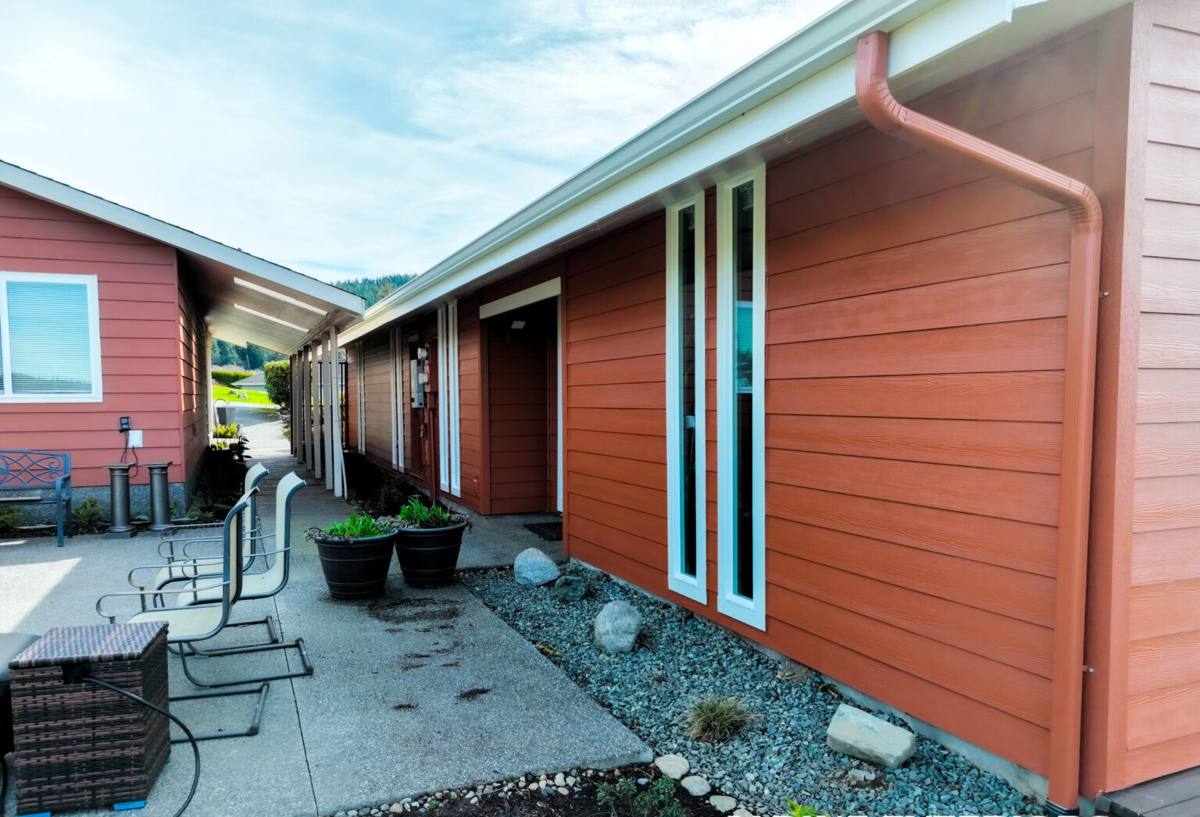
What Waterfront Exposure Does to Siding Over Time
Salt Air
Airborne salt from the bay doesn't just corrode metal — it accelerates the breakdown of caulk, paint, and adhesives, and it draws moisture into any material that isn't sealed well. Siding systems that rely on surface paint for protection (rather than a factory-cured finish) tend to chalk, fade, and lose their seal noticeably faster on a canal-front lot than on a home a few blocks from the water.
Year-Round UV
Pinellas County gets sun exposure most of the year, not just in summer. UV breaks down pigment and the polymers in lower-grade coatings, which is why south- and west-facing walls on older homes often look years older than the rest of the house. Repeated repainting becomes a maintenance cycle homeowners get stuck on if the underlying siding material doesn't hold color well on its own.
Wind-Driven Rain
Water pushed sideways by wind finds every gap in flashing, trim, and seams — it doesn't behave like rain falling straight down. On a waterfront lot with fewer windbreaks, wind-driven rain during storms is a bigger factor than it is on a more sheltered inland property, and it's usually the mechanism behind hidden rot: water gets behind the siding, not through it.
Storm Wind Loads
Tropical storms and hurricane-strength wind events are a real planning factor for any St. Petersburg home, and waterfront exposure in Coquina Key means fewer trees and structures to break the wind before it reaches the house. Siding attachment and fastening matter as much as the material itself when a storm comes through.
Signs Your Coquina Key Home Needs Replacement, Not Repair
- Soft, spongy, or crumbling spots when you press on the siding, especially near the bottom courses or window trim
- Visible warping, buckling, or panels pulling away from the wall
- Paint that keeps failing within a year or two of repainting, even with quality paint
- Persistent mold, mildew, or dark staining that returns quickly after cleaning
- Cracked or delaminating panels, particularly on walls facing the water or prevailing wind
- Rot discovered at a single spot during a repair, with no clear sense of how far it extends behind the wall
A single soft spot is sometimes a legitimate repair. Multiple soft spots, or rot found once you open the wall up, is usually a sign the moisture barrier and framing underneath have been compromised for a while — and that's a replacement conversation, not a patch job.
Why We Install Only James Hardie Fiber Cement
We don't install vinyl, LP SmartSide, or wood siding, and on a waterfront property like the ones in Coquina Key, that's not a marketing preference — it's a decision built around how each material actually holds up in this exact exposure.
Vinyl softens and can distort in sustained high heat, and its seams and fastening are more vulnerable in high wind events than a properly installed fiber cement wall. Engineered wood products use a wood-fiber core that, once its protective coating is compromised by a fastener hole, a seam, or storm damage, is exposed to a genuinely wet, salty climate — not a forgiving one. Untreated or primed wood siding requires a maintenance schedule most homeowners underestimate, and salt air shortens that schedule further.
James Hardie fiber cement is non-combustible, doesn't support the kind of moisture-driven decay that engineered wood products are vulnerable to, and comes with a factory-applied ColorPlus finish that's baked on rather than sprayed on-site — which matters directly for UV and salt exposure, since it's the coating that fades and chalks first on lower-grade materials. Hardie also builds specific product lines engineered for humid, high-moisture climates like ours, which we cover below. None of this means other products are worthless everywhere; it means that for a canal-front or bay-adjacent home in St. Petersburg, we think the trade-offs land clearly in Hardie's favor, and we'd rather install one material well than several materials with caveats.
HZ5 vs. HZ10: Which Hardie Line Fits Coquina Key
James Hardie engineers its siding by climate zone. Coquina Key's exposure — high humidity, salt air, and direct water proximity — puts it solidly in the range where the moisture- and mildew-resistant HZ product lines earn their keep rather than being an upsell.
| Factor | Standard-Climate Product | HZ (Humid Zone) Product |
|---|---|---|
| Moisture resistance engineering | Built for drier, lower-humidity regions | Engineered specifically for high-humidity, coastal-adjacent climates |
| Fit for waterfront/canal lots | Not the intended use case | Matches the intended use case |
| Warranty alignment | May not reflect full performance in humid coastal zones | Backed for the climate it's engineered for |
| Typical recommendation for Pinellas County | Rarely appropriate | Standard choice for this region |
We spec the humid-climate product line as the default for Coquina Key homes, not an add-on — the standard-zone product simply isn't engineered for the conditions on a canal or bay-facing lot.
What Correct Installation Actually Involves
The siding panel itself is only part of the system. On a waterfront property, the details underneath the visible siding are what determine whether the job holds up through the next few storm seasons.
Moisture Barrier and Flashing
A continuous water-resistive barrier goes on before any siding, with flashing detailed at every window, door, and penetration so wind-driven rain has nowhere to track behind the wall. This is the step that gets rushed on a bad installation and is the step that matters most in this climate.
Fastening for Wind
Fastener type, spacing, and placement are engineered to the wind zone, not just "nailed on." Coquina Key's open waterfront exposure means we don't cut corners here — correct fastening is a big part of how the siding performs in a named storm.
Clearance and Drainage
Siding needs proper clearance from grade, roofing, decks, and hardscape so water has somewhere to go instead of wicking up into the bottom of the panels — a common failure point we see on older homes near the water.
Trim, Caulking, and Sealant Details
Joints, corners, and trim transitions are sealed with products rated for the exposure, and factory-finished panels mean the color coat isn't relying on field-applied paint to hold up against salt air and UV.
Our Process for a Coquina Key Siding Replacement
- On-site assessment — We walk the exterior, check for hidden moisture and rot behind existing siding, and look specifically at water-facing walls where exposure is worst.
- Scope and product plan — We identify the right Hardie panel profile and HZ line for your home, and flag any framing or sheathing repair needed before new siding goes on.
- Tear-off and inspection — Old siding comes off and we inspect the sheathing underneath before covering anything back up. This is where hidden problems get caught, not after.
- Moisture barrier and flashing — A proper water-resistive barrier and flashing system goes in before a single panel is hung.
- Installation to spec — Panels are fastened, spaced, and finished to manufacturer and code requirements for this wind zone.
- Final walkthrough — We go over the finished job with you, including care and warranty registration.
Why Local Experience in This Neighborhood Matters
A crew that mostly works inland St. Petersburg neighborhoods can still install siding correctly, but a crew that regularly works Coquina Key and similar waterfront pockets of Pinellas County has already seen what this exposure does to a wall over ten or fifteen years — which framing areas tend to trap moisture first, which orientations take the worst of the salt air, and where storm wind tends to find weak points in older installations. That familiarity shows up in the details: where we pay extra attention to flashing, how we handle clearance near seawalls and docks, and which product spec we default to before you even ask.
What This Costs
Every siding replacement is priced around the specifics of the home — square footage, current wall condition, trim complexity, and how much (if any) sheathing repair is needed once the old siding comes off. Waterfront homes in Coquina Key sometimes carry a slightly higher scope than an inland home of the same size, simply because moisture exposure has had more time to work on the wall assembly. We don't publish blanket per-square-foot pricing because it misleads homeowners more than it helps — the honest number only comes after we've actually looked at your walls.
Ready to Talk About Your Home
If your siding is showing its age — or you already know there's damage behind it — we're glad to come take a look. The estimate is free, there's no pressure, and you'll get a straight answer about whether you're looking at repair or replacement. Use the form below to get started.