 St. Petersburg Roofing
 Deck Repair Built for Crescent Lake's Older Homes and Humid Climate
Crescent Lake is one of St. Petersburg's older, established neighborhoods, and that shows up in the decks we get called out to work on. A lot of homes here have wood or wood-composite decks that have been through decades of Gulf Coast weather — hot, humid summers, salt-tinged air drifting in from Tampa Bay, and the occasional direct hit from tropical storm or hurricane winds and wind-driven rain. Add in the mature tree canopy that gives Crescent Lake its character, and you get decks that sit in more shade and moisture than a typical new-construction yard. Shade slows drying time after every rain, and slow-drying wood is exactly what rot and fungal decay need to get started.
Deck repair in this neighborhood isn't a one-size-fits-all job. A deck on an older Craftsman bungalow with mature oaks overhead has different problems than a newer build on an open lot. Our job is figuring out which failure pattern your deck actually has, then fixing the cause — not just patching the symptom.
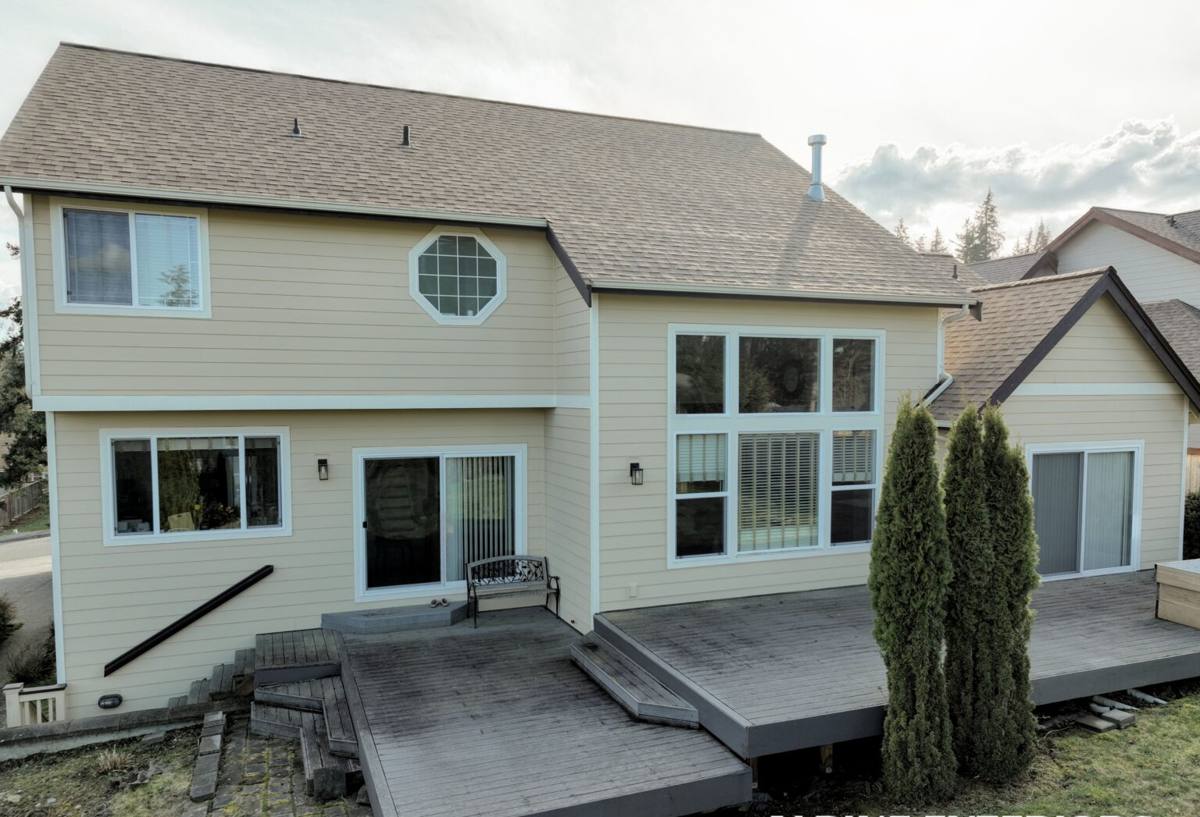
What Pinellas County Weather Does to a Deck Over Time
Every deck in St. Petersburg is fighting the same four things, year after year:
- Year-round UV exposure — breaks down wood fibers, dries out and cracks sealants, and fades or chalks composite decking faster than manufacturers advertise in cooler climates.
- Humidity and wind-driven rain — pushes moisture into end grain, fastener holes, and any gap where flashing or caulking has failed, feeding rot from the inside out.
- Salt air — even a few miles from open water, airborne salt accelerates corrosion on nails, screws, joist hangers, and structural brackets, which is often the real reason a deck starts to feel "loose" before the wood itself looks bad.
- Hurricane-force wind events — repeated seasonal storms rack a deck's frame, work fasteners loose, and stress ledger board connections at the house — the single most safety-critical joint on the whole structure.
None of these show up overnight. They compound. A deck that gets a proper inspection and minor repairs every couple of years in this climate will outlast one that gets ignored until boards are visibly failing.
Why Ledger Boards and Fasteners Fail First
The ledger board — the piece that bolts the deck to the house — takes the brunt of structural stress and is also the hardest spot for water to escape once it gets behind flashing. In our experience with Pinellas County decks, this connection and the fasteners throughout the frame are usually where a repair needs to start, even when the visible damage is somewhere else, like a bouncy board in the middle of the deck.
Common Deck Problems We See in Crescent Lake
| Symptom | Likely Cause | Repair Approach |
|---|---|---|
| Soft or spongy decking boards | Trapped moisture, wood rot, poor drainage/airflow underneath | Remove and replace affected boards; improve ventilation and drainage |
| Rust streaks around screws/nails | Corroded fasteners from salt air and humidity | Replace with coated or stainless fasteners rated for coastal use |
| Deck feels loose or sways | Failing ledger connection, weakened joist hangers, racked frame from wind | Inspect and reinforce structural connections, re-bolt ledger to house framing |
| Cracked or splintering boards | UV degradation, dried-out wood fibers, lost sealant protection | Board replacement plus renewed sealant/stain schedule |
| Discoloration, mildew, or dark staining | Shade from tree canopy trapping moisture, poor sun exposure to dry surfaces | Clean, treat, and address underlying drainage/airflow |
| Gaps or separation at the house wall | Ledger board pulling away, flashing failure letting water behind siding | Re-secure ledger, correct or replace flashing |
What a Correct Deck Repair Actually Involves
A repair that's done right starts with an honest structural assessment, not just a look at the surface boards. We check:
- The ledger board connection to the house and whether flashing is doing its job
- Joists and beams for soft spots, checking with a probe rather than guessing by eye
- Fastener condition throughout — not just the ones that are visibly rusted
- Footings and posts for movement, settling, or rot at ground contact points
- Railings and stair connections, which take repeated stress and are a safety priority
- Drainage and airflow underneath the deck, especially in shaded yards
From there, the fix is scoped to what's actually needed. Sometimes that's a handful of boards and a fastener upgrade. Sometimes it's a structural reinforcement at the ledger or a joist replacement that isn't visible until you're underneath the deck looking up. We'd rather tell you the full scope up front than come back in six months for a repair that should have been caught the first time.
Materials Matter More Here Than in Drier Climates
In a coastal, high-UV, high-humidity area like St. Petersburg, the materials used in a repair matter as much as the workmanship. We use fasteners and hardware rated for coastal/exterior exposure, not standard interior-grade hardware, because the cost difference is small compared to redoing a repair in a few years. Where wood is being replaced, matching species and moisture content to the existing structure helps avoid uneven expansion and new stress points at the seams.
Our Deck Repair Process
- On-site inspection. We walk the full deck, check structural connections, and probe suspect boards rather than relying on a visual pass alone.
- Written scope and estimate. You get a clear breakdown of what needs repair now versus what can be monitored, with pricing before any work starts.
- Repair. Board replacement, fastener upgrades, structural reinforcement, or flashing correction — done to code and matched to what your deck's frame actually needs.
- Final check. We walk the deck with you, test the areas we worked on, and point out any maintenance items worth watching going forward.
Repair vs. Replacement: How to Tell Which You Need
Not every deck problem calls for a full rebuild, and not every deck is worth patching indefinitely. A few honest guidelines:
- Repair usually makes sense when the frame and footings are sound and the problems are isolated — a few rotten boards, corroded fasteners, a loose railing, or a single weak spot in the ledger connection.
- Replacement is usually the better investment when rot has spread through multiple structural members, the deck was undersized or under-built for current code, or repeated storm damage has racked the frame beyond a clean fix.
- Age is a factor but not the deciding one. A well-maintained 20-year-old deck can be in better shape structurally than a poorly built 8-year-old one.
We'll always tell you if we think repair isn't worth it — a deck held together by patches isn't a good use of your money or a safe long-term structure for your family.
Maintenance That Extends the Life of a Repair
Once a deck is repaired, a little upkeep goes a long way in this climate:
- Reseal or restain wood decking on a regular schedule — Florida sun breaks down finishes faster than it does further north
- Keep gutters and downspouts clear so runoff isn't dumping directly onto or under the deck
- Trim back tree canopy where it's keeping deck boards from drying out after rain
- Rinse salt residue off railings and hardware periodically if you're within a few miles of the water
- Have fasteners and structural connections checked every year or two, especially after a active hurricane season
Why Hire a Crew That Already Works in Crescent Lake
Deck repair looks different depending on where in Pinellas County you are, and Crescent Lake's mix of mature tree cover, older housing stock, and proximity to the bay creates a specific set of conditions. A crew that already works this neighborhood knows to check shaded, slow-drying sections more closely, knows what fastener corrosion looks like at this stage of the coastal exposure curve, and isn't guessing at how local building patterns interact with Florida's climate. That familiarity means a faster, more accurate diagnosis and fewer surprises once we're actually into the repair.
St. Petersburg Roofing Co has spent years working on homes throughout St. Petersburg and greater Pinellas County, and decks are one of the exterior systems that suffer most from being out of sight, out of mind — until a board gives way. We'd rather catch the problem at the fastener-corrosion stage than the collapsed-board stage.
If your deck in Crescent Lake feels loose, shows soft spots, or just hasn't been looked at in a few years, we're happy to come take a look. Fill out the form below for a free, no-pressure estimate — we'll tell you honestly what needs fixing and what can wait.