 St. Petersburg Roofing
 Building a Deck That Actually Holds Up on St. Pete Beach
St. Pete Beach sits right on the Gulf, and that location is exactly why decks here fail faster than decks fifteen miles inland. Salt air, constant UV exposure, wind-driven rain, and the occasional hurricane-force wind event aren't occasional stresses on a barrier island deck — they're the everyday operating conditions. A deck built with inland assumptions, inland fasteners, and inland framing details will show problems within a few seasons: rust bleeding through the boards, loose railings, cupped or checked decking, and connections that were never rated for the wind this stretch of Pinellas County actually sees.
This page covers what we build differently for homes in St. Pete Beach specifically — not a generic deck-building overview, but the material choices, hardware, and construction details that matter for a deck standing a few blocks from open water.
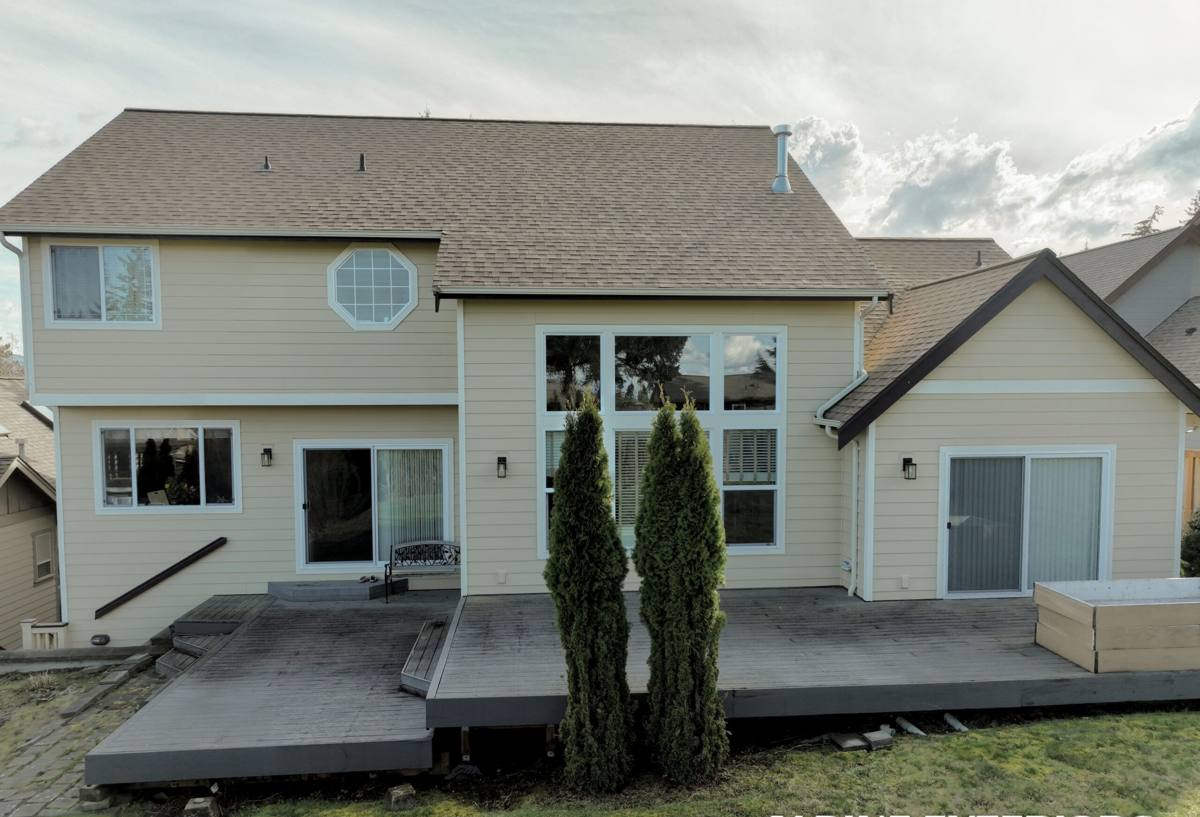
What the Barrier Island Climate Does to a Deck
Salt air and corrosion
Airborne salt doesn't need direct spray to cause damage — it travels on the wind and settles on every exposed surface, including the underside of a deck and the framing hidden beneath the boards. Standard galvanized fasteners and connectors that are perfectly fine forty miles inland will corrode noticeably faster this close to the Gulf. Once a fastener starts rusting, it weakens from the inside before you ever see a stain on the wood.
Intense, year-round UV
Florida sun is hard on any exterior surface, but it's particularly hard on horizontal surfaces like deck boards that take direct overhead exposure most of the day, most of the year. UV breaks down the lignin in wood fibers and degrades the surface layer of lower-grade composite products, which is why color retention and fade resistance matter more here than in a lot of the country.
Wind-driven rain and hurricane wind loads
St. Pete Beach gets wind-driven rain that pushes water sideways and upward into joints, ledger connections, and fastener heads that a standard rain event would never reach. And when a named storm comes through, the wind loads on an elevated deck or an attached structure are a real structural concern, not a theoretical one. Framing, post spacing, and railing attachment all need to account for that.
Framing and Fasteners: Where Most Deck Failures Start
Homeowners tend to focus on the decking material — the boards you walk on and see. But the framing and fasteners underneath are what actually determine whether a deck lasts 10 years or 25 in this environment. This is also where corner-cutting is easiest to hide, because it's out of sight once the boards go down.
| Hardware Choice | How It Performs Near the Gulf | Our Standard |
|---|---|---|
| Standard electro-galvanized fasteners | Corrode noticeably within a few years in salt air; can streak and weaken connections | Not used on any exterior deck connection |
| Hot-dip galvanized structural hardware | Better corrosion resistance, acceptable for framing not in direct salt exposure | Used selectively where appropriate |
| Stainless steel fasteners and connectors | Best long-term corrosion resistance for a barrier island environment | Standard for ledger boards, joist hangers, and railing connections |
| Pressure-treated framing lumber | Resists rot but still needs correctly rated, compatible fasteners | Standard framing material, paired with stainless or coated hardware rated for treated lumber |
One detail worth understanding: pressure-treated lumber contains chemicals that accelerate corrosion in incompatible metals. Pairing treated lumber with the wrong fastener type causes exactly the kind of hidden hardware failure that shows up as a wobbly rail or a soft spot years later. We match fastener chemistry to the lumber and to the exposure the connection will actually see.
Decking Material Options for St. Pete Beach
There's no single "best" decking material — there's a best material for your budget, your maintenance appetite, and how close your home sits to salt spray. We'll walk through the honest trade-offs rather than push one product.
| Material | Upfront Cost | Maintenance | Notes for This Area |
|---|---|---|---|
| Pressure-treated wood | Lowest | Regular sealing/staining needed, more often here due to UV and humidity | Good value if you're willing to keep up with maintenance; UV and moisture cycling will show wear faster than inland |
| Composite decking | Mid to upper-mid | Low; periodic cleaning | Look for capped composite specifically — uncapped composite absorbs moisture and can support mold growth in a humid coastal climate |
| PVC decking | Highest | Lowest | No wood fiber to absorb moisture or feed mold; strong choice for direct sun and salt exposure, at a higher material cost |
| Tropical hardwoods | High | Moderate to high | Naturally dense and rot-resistant, but still needs oiling to control UV graying and requires correct fastener compatibility |
We won't tell you a budget wood deck is a bad choice — for a lot of homeowners it's the right call, as long as the maintenance schedule is realistic. What we will say plainly: uncapped composite in a high-humidity, salt-exposed environment is a trade-off we walk clients through carefully, because the moisture behavior is different than what most people expect from "low-maintenance" marketing.
Railings, Footings, and Wind Considerations
Two structural areas deserve specific attention on a St. Pete Beach deck:
Footings and post bases
Elevated decks and any deck attached to the house need footings sized and set correctly for local soil conditions and expected loads, with post bases that keep wood from sitting in standing water after a heavy rain event. Sandy coastal soils behave differently than inland clay soils, and footing depth and diameter should reflect that.
Railings and guard systems
Railings take direct wind load during storms and need attachment hardware rated for that, not just cosmetic screws into the top rail. This is also the most-touched part of any deck, so a loose or corroding railing connection is both a durability issue and a safety issue.
Permitting in St. Petersburg and Pinellas County
Deck construction in and around St. Pete Beach generally requires a permit, and inspections check framing, footing depth, and railing height and spacing against current code, including wind-load requirements that apply along the coast. Permit requirements and specific wind-zone rules can vary by exact location and jurisdiction, so we pull and manage the permit as part of the job rather than leaving that step to the homeowner.
Our Deck Building Process
Every deck we build in St. Pete Beach follows the same core process, adjusted for the specific home and site:
- On-site assessment of the space, existing structure (if replacing a deck), soil, and drainage
- Material and layout discussion, including honest trade-offs for your budget and maintenance preference
- Permit drawings and submission to the appropriate local jurisdiction
- Footings and framing, built with corrosion-appropriate hardware throughout
- Decking, railing, and stair installation
- Final walkthrough and inspection sign-off
Before we hand a deck over, we check the details homeowners rarely think to ask about:
- All structural fasteners are corrosion-rated for coastal exposure, not just standard galvanized
- Ledger board attachment to the house is properly flashed to keep wind-driven rain out of the wall structure
- Post bases and footings keep wood off standing water
- Railing connections are checked for wind-load attachment, not just cosmetic fastening
- Decking gaps are set correctly for the material's expansion and drainage needs
- Permit inspections are scheduled and passed before we consider the job complete
Maintenance After We Build It
A well-built deck on St. Pete Beach still needs upkeep — the climate doesn't stop working on it once we leave. Wood decks need re-sealing on a regular schedule, more often than the same product would need inland, because of the combined UV and salt exposure. Composite and PVC decks need periodic washing to keep salt residue from building up in the surface texture. Railing hardware and ledger connections are worth a visual check after any major storm, just to catch anything that's worked loose before it becomes a bigger repair.
Why Hire a Crew That Already Works St. Pete Beach
A contractor who mostly builds decks inland will default to inland assumptions — standard fasteners, standard maintenance schedules, standard framing details — because that's what works where they usually build. On a barrier island, those defaults cause the corrosion, water intrusion, and hardware failures described above. Working regularly in St. Pete Beach and along the Pinellas County coastline means we're already specifying stainless hardware, capped or PVC decking where it makes sense, and flashing details built for wind-driven rain as our starting point, not an upsell. We also know the local permitting process for this stretch of the coast and build to the wind-load expectations that apply here, not a generic statewide minimum.
If you're planning a new deck or need to replace one that's showing its age, we're happy to take a look and put together a straightforward estimate — no pressure, no pushy upsells, just a clear picture of your options. Use the form below to request a free estimate.