 St. Petersburg Roofing
 Deck Repair for Coquina Key's Waterfront Homes
Coquina Key is one of St. Petersburg's canal-laced neighborhoods, and that waterfront setting is exactly why decks here take more abuse than decks a few miles inland. Homes backing up to canals or open water get salt-laden air, near-constant humidity, and full sun exposure with almost nothing to block it. Add in Pinellas County's hurricane season and the wind-driven rain that comes with it, and you have a climate that is genuinely hard on wood, fasteners, and framing. A deck that would last decades in a drier, cooler climate can start showing real structural problems in Coquina Key in half that time if it wasn't built or maintained with that environment in mind.
We work on decks throughout St. Petersburg, but we're specifically familiar with what canal-front and near-water properties in Coquina Key throw at a repair crew — corroded hardware, soft framing near grade, and railings that look fine from a distance but fail a hand-push test. This page covers what actually goes wrong with decks in this kind of setting, what a correct repair looks like, and how we approach the job.
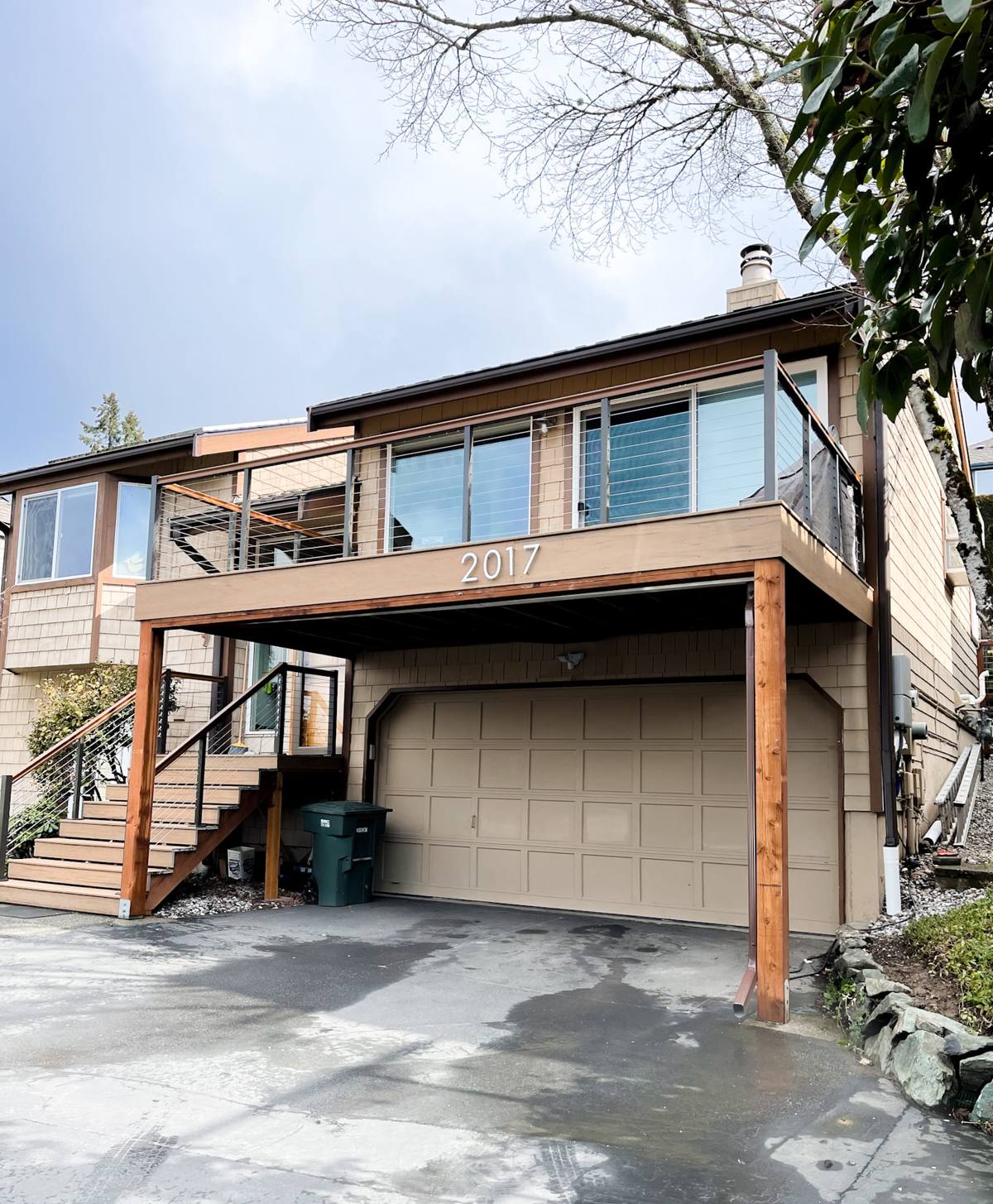
Why Decks Fail Faster Near the Water
Salt Air and Humidity
Salt in the air accelerates corrosion on any metal fastener, bracket, or connector — nails, screws, joist hangers, bolts. Once a fastener starts rusting, it loses holding strength long before it looks obviously bad. Humidity that never fully drops, especially at night, also keeps wood at a higher moisture content for more of the year, which speeds up rot in end grain, ledger connections, and anywhere water can sit.
Year-Round UV Exposure
Florida sun is intense and consistent almost every month of the year. UV breaks down the lignin in wood fiber, dries out and cracks the surface, and degrades sealants, stains, and the top layer of composite decking over time. Unsealed or under-maintained wood decking in this kind of sun exposure will gray, splinter, and check noticeably faster than the same material in a milder climate.
Wind-Driven Rain and Storm Loading
St. Petersburg sees intense, sideways rain during storms, which drives moisture into joints, under flashing, and behind ledger boards that would stay dry in a straight-down rain. Hurricane-force wind events also put real lateral load on railings, stair stringers, and the ledger connection to the house — the same connections that may already be weakened by corrosion or rot. That combination is how a deck that "looked fine" ends up failing during or after a storm.
Ground Contact and Drainage
Many Coquina Key lots sit low and close to water, which means posts and framing near grade can stay damp longer after rain, and in some cases deal with periodic high water. Poor drainage under a deck compounds every other issue on this list.
Signs Your Coquina Key Deck Needs Repair
Some deck problems are obvious. Others hide until someone puts real weight on the wrong spot. Here's what we tell homeowners to check for between inspections:
- Soft, spongy, or spring-feeling boards, especially near the house or over low ground
- Visible rust streaks below joist hangers, bolts, or screw heads
- Railings or posts that flex or wiggle when pushed
- Gaps opening up where the deck ledger meets the house
- Cracking, splintering, or graying wood that feels dry and brittle
- Stairs that feel bouncy or uneven underfoot
- Standing water or slow drainage underneath the deck after rain
- Fasteners that are loose, missing, or backed out of the surface
If you're seeing more than one or two of these, it's worth having someone look at the framing, not just the decking surface. Surface wear is cosmetic; framing and connection problems are structural and are what actually cause failures.
What a Correct Deck Repair Actually Involves
A lot of deck "repairs" amount to swapping a few bad boards and calling it done. That fixes what's visible but often leaves the real problem — corroded connectors, a compromised ledger, undersized or rotted framing — in place. A repair done right starts underneath, not on top.
Structural Inspection First
Before replacing anything, we check the ledger board connection to the house, the condition of joists and beams, post bases, and every hanger and fastener we can access. This is where hidden rot and corrosion actually live, and it's the difference between a repair that lasts and one that fails again in a year or two.
Fastener and Hardware Grade Matters
In a salt-air environment, standard galvanized hardware corrodes faster than it should. We use fasteners and connectors rated for coastal or high-corrosion exposure wherever it matters structurally — ledger bolts, joist hangers, and structural screws — rather than defaulting to whatever is cheapest. It costs a little more up front and saves a callback in a few years.
Ledger Flashing and Water Management
Most rot at the house connection traces back to water getting behind the ledger board because flashing was missing, undersized, or installed wrong the first time. Any time we're into a ledger repair, we correct the flashing and water path, not just patch the wood.
Matching or Upgrading the Decking
Depending on the deck's age and the homeowner's goals, we'll either match existing wood decking or discuss moving to a composite or PVA-based board for the repaired sections. We'll walk through the honest trade-offs of each rather than pushing one option — see the comparison below.
Decking Material Comparison for This Climate
There's no single "best" decking material — each comes with a different maintenance commitment and a different way of aging in sun, salt, and humidity. Here's how the common options actually compare for a waterfront St. Petersburg property:
| Material | Sun/UV Behavior | Moisture & Salt Air | Maintenance |
|---|---|---|---|
| Pressure-treated wood | Grays and checks over time without sealing | Needs sealing to resist moisture and rot | Annual cleaning and resealing recommended |
| Tropical hardwood | Very durable, ages to gray without oiling | Naturally rot-resistant, handles humidity well | Periodic oiling for color; low structural upkeep |
| Composite decking | Fade-resistant, but quality varies by product | Doesn't rot, but can trap moisture at fasteners if not detailed correctly | Low — occasional washing |
| PVC decking | Very UV-stable, resists chalking | Fully moisture-immune surface | Lowest — washing only |
Regardless of surface material, the framing underneath is almost always wood or treated wood, which means the structural inspection and hardware quality matter just as much as whatever decking you choose on top.
Our Deck Repair Process
- On-site inspection — we check framing, connections, hardware condition, and the decking surface, and tell you honestly what's cosmetic versus structural.
- Written scope and estimate — a clear breakdown of what needs repair now versus what can wait, with material options explained.
- Permitting where required — structural deck repairs in Pinellas County can require a permit; we handle that so the work is done to code, not around it.
- Repair work — framing and connection repairs first, then decking, railings, and stairs, using coastal-rated hardware where it matters.
- Final walkthrough — we check the repair with you before we consider the job done, including how it drains and how the railings and stairs feel underfoot.
Why a Crew That Already Works Coquina Key Matters
A contractor who mainly works inland, drier neighborhoods doesn't always default to coastal-grade hardware or think to check ledger flashing first — because in that environment, it often isn't the first thing that fails. A crew that regularly works waterfront St. Petersburg properties knows to check those things automatically, because we've seen what salt air and storm-driven rain do to a deck that was built to a generic spec instead of a coastal one. That local pattern-recognition is the difference between a repair that addresses the actual cause and one that just replaces what's visibly broken.
It also means faster, more accurate estimates. We're not guessing at what Pinellas County code requires or what materials hold up near the water — we deal with it regularly.
What Drives the Cost of a Deck Repair
Every deck repair is different, so we won't quote a number without seeing the deck, but here's what actually moves the price:
| Factor | Why It Matters |
|---|---|
| Extent of structural damage | Surface board replacement costs far less than ledger, joist, or post repair |
| Decking material chosen | Wood, composite, and PVC have different material costs and install labor |
| Access and deck height | Low clearance or elevated decks take more time to work under and around |
| Hardware upgrade needs | Coastal-rated fasteners and connectors cost more than standard galvanized |
| Permit requirements | Structural work typically requires permitting and inspection time |
As a general range, spot repairs to boards and railings tend to be a smaller job, while ledger, framing, or full resurfacing work costs more because it involves tearing into the structure. We'll give you real numbers once we've actually inspected the deck.
If your deck in Coquina Key is showing soft spots, rust streaks, wobbly railings, or storm damage, it's worth getting it looked at before the next big rain event or hurricane season test finds the weak spot for you. We offer a free, no-pressure estimate — fill out the form below and we'll take a look.