 St. Petersburg Roofing
 Deck Repair Built for Historic Kenwood's Older Homes
Historic Kenwood is one of St. Petersburg's older residential neighborhoods, built out mostly with Craftsman-style bungalows in the early decades of the last century. Many of those homes have had decks, porches, and elevated wood platforms added or rebuilt over the years — some original to the era, most not. Whatever the age, a deck in this part of Pinellas County is carrying a heavier load than the same structure would in a drier, cooler climate. Our crew repairs decks throughout St. Petersburg, but Kenwood's mix of older framing, mature tree canopy, and close-set lots creates repair patterns we see again and again on this side of town.
This page covers what deck repair actually means for a Kenwood home — what fails first, what a correct repair looks like, and what to expect when you bring us in.
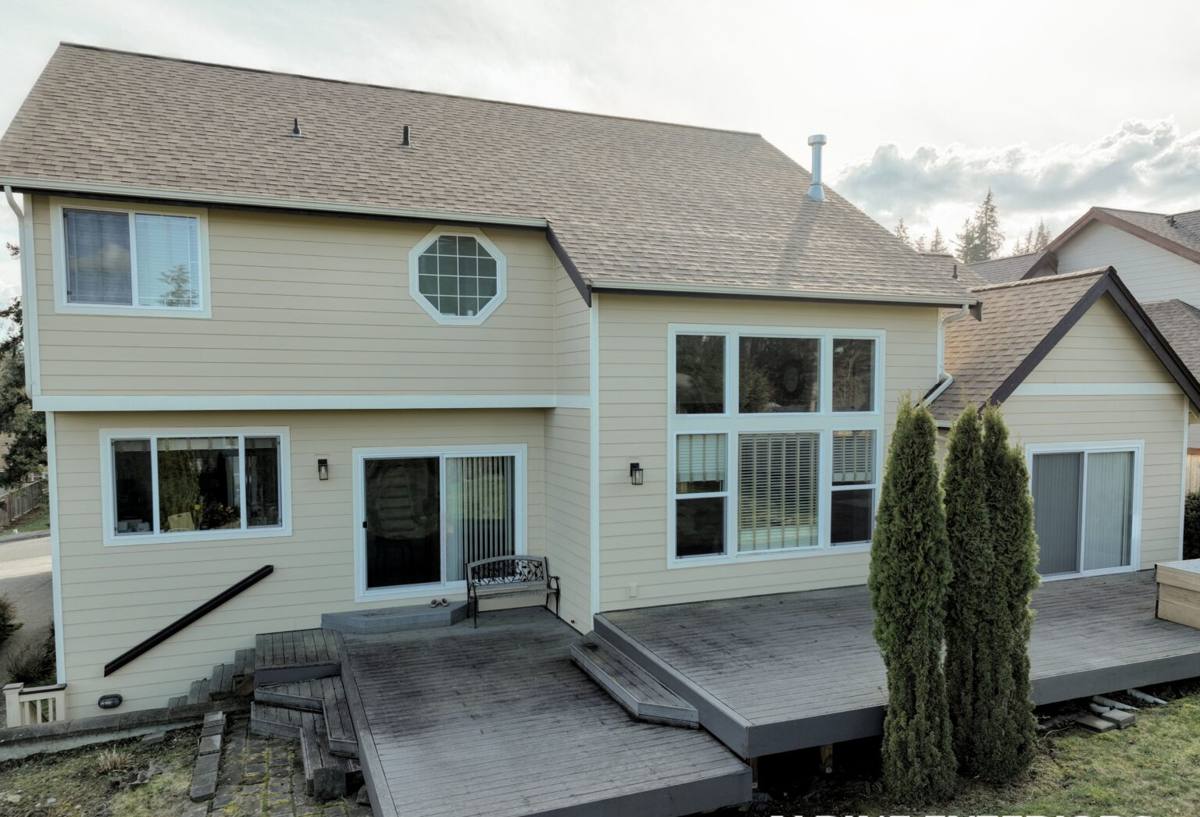
Why Kenwood Decks Take a Beating
St. Petersburg's climate is hard on any exterior wood or fastener system, and a deck has more exposed joints, connections, and horizontal surfaces than almost anything else on a house.
Sun and heat
Year-round intense UV breaks down wood fibers, dries out sealants, and fades or chalks composite decking faster than manufacturers' literature usually admits. A deck with southern or western exposure in Kenwood's open, tree-thinned yards will show UV wear years before a shaded one does.
Wind-driven rain and humidity
Afternoon storms push rain sideways into gaps, ledger connections, and stair stringers that were never meant to stay wet. Combined with Florida's humidity, that moisture doesn't evaporate quickly — it sits in end grain and fastener holes, which is exactly where rot starts.
Salt air
St. Petersburg sits on a peninsula, and even neighborhoods a few miles from open water get salt-laden air on windier days. Salt accelerates corrosion in nails, screws, joist hangers, and post bases — often long before the wood around them looks obviously bad.
Hurricane-force wind loads
Pinellas County isn't in Florida's High-Velocity Hurricane Zone, but the Florida Building Code still requires wind-resistant construction for this region, and a named storm can put real lateral and uplift load on a deck's railings, ledger attachment, and post connections. Older decks built before current code updates are frequently under-attached for what they're now being asked to withstand.
Common Problems We Find on Kenwood Decks
- Ledger boards attached to the house with the wrong fasteners, or without proper flashing, letting water track into the rim joist
- Rotted or split joists and beams, especially near ground contact or where debris collects
- Rusted or corroded joist hangers, bolts, and screws — a bigger issue this close to the coast
- Loose, wobbly, or undersized railing posts that don't meet current guard requirements
- Stair stringers cracked or rotted at the base where they meet grade
- Cupped, splintering, or delaminating deck boards from repeated wet-dry cycles
- Undersized or missing post footings on older, owner-built additions
Because many Kenwood homes have had multiple owners and multiple rounds of work over the decades, it's common to find a deck that looks fine on the surface but was framed or fastened to a standard that's now outdated. That's usually the gap between "looks okay" and "is actually sound."
What a Correct Deck Repair Actually Involves
A proper repair starts underneath the deck, not on top of it. Surface boards are the easiest thing to replace and the least useful thing to focus on if the frame underneath is compromised.
Structural assessment first
We check the ledger connection, look for hidden rot in joists and beams (often worse than it appears from above), inspect every hanger and fastener for corrosion, and confirm posts and footings are adequate for the deck's height and span. This is the step that gets skipped by contractors who just want to swap boards and move on.
Fastener and hardware upgrades
Given the salt air here, we use stainless steel or heavy hot-dip galvanized fasteners and hardware rated for coastal exposure, not the standard-grade hardware that's fine further inland. Mixing metals (say, a coated screw against an aluminum bracket) creates galvanic corrosion that will fail faster than either material alone.
Flashing at the house connection
The ledger-to-house joint is the single most common point of hidden water damage on any deck. Correct flashing — installed properly, not just caulked over — is non-negotiable on any repair we do.
Bringing railings and guards up to code
If a deck's railing system is loose, undersized, or spaced incorrectly, we address that as part of the repair rather than reattaching a system that wasn't safe to begin with.
Repair vs. Replacement: How We Decide
Not every deck needs a full rebuild, and not every deck is worth patching. We look at the percentage of the structure affected, the age and condition of the framing versus the decking, and how the numbers actually compare.
| Situation | Usually Repair | Usually Replace |
|---|---|---|
| Framing (joists, beams, posts) | Sound, isolated soft spots only | Widespread rot or undersized for current loads |
| Deck boards | Some cupping or splintering, frame is solid | Most boards failing at once, same age as bad frame |
| Ledger/house connection | Flashing failure only, structure intact | Rot has spread into the house's rim joist |
| Railings | Loose posts, hardware corrosion | Undersized system that never met code |
| Age of deck | Under 12–15 years, maintained | Older, unmaintained, multiple past patch jobs |
We'll tell you honestly which side of that table your deck falls on, including when a repair is the right call financially even if a rebuild would be "nicer."
Working Near Historic Kenwood's Character
Kenwood is a neighborhood where a lot of homeowners care about keeping their property's look consistent with the surrounding streetscape. We're not going to talk you into a deck design that clashes with a bungalow's character, and if your property is subject to any local historic district design review, we'll work within that rather than around it. In practice, this mostly affects visibility, height, and material choices for anything facing the street — it rarely limits structural repair work that isn't visually changing the deck.
Our Deck Repair Process
- On-site inspection — we get under the deck, check the ledger, probe suspect wood, and test hardware, not just look at the surface
- Written scope and estimate — what's structural, what's cosmetic, and what we'd prioritize if budget is a factor
- Repair work — framing, fasteners, flashing, and railings addressed in the right order, not just deck boards swapped
- Final walkthrough — we show you what was found and what was fixed before we call it done
Materials We Use — and Why
For structural framing, pressure-treated lumber rated for ground contact where applicable is standard, paired with corrosion-resistant hardware given the coastal air. For decking surfaces, we'll work with either quality wood or composite decking depending on your budget and maintenance preference.
Wood decking
Costs less up front, needs regular sealing or staining to hold up to St. Petersburg's UV and rain, and shows wear sooner if that maintenance slips. It's a fine choice for homeowners who will keep up with it.
Composite decking
Higher upfront cost, no staining required, but it's not maintenance-free — it still needs cleaning, and lower-grade composite can fade or hold heat more than owners expect in full Florida sun. We'll be straight with you about which grade fits your budget and how it'll actually perform here, rather than overselling it as zero-maintenance.
Cost Factors to Expect
Every deck is different, so we don't quote sight-unseen, but these are the variables that move a repair estimate up or down:
- How much of the framing is compromised versus just the surface boards
- Whether the ledger connection needs to be opened up and re-flashed
- Deck height and whether posts and footings need reinforcement
- Railing and guard work required to meet current code
- Material choice for replaced decking (wood versus composite, and grade of each)
- Access — decks with limited access underneath or around take longer to inspect and repair properly
Maintenance That Extends the Repair
A repair only holds up as long as the deck is looked after afterward. A few habits make a real difference in this climate:
- Sweep debris off the deck surface and out from underneath regularly — trapped leaves and pollen hold moisture against the wood
- Reseal or restain wood decking on the schedule the product calls for, not "when it looks bad"
- Check railing posts for movement once or twice a year, especially after a rough storm season
- Rinse salt residue off the deck surface periodically if you're within a few miles of the water
- Have the underside inspected every few years even if the top looks fine — that's where problems start
Why Local Experience in Kenwood Matters
A crew that already works in Historic Kenwood knows the housing stock — the era these homes were built, the kinds of additions that got tacked on over the decades, and the framing shortcuts that were common in past repairs around here. That experience means a faster, more accurate inspection and fewer surprises mid-project. We're also familiar with what local permitting and, where applicable, historic district review actually require, so we're not guessing or causing delays on your project.
If your deck has soft spots, a wobbly rail, or you just haven't had it checked in a while, we're happy to take a look. Fill out the form below for a free, no-pressure estimate — we'll tell you honestly what's going on and what it would take to fix it right.