 St. Petersburg Roofing
 Deck Replacement in Childs Park: What Local Homes Are Up Against
Childs Park sits inland from Tampa Bay, but "inland" in Pinellas County doesn't mean sheltered. Homes here still deal with salt-laden air moving in off the water, intense year-round Florida sun, sudden afternoon downpours, and the real chance of hurricane-force winds during storm season. A deck is one of the most exposed structures on a property — it takes direct sun, direct rain, and direct wind with no roof overhead and no siding to break the impact. When a deck starts failing in this neighborhood, it's usually not bad luck. It's the climate doing exactly what it does to untreated wood, undersized fasteners, and structures that were built to a minimum code standard years ago rather than to hold up long-term in a coastal Gulf Coast climate.
We work on decks throughout St. Petersburg and Pinellas County, and Childs Park's older housing stock means we see a consistent pattern: decks original to the home, or added decades ago, that were never designed for the UV exposure and moisture cycling this area delivers year after year.
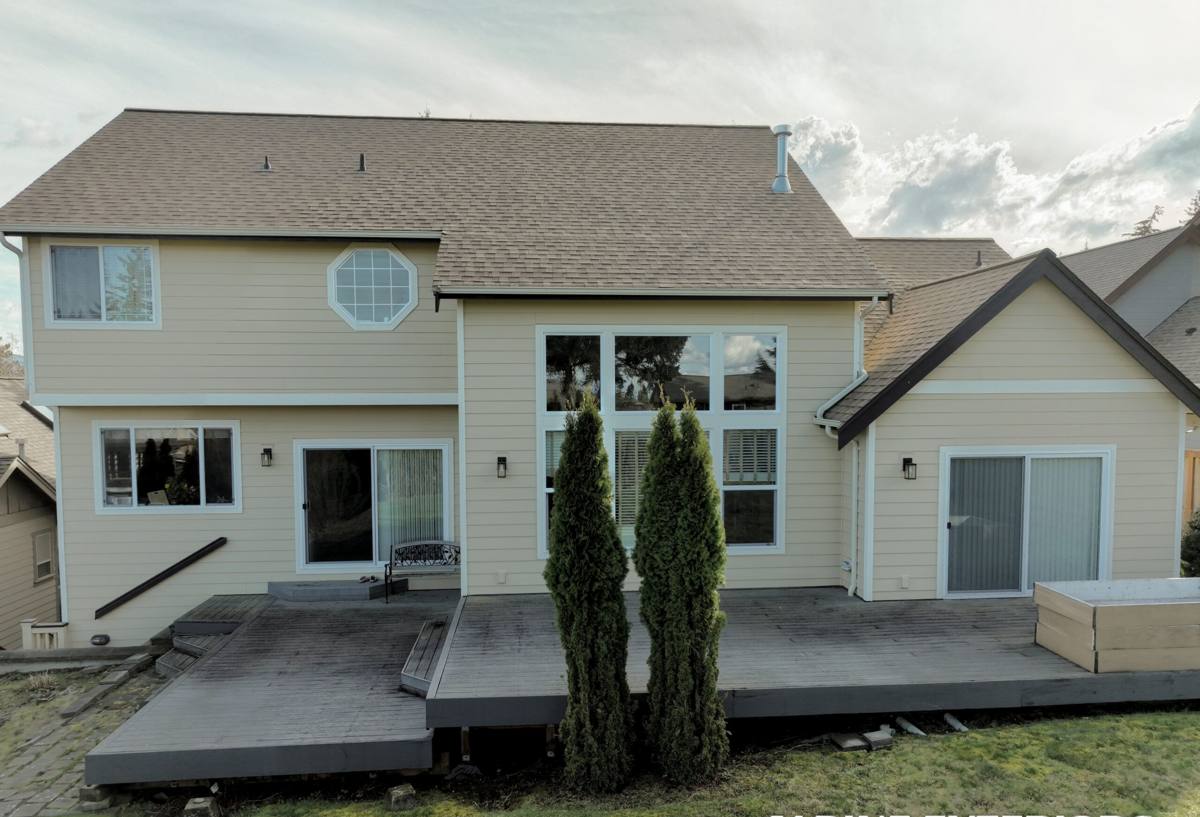
Why Decks Fail Faster in This Climate
UV Breakdown
Florida sun isn't seasonal — it's a year-round load on any exposed wood or composite surface. UV rays break down the lignin in wood fibers, causing graying, splintering, and surface checking. On composite decking, UV exposure over many years can fade color and, on lower-quality boards, cause the surface to become brittle. A deck in St. Petersburg ages differently than the same deck would in a northern climate, and it needs materials and finishes chosen with that in mind.
Wind-Driven Rain and Moisture Cycling
It's not just how much rain falls — it's how it arrives. Wind-driven rain gets pushed sideways and up under boards, into ledger connections, and around post bases in ways a straight-down rain never would. Combined with our humidity, wood framing and decking go through constant wet-dry cycling. That cycling is what causes warping, cupping, and — worse — hidden rot in structural members that look fine from the top.
Salt Air
Even away from the immediate waterfront, salt air travels on Gulf breezes and settles on exposed metal. Fasteners, brackets, and hardware that aren't rated for coastal exposure corrode faster here than almost anywhere else in the country. A deck is only as strong as the metal holding it together, and corroded ledger bolts or joist hangers are one of the most common hidden failures we find when we open up an old deck.
Hurricane-Force Wind Loads
A deck attached to a home has to resist uplift and lateral loads during tropical storms and hurricanes, not just support foot traffic. Older decks were frequently built without engineered ledger attachment or proper hurricane hardware, which is a real safety concern when Pinellas County gets hit with a named storm.
Signs a Deck Needs Replacing, Not Just Repairing
- Soft, spongy, or springy spots when you walk across the deck
- Visible gaps or separation where the deck attaches to the house (the ledger board)
- Rust staining running down from screws, bolts, or joist hangers
- Wood that's gray, splintering, or crumbles when probed with a screwdriver
- Posts that wobble or show rot near ground contact
- Boards that have cupped, twisted, or pulled away from framing
- A deck older than 15-20 years that has never had structural components inspected
- Railings that flex or feel loose when leaned on
Any one of these on its own might be repairable. Several together, especially at the ledger connection or in the support posts, usually mean the structure has reached the point where patching costs more over time than a proper rebuild.
What a Correct Deck Replacement Actually Involves
A deck replacement done right in this climate is not just swapping old boards for new ones on the same frame. It starts underneath.
1. Full Structural Assessment
We check the ledger board attachment, the condition of support posts and footings, joist spacing and condition, and any signs of past water intrusion at the house connection — a common source of larger, hidden problems.
2. Ledger Flashing Done Right
The ledger board — where the deck attaches to the house — is the single most common point of failure and the single most common source of water damage into the home itself. Proper flashing here isn't optional. It's the difference between a deck that sheds water away from your house and one that's slowly rotting your rim joist from behind the siding.
3. Corrosion-Resistant Hardware
Given the salt air across St. Petersburg, we use fasteners, joist hangers, and structural connectors rated for coastal and treated-lumber exposure. Standard hardware corrodes faster here and becomes a hidden liability within a few years.
4. Wind-Rated Attachment
Ledger bolting, post-to-beam connections, and railing attachment are built to resist the uplift and lateral forces this area's wind events can generate, not just the minimum needed to pass a casual inspection.
5. Decking Material Selection
We walk homeowners through the real trade-offs between pressure-treated wood, cedar, and composite decking for this specific climate — covered below.
6. Proper Drainage and Ventilation Underneath
Air needs to move under the deck to let framing dry out between rain events. Decks built too low to the ground or without gaps for airflow trap moisture and shorten the life of even good materials.
Decking Material Comparison for St. Petersburg Conditions
| Material | UV/Heat Behavior | Moisture Behavior | Maintenance | Typical Lifespan Here |
|---|---|---|---|---|
| Pressure-Treated Pine | Grays and can splinter without regular sealing | Prone to cupping/warping if not sealed and cycled wet-dry | Needs sealing every 1-2 years in this climate | 10-15 years with upkeep |
| Cedar | Naturally more UV-stable but still fades without finish | Naturally rot-resistant but not immune to prolonged moisture | Sealing/staining every 2-3 years | 15-20 years with upkeep |
| Composite Decking | Higher UV resistance; quality varies by brand and product line | Doesn't rot but can trap moisture underneath if airflow is poor | Occasional cleaning, no sealing/staining | 25+ years depending on product |
We don't push one material as universally "best" — we walk through budget, maintenance appetite, and how long the homeowner plans to stay in the house, then make an honest recommendation. Composite carries a higher upfront cost but removes the sealing cycle that pressure-treated wood demands in this climate. Wood costs less upfront but only performs long-term if the maintenance actually happens on schedule, which is a real commitment given how hard Florida sun and humidity are on exposed wood.
Our Process for Childs Park Deck Replacements
- On-site assessment — we inspect the existing deck, the ledger connection, and framing condition, and take measurements
- Honest recommendation — repair versus replace, and which materials fit the home and budget
- Written estimate — clear scope, materials, and cost, no vague allowances
- Permitting — deck replacements in St. Petersburg typically require a permit; we handle that process
- Demolition and disposal — old decking, framing, and hardware removed and hauled off
- Structural rebuild — ledger flashing, footings, framing, and hardware installed to hold up to local wind and moisture conditions
- Decking, railing, and finish work — installed per the chosen material's manufacturer specifications
- Final walkthrough — we review the finished deck with the homeowner before calling the job done
Why Hiring a Crew That Already Works in This Area Matters
A deck built to a generic national standard isn't necessarily built for St. Petersburg. A crew that regularly works Pinellas County neighborhoods like Childs Park already knows which hardware holds up against salt air, how local permitting and inspection works, and how to detail ledger flashing so it actually sheds wind-driven rain instead of channeling it into the house. That's not something you can substitute with a generic build spec pulled from a supplier catalog. It comes from repeatedly seeing what fails here and building differently because of it.
It also matters for accountability. A local, established contractor has a reputation in the community and isn't going anywhere after the invoice is paid — which matters if a warranty issue or storm-related question comes up years down the road.
Questions to Ask Before Hiring Anyone for Deck Work
- Are you licensed and insured to do this work in Pinellas County?
- Will you pull the required permit, or is that on me?
- What hardware and fastener grade will you use given the salt air here?
- How will the ledger board be flashed against the house?
- What's the written warranty on labor versus materials?
- Can I see the scope of work in writing before anything starts?
Any contractor unwilling to give straight answers to these questions, or who wants to skip the permit, is a red flag worth taking seriously — especially on a structure that has to hold up people and resist hurricane winds.
Get an Honest Look at Your Deck
If your deck in Childs Park is showing its age — soft spots, rusted hardware, gaps at the house connection, or just years of Florida sun and rain — it's worth getting a straight assessment before deciding between repair and replacement. We'll take a look, tell you what we actually see, and put together a clear, no-pressure estimate. Fill out the form below to get started.