 St. Petersburg Roofing
 Composite Decking Built for Historic Kenwood's Older Homes
Historic Kenwood is one of St. Petersburg's designated historic districts, known for its concentration of early-20th-century bungalow and Craftsman-style homes, mature oak canopy, and narrow, walkable lots. Those qualities are exactly why so many homeowners here want an outdoor living space that fits the character of the neighborhood without dragging them into a wood deck maintenance cycle every couple of years. Composite decking has become the practical answer for a lot of Kenwood properties, but "composite decking" covers a wide range of products and installation quality, and what works on a new-construction home in a subdivision isn't always the right approach on a house with 90-plus-year-old framing, a raised pier foundation, or a footprint shaped by mature trees. This page covers what composite decking actually needs to hold up in this part of Pinellas County, and how we approach it on Kenwood homes specifically.
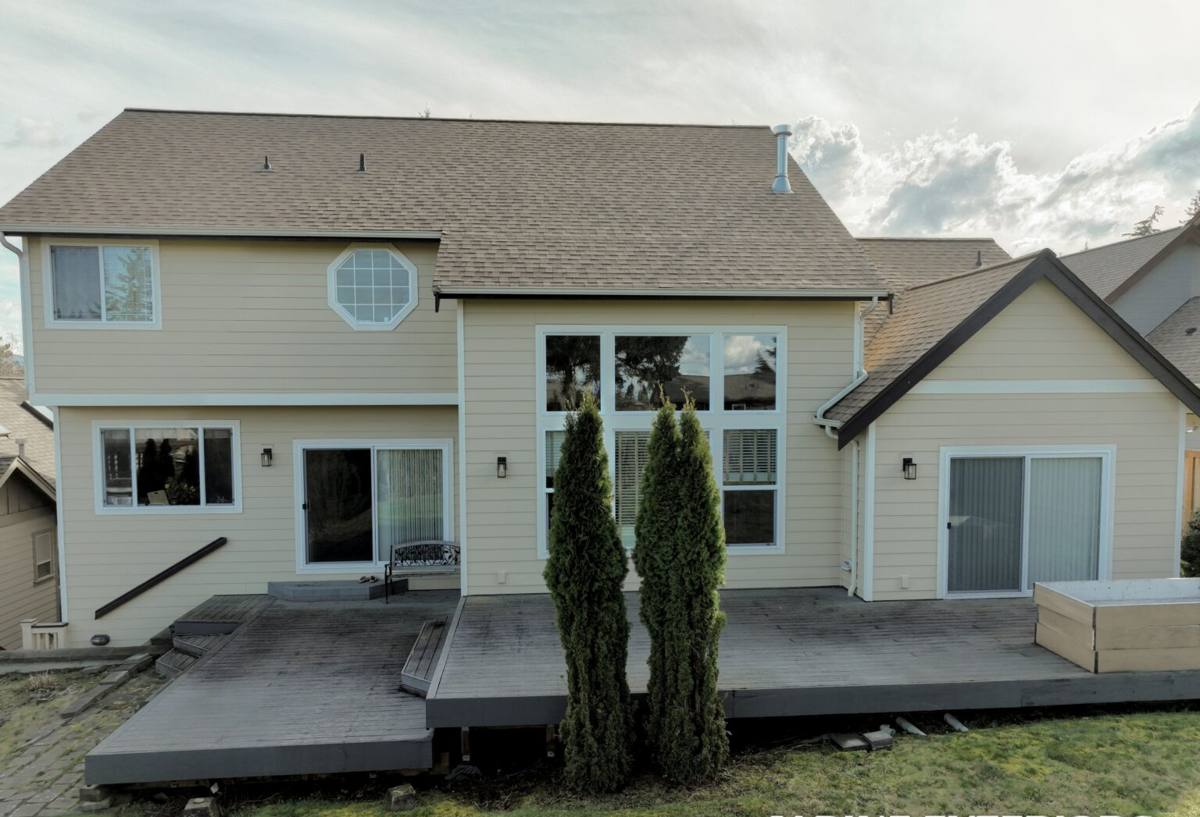
What St. Petersburg's Climate Does to a Deck
St. Petersburg sits on a peninsula between Tampa Bay and the Gulf, and that location shapes every decking decision we make here. A few things every deck in this area has to survive:
- Intense, year-round UV. Florida sun fades and breaks down materials faster than almost anywhere else in the country. Cheap capped composites and uncapped boards chalk, fade unevenly, and lose surface integrity years ahead of schedule.
- Wind-driven rain. Afternoon storms don't just fall straight down here — they blow sideways under eaves and into board gaps, joints, and fastener holes. Decking that isn't detailed for drainage traps moisture where you can't see it.
- Salt air. Even inland from the immediate waterfront, St. Petersburg's proximity to the Bay and the Gulf means airborne salt accelerates corrosion of fasteners, brackets, and any metal hardware that isn't rated for it.
- Hurricane-force wind events. Pinellas County sees tropical storm and hurricane exposure most seasons. A deck's structural connections — ledger attachment, post bases, joist hangers — matter as much as the decking surface itself.
- Humidity and heat cycling. Constant expansion and contraction stresses fasteners and board-to-board gapping if it wasn't installed with the right spacing to begin with.
None of this is unique to Kenwood, but it's compounded on older homes where the deck is tying into original framing, older foundation piers, or a house that's already settled and shifted over the decades.
Why Composite Fits Kenwood's Historic Housing Stock
Kenwood's bungalows were largely built with covered porches, small footprints, and outdoor spaces that were meant to extend living space in a hot climate before air conditioning was common. Adding or replacing a deck on one of these homes usually means working around an existing porch structure, tight side yards, root systems from established trees, and a house that wasn't framed with modern deck ledger attachment in mind.
Where composite earns its cost
Composite decking makes sense here because it doesn't need refinishing, doesn't splinter or cup the way older wood does in humidity swings, and holds color reasonably well under sustained UV exposure when you buy a quality capped product. For a historic-character home, it also lets you match a board profile and color that reads as traditional wood decking from the street without taking on a wood deck's maintenance schedule.
Where it doesn't solve everything
Composite is not maintenance-free, and it's not automatically hurricane-rated just because it's composite. The structural frame underneath — the part nobody sees — is what actually determines whether the deck survives a wind event and stays safe over the following decade. We treat the substructure as the real project and the decking surface as the finish layer, not the other way around.
What a Correct Composite Deck Installation Involves
A composite deck that's going to last in this climate, on an older Kenwood home, needs several things done right — most of which aren't visible once the job is finished:
- Proper ledger attachment or a freestanding frame. On older homes, we evaluate whether the existing rim joist or wall framing can safely carry a ledger-attached deck, or whether a freestanding structure (its own posts and footings, not tied to the house) is the safer, more durable choice — which is common on historic-era framing.
- Corrosion-resistant fasteners and hardware. Stainless steel or coated fasteners rated for coastal/high-corrosion environments, not standard interior-grade hardware, on every structural connection.
- Code-compliant footings sized for local soil and wind loads. Footing depth and post spacing follow Pinellas County wind and building requirements, not a generic national minimum.
- Joist spacing matched to the composite manufacturer's spec. Composite boards need tighter joist spacing than wood in many cases, especially on angled or picture-frame layouts — skipping this is a common cause of bounce and long-term sag.
- Proper board gapping and hidden fastening. Correct expansion gaps for heat cycling, and a fastening system that keeps the surface clean without exposed screw heads that trap water and rust.
- Ventilation and drainage underneath. Airflow beneath the deck keeps the substructure dry after wind-driven rain events and reduces rot risk on any wood framing components.
- Flashing at the house connection. Proper flashing where the deck meets siding or an existing porch structure keeps water from working its way behind the wall — a common failure point we find when replacing older decks.
Working Around Kenwood's Historic District Character
Historic districts in St. Petersburg can carry design review requirements for exterior changes, and older lots in Kenwood often come with mature tree root systems, tight setbacks, and foundations that weren't built to modern standards. Before we finalize a plan, we look at how the deck ties into the existing structure, whether the footprint needs to work around root zones or drainage patterns, and what permitting applies to the specific property. We'd rather flag a constraint before the project starts than discover it mid-build.
Composite vs. Wood vs. PVC: Cost and Performance Factors
| Factor | Wood (Pressure-Treated) | Composite | PVC/Vinyl |
|---|---|---|---|
| Upfront material cost | Lowest | Mid to upper-mid | Highest |
| Maintenance in this climate | Annual sealing/staining recommended | Periodic washing, no refinishing | Minimal, occasional washing |
| UV fade resistance | Fades and grays without upkeep | Good with capped products | Very good |
| Moisture/rot behavior | Prone to rot if maintenance lapses | Resists rot, some moisture absorption at cut edges | Fully moisture resistant |
| Appearance for historic homes | Traditional wood look | Wood-grain look available | More uniform, less "natural" look |
| Typical lifespan (properly installed) | 10-15 years | 20-30 years | 25-30+ years |
We install all three depending on the homeowner's budget and priorities, but for Kenwood's older homes, composite is usually the sweet spot between upfront cost, low upkeep, and a look that fits a historic streetscape.
Our Process on a Historic Kenwood Property
- On-site assessment. We look at the existing structure or porch, the foundation type, tree root zones, drainage, and how the new deck will connect to the house.
- Structural plan. We determine ledger-attached vs. freestanding framing, footing layout, and joist spacing based on the composite product and local wind requirements.
- Permitting. We handle the permit application and, where applicable, coordinate on any historic district review requirements before work begins.
- Framing and hardware. Structural frame goes in first, with corrosion-resistant fasteners and proper flashing at every house connection.
- Decking installation. Boards are installed to the manufacturer's spacing and fastening spec, with attention to drainage and airflow underneath.
- Final inspection and walkthrough. We confirm the work passes inspection and walk the finished deck with you before calling the job done.
Deck Maintenance Checklist for This Climate
Composite is low-maintenance, not no-maintenance. In St. Petersburg's UV and humidity, a few habits keep a composite deck looking and performing like new for decades:
- Rinse the surface periodically to remove pollen, salt residue, and organic buildup, especially after storms.
- Clear leaves and debris from between boards and around the perimeter so airflow underneath isn't blocked.
- Check railing posts and stair connections annually for looseness, since wind and heat cycling can work fasteners over time.
- Inspect fastener heads and hardware for early corrosion, particularly near any coastal exposure.
- Keep gutters and downspouts near the deck clear so runoff isn't dumping directly onto the structure.
- Address any soft spots, staining, or discoloration early rather than waiting for it to spread.
Why Hire a Crew That Already Works in Kenwood
A deck contractor who only works new-construction subdivisions is used to square lots, modern framing, and no permitting friction. Historic Kenwood is a different job every time — older foundations, tree-root-constrained footprints, and a streetscape where the finished look matters as much as the structure. Knowing how St. Petersburg and Pinellas County permitting applies to a historic-era property, and having actually framed decks off of houses this age, is the difference between a deck that looks right and holds up through hurricane season, and one that needs to be redone in five years.
If you're weighing composite decking for a Kenwood property, we're happy to walk the site, talk through what your specific home and lot need, and give you a straightforward estimate — no pressure, no upsell. Use the form below to get started.