 St. Petersburg Roofing
 Siding Replacement Built for Historic Kenwood's Older Homes
Historic Kenwood is one of St. Petersburg's older residential neighborhoods, and that history is exactly what makes siding decisions here different from a newer subdivision. Many of these homes were built decades before modern house-wrap, modern flashing details, or climate-rated siding even existed. When it's time to replace the siding on a Kenwood bungalow or craftsman-style home, the goal isn't just to make it look good again — it's to correct decades of moisture history, work around original wood trim and window openings, and put a product on the wall that can actually survive Pinellas County's climate for the next several decades.
We install exclusively James Hardie fiber cement siding, and on a neighborhood like Kenwood, that standard matters more than most places. Older wall assemblies, mixed repair history, and a strong neighborhood interest in keeping the original architectural character intact all raise the stakes on getting the job right the first time.
What St. Petersburg's Climate Does to Older Siding
St. Petersburg sits on a peninsula between Tampa Bay and the Gulf, which means Historic Kenwood homes take on weather stress from every direction, year-round:
- Hurricane-force wind: Wind-driven pressure works siding loose at fastener points and finds every weak seam, especially on homes where trim and siding have been patched piecemeal over the years.
- Wind-driven rain: Tropical systems don't just drop rain straight down — it gets pushed sideways into wall assemblies, exploiting gaps around old window and door openings.
- Intense, near-constant UV: Central Florida sun breaks down paint films and unprotected wood fiber fast, which is why older wood or hardboard siding in Kenwood often shows chalking, fading, and cracking well before it's structurally "old."
- Salt air: Even a few miles inland from the Bay, airborne salt accelerates corrosion of fasteners and metal trim and speeds up the breakdown of lower-grade siding materials.
Individually, any one of these would shorten the life of a mediocre siding product. Together, they're why so many original wood and early hardboard sidings in this part of St. Petersburg are past due for replacement, not just repair.
Why Older Kenwood Homes Are Especially Vulnerable
Homes in this neighborhood were often built with wood lap siding or, later, hardboard products that were never engineered for a coastal, hurricane-prone climate. Add decades of repainting over old caulk joints, prior repairs that didn't match the original wall assembly, and settling that's common in older foundations, and you get walls where moisture has had a lot of chances to get in and very few chances to get back out. By the time siding failure is visible from the curb — soft spots, peeling paint, visible board separation — the damage underneath is usually further along than it looks.
What a Correct Siding Replacement Involves Here
Replacing siding on a historic home isn't a tear-off-and-nail-up job. Done right, it's a sequence:
- Full removal and inspection: Every old siding course comes off so the sheathing and framing underneath can actually be seen, not guessed at.
- Rot and moisture remediation: Any water-damaged sheathing, framing, or trim gets addressed before anything new goes back on. Covering up existing rot is the single most common shortcut that ruins a siding job.
- Correct water-resistive barrier: A properly lapped and sealed house-wrap system, since this is the layer that actually protects the wall once wind-driven rain gets past the siding surface.
- Flashing at every penetration: Windows, doors, hose bibs, vents, and any trim intersections all need flashing detailed to shed water outward, not into the wall.
- Fastening to spec for wind exposure: Fastener pattern and type matter for wind uplift resistance — this is not a place to use whatever's fastest.
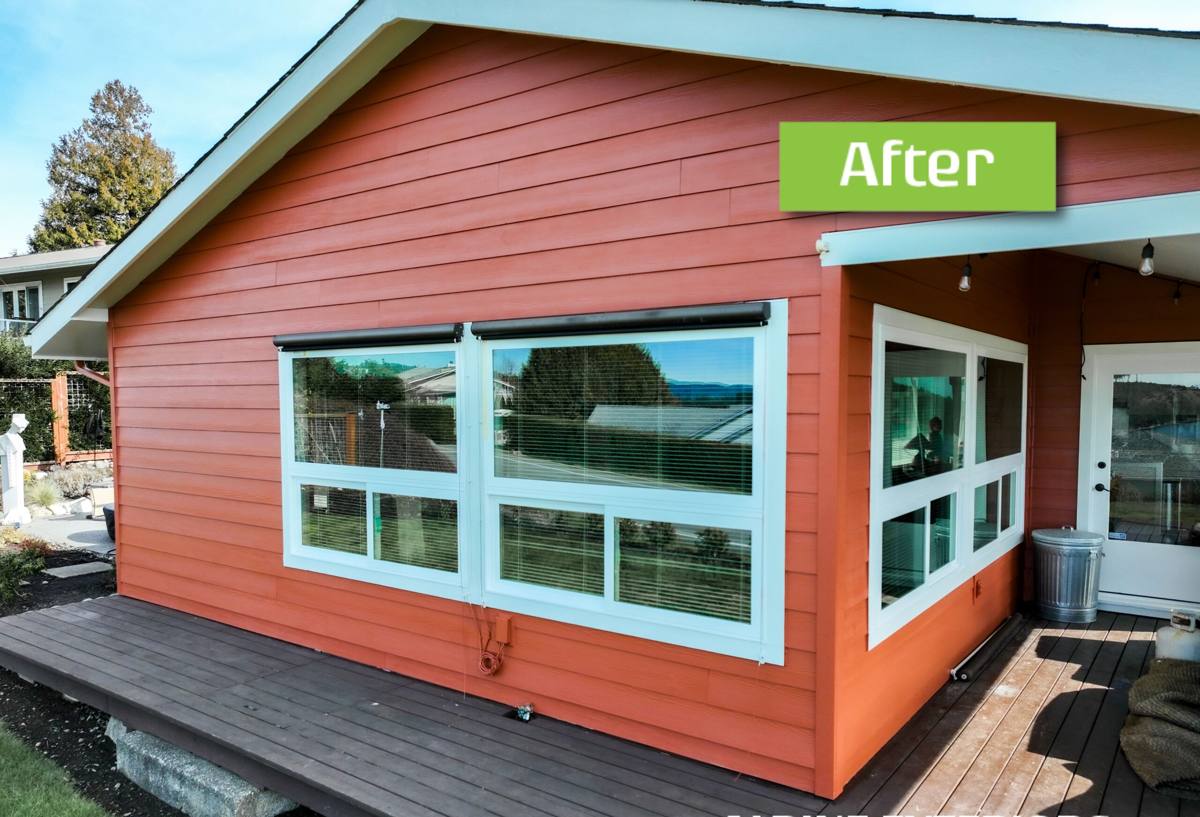
- Factory-finished siding installation: Installing James Hardie ColorPlus siding with the correct gapping, caulking, and fastener placement per manufacturer specification.
Skipping or rushing any one of these steps is how a siding job looks fine for a year or two and then fails early — which, on an older Kenwood home, usually means uncovering a second, worse problem that a rushed crew never should have painted over.
Why We Only Install James Hardie Fiber Cement
We don't offer vinyl, LP SmartSide, primed wood, cedar, or other fiber cement brands as alternatives — not because there's no market for them, but because we don't think they hold up to this climate and this house type well enough for us to put our name on the install. Here's the honest reasoning:
| Material | Where it struggles in this climate |
|---|---|
| Vinyl siding | Softens and can warp under intense sustained UV and heat; more vulnerable to wind uplift in hurricane-force gusts; seams can open over time |
| LP SmartSide (engineered wood) | Wood-based core is more sensitive to sustained moisture exposure than fiber cement; requires diligent caulk and paint maintenance in a wet climate |
| Primed spruce / raw wood | Needs the most ongoing maintenance of any option; UV and humidity cycle the wood, leading to cracking and repainting on a short cycle |
| Cedar | Attractive but high-maintenance; salt air and humidity shorten its practical service life without frequent sealing |
| Other fiber cement brands | Similar core material to Hardie, but factory finish warranty, climate-specific product engineering, and installer network support vary by manufacturer |
James Hardie makes climate-specific HZ5 product lines engineered for hot, humid, high-moisture regions like ours. The fiber cement core is non-combustible and doesn't feed on moisture the way wood-based products can. The ColorPlus factory finish is baked on and warrantied against fading, which matters enormously under St. Petersburg's UV load — it's a real advantage over field-painted siding that will need repainting again within a handful of years. And the transferable warranty backing it is documented and meaningful, not just a sales point.
Preserving Character While Replacing the Skin
A lot of Kenwood homeowners are rightly protective of their home's original look — the trim profiles, the lap reveal, the overall proportions that give these houses their character. Siding replacement doesn't have to mean losing that. James Hardie's lap siding comes in reveal widths and trim profiles that can be matched closely to traditional wood siding proportions, and the ColorPlus palette includes traditional, historically appropriate colors alongside more modern options. The goal on a job like this is a new, weathertight wall assembly that still reads as the same house from the street.
Our Process for a Historic Kenwood Siding Job
- On-site inspection of existing siding, trim, and visible moisture or rot indicators
- Written scope covering removal, any substrate repair anticipated, barrier and flashing details, and the specific Hardie product and profile
- Clear, itemized estimate with no vague "may vary" line items
- Scheduled tear-off and inspection, with any hidden damage discussed with you before we cover it back up
- Installation to manufacturer specification, including fastening and clearances appropriate for our wind exposure
- Final walkthrough before we consider the job done
What to Ask Any Contractor Before Hiring for This Kind of Job
- Will you remove all existing siding, or only patch what's visibly damaged?
- What happens if you find rot or water damage once the old siding is off?
- What house-wrap and flashing details will you use around windows and doors?
- Is the fastening pattern rated for our local wind exposure requirements?
- What warranty backs the material, and what warranty backs your labor?
Why Local Experience in Kenwood Specifically Matters
A crew that's worked in Historic Kenwood before already understands the general age and construction patterns common to these homes, has a feel for what's usually hiding under old siding here, and knows how to work respectfully around a neighborhood where curb appeal and architectural character are part of the property's value. That's a different starting point than a crew treating every job as a blank slate, and it usually means fewer surprises and a smoother process from estimate to final walkthrough.
What This Typically Costs
Every Kenwood home is different — square footage, trim complexity, and how much substrate repair is needed all move the number. In broad terms, expect the estimate to reflect full tear-off labor, any rot remediation found, house-wrap and flashing materials, and the Hardie product line and color you choose. We give you an itemized number in writing before any work starts, not a ballpark that changes once the crew shows up.
If your Kenwood home's siding is past due — peeling, soft, cracked, or just tired-looking after years of Florida sun and storms — we're glad to come take a look. The estimate is free, there's no pressure, and you'll walk away with a clear, honest picture of what your home actually needs.