 St. Petersburg Roofing
 Why Coquina Key Homes Need Siding Built for the Water's Edge
Coquina Key sits surrounded by water on nearly every side, which means homes here take on exterior punishment that inland St. Petersburg neighborhoods simply don't face. Salt-laden air drifts off the surrounding bays and canals every day of the year, settling into any siding material with pores, seams, or a painted-on finish. Add in the intense, near-constant Florida UV load and the wind-driven rain that comes with Tampa Bay's storm season, and you have a climate that actively works to degrade the wrong siding product year after year.
Homeowners in this part of Pinellas County often tell us the same thing: whatever was on the house before started failing faster than it should have. Paint chalked out early, seams opened up, or moisture found its way behind panels that looked fine from the curb. That pattern isn't bad luck — it's what happens when a siding product not engineered for this specific combination of salt, sun, and storm exposure gets installed on a home a few blocks from the water.
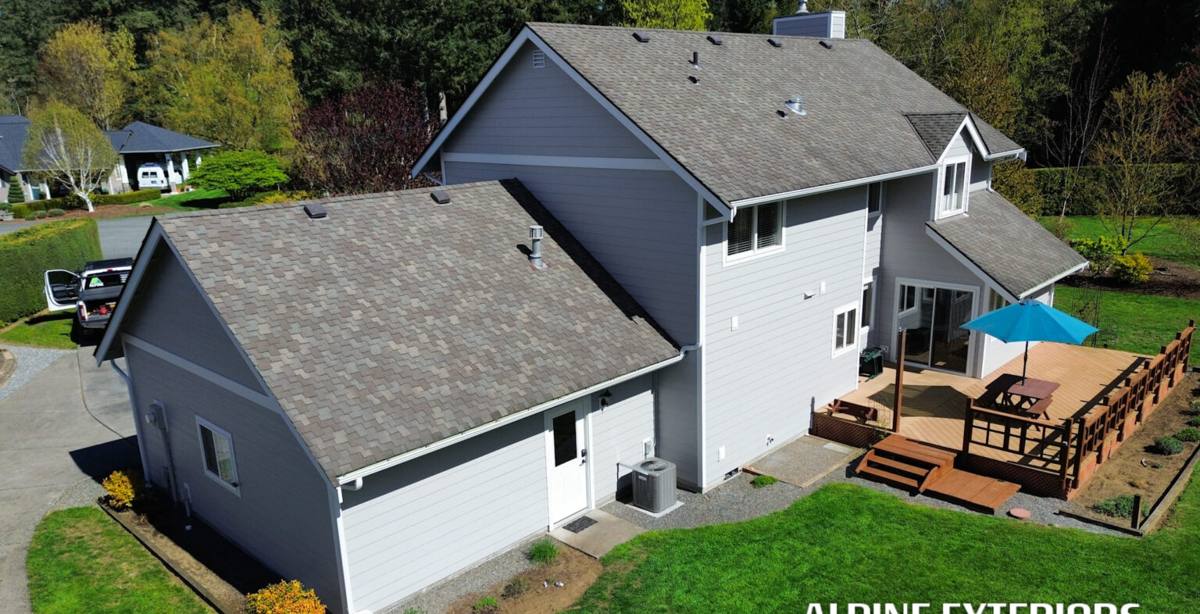
What "Correct" Siding Looks Like on a Coquina Key Home
A properly specified and installed siding job on a waterfront-adjacent property has to do three things at once: resist moisture intrusion, hold its finish under relentless UV, and stay physically intact through high wind events. That's a tall order, and it's exactly why we've standardized on James Hardie fiber cement rather than offering a menu of siding brands and letting cost drive the decision.
Non-Combustible, Dimensionally Stable Core
James Hardie siding is fiber cement — a mix of cement, sand, and cellulose fibers — which means it doesn't expand and contract with humidity swings the way wood-based products do, and it won't feed a fire the way some other siding materials can. In a neighborhood with tightly spaced lots, that non-combustible quality is worth understanding even if you never expect to need it.
ColorPlus Factory Finish
Hardie's ColorPlus finish is baked on in a controlled factory environment, not brushed on at the jobsite. That matters enormously in a high-UV, high-salt environment because the finish is engineered to resist fading and chalking far longer than field-applied paint, and it carries its own finish warranty separate from the substrate warranty. On a home just steps from open water, this is the difference between siding that still looks sharp in ten years and siding that needs repainting in three or four.
HZ5 and Climate-Engineered Product Lines
James Hardie makes region-specific formulations, and homes in our humid, coastal climate zone get the HZ5 product line, engineered specifically for moisture and humidity exposure common to Gulf Coast and coastal Southeast properties. This isn't a marketing distinction — it changes how the board handles moisture cycling over decades of Florida weather.
The Salt Air Problem, Specifically
Salt air is corrosive to more than just metal. On siding, airborne salt accelerates the breakdown of certain paint chemistries, contributes to premature caulking failure, and can accelerate deterioration in materials that absorb moisture readily. Coquina Key's proximity to Tampa Bay waters means homes here get a steady, low-grade dose of this exposure every single day, not just during storms. Fiber cement's density and factory-cured finish resist this kind of slow chemical wear far better than materials that rely on a surface-level paint job for protection.
We also pay close attention to metal flashing, fasteners, and trim details on every Coquina Key job for this same reason — using corrosion-resistant fasteners and properly lapped flashing so the whole assembly, not just the siding panel itself, is built for a salt-air environment.
Wind and Wind-Driven Rain: The Installation Details That Actually Matter
Fiber cement siding's wind performance is only as good as its installation. A board rated for high wind exposure that's face-nailed incorrectly, spaced with the wrong gap, or lacking proper flashing behind seams and penetrations will fail at those installation points long before the material itself gives out. This is where a huge share of siding problems in wind- and rain-exposed neighborhoods actually originate — not from the product, but from shortcuts taken during the install.
What a Correct Hardie Installation Includes
- A code-compliant water-resistive barrier installed and lapped correctly behind every panel
- Proper flashing at all windows, doors, and penetrations to direct wind-driven rain away from the sheathing
- Fastener placement, spacing, and embedment that matches James Hardie's published installation instructions for our wind zone
- Correct joint treatment at butt seams, inside corners, and outside corners to prevent water intrusion
- Proper clearance between the bottom edge of the siding and grade, decks, or roof lines to avoid wicking moisture
- Caulking and sealant used only where Hardie's specifications call for it — not as a substitute for proper flashing
Skipping any one of these steps doesn't just risk a warranty claim — it risks the underlying wall assembly, which is the expensive kind of repair a homeowner really doesn't want to discover after the fact.
Why We Only Install James Hardie
We get asked fairly often why we don't offer vinyl, LP SmartSide, or other fiber cement alternatives alongside Hardie. The honest answer is that we looked at the trade-offs and decided we didn't want to put our name on products that ask homeowners to accept more maintenance, more moisture risk, or a weaker warranty structure in a climate that doesn't forgive those compromises.
| Consideration | Typical Vinyl Siding | Engineered Wood (e.g., LP SmartSide) | James Hardie Fiber Cement |
|---|---|---|---|
| Salt air / coastal durability | Can become brittle and discolored over time in high-UV, salt-exposed settings | Wood-based substrate is more vulnerable to prolonged moisture exposure | Dense fiber cement resists salt-driven finish and material breakdown |
| Wind performance | Lighter material, more prone to cracking or blow-off in high wind if not correctly installed | Performs well when properly sealed, but installation sensitivity is higher | Heavier, rigid panels rated for high wind zones when installed to spec |
| Finish longevity | Color is molded in, but can fade and chalk under intense UV | Typically field- or factory-painted with standard repaint intervals | ColorPlus factory finish engineered for extended fade resistance |
| Fire characteristics | Combustible plastic material | Wood-based, combustible | Non-combustible cement-based composition |
| Warranty structure | Varies by manufacturer, often material-only | Material warranty, moisture-related exclusions common | Transferable warranty covering substrate, with separate ColorPlus finish coverage |
To be fair to those other products: vinyl is inexpensive and low-maintenance in mild climates, and engineered wood siding installs quickly and holds paint well when properly sealed and maintained. Those aren't bad products in every setting. They're just not what we're willing to install on a home in a coastal Pinellas County neighborhood where salt air, sun, and wind compound each other year-round. James Hardie's fiber cement composition, factory finish, and climate-specific HZ5 formulation are built for exactly this kind of exposure, and that's why it's the only siding brand we put on homes.
Our Process for Coquina Key Siding Projects
1. On-Site Assessment
We walk the exterior with you, looking at current siding condition, any signs of moisture intrusion at trim and penetrations, and the specific wind and sun exposure of your particular lot orientation relative to the water.
2. Product and Profile Selection
James Hardie offers multiple siding profiles — lap siding, shingle-style panels, board and batten — plus a range of ColorPlus finishes. We help you match a profile and color to your home's architecture while keeping HZ5 climate specification non-negotiable for this area.
3. Tear-Off and Substrate Check
Old siding comes off, and we inspect the sheathing underneath for any hidden moisture damage before anything new goes up. This step gets skipped by crews trying to move fast, and it's the single most important step for a home near open water.
4. Installation to Manufacturer Spec
Water-resistive barrier, flashing, fastener schedule, and joint treatment are all installed to James Hardie's published requirements for our wind and moisture zone — not shortcuts, not "close enough."
5. Final Walkthrough
We review the completed job with you, covering warranty registration and any basic care recommendations specific to a coastal property.
Why Local Experience with Coquina Key Specifically Matters
A crew that mainly works inland St. Petersburg or Tampa neighborhoods doesn't necessarily think about salt exposure, canal-adjacent moisture patterns, or the wind exposure differences between a home on open water and one a mile inland. Working regularly in Coquina Key and similar waterfront Pinellas County neighborhoods means we're not guessing at flashing details or fastener choices — we're applying what consistently holds up in this specific exposure, house after house.
That local pattern recognition also shows up in scheduling and material choices around Tampa Bay's storm season, since a siding project started or left mid-installation right before a wind event is a real risk we plan around rather than react to.
What to Ask Before Hiring Anyone for Siding Work Here
- Are you installing James Hardie's HZ5 climate-specific product, or a general-purpose version not matched to this humidity zone?
- Will the crew follow Hardie's published fastener spacing and flashing details, or their own shortcuts?
- Is the water-resistive barrier and flashing inspected before old siding comes off, or just assumed to be fine?
- What does the warranty actually cover — material only, or material plus the ColorPlus finish?
- Has this crew worked on homes with similar salt and wind exposure before, or mostly inland properties?
If your Coquina Key home's siding is showing its age — chalking paint, open seams, or soft spots near trim — we're happy to take a look and give you a straightforward, no-pressure assessment and estimate. Use the form below to get started.