 St. Petersburg Roofing
 Kenneth City Sits in One of the Toughest Climates for Exterior Siding
Kenneth City is a small, established community tucked inside Pinellas County, surrounded by St. Petersburg and Pinellas Park. It doesn't sit directly on the water, but it doesn't need to — Pinellas County as a whole gets the full package of Gulf Coast weather stress: hurricane-force wind gusts, wind-driven rain that gets forced sideways into wall assemblies, some of the most intense year-round UV exposure in the continental U.S., and salt-laden air that drifts inland on sea breezes and settles on every exterior surface, siding included. Homes here don't get a break between seasons the way northern homes do. There's no winter lull — the sun, humidity, and storm risk are essentially constant, which means siding is under load every single day it's on the house.
That's the backdrop for every siding decision in this neighborhood. A product that performs fine in a dry, moderate climate can fail early here, and a product that's engineered for humid, coastal-adjacent conditions will outlast one that isn't — often by a decade or more. This page is specifically about James Hardie fiber cement siding installed on Kenneth City homes, what the climate demands from it, what a correct installation looks like, and how we run the job from first estimate to final walk-through.
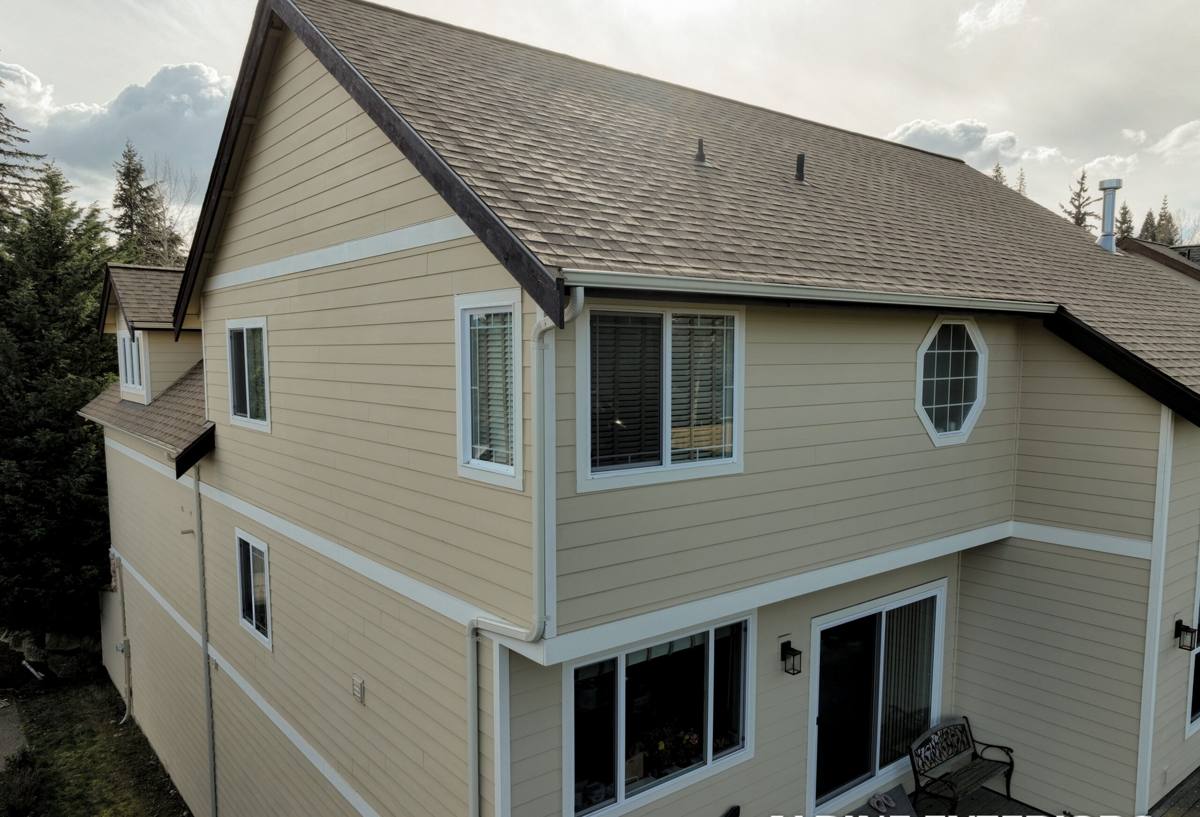
What Pinellas County Weather Actually Does to Siding
UV and Heat
Florida sun breaks down pigments and resins faster than almost anywhere else in the country. Siding that isn't factory-finished for UV resistance will chalk, fade unevenly, and need repainting well before a homeowner expects to spend money on it again.
Wind-Driven Rain
Pinellas County storms don't just drop rain straight down — gusts push it sideways and upward under laps, around trim, and into any gap in the weather barrier. Siding systems that rely on caulk alone to keep water out, rather than proper flashing and drainage detailing, tend to let moisture in over time.
Salt Air
Even inland from the immediate coastline, salt aerosol travels on prevailing winds and settles on painted and unpainted surfaces alike. It accelerates corrosion of exposed fasteners and metal trim and can degrade some coatings faster than inland climates would.
Wind Load
Tropical storm and hurricane wind events put real lateral and uplift stress on siding panels and their fastening. A product and installation method rated for high wind zones matters here in a way it simply doesn't in most of the country.
Why We Standardized on James Hardie for Homes Like These
We install James Hardie fiber cement siding exclusively — we don't install vinyl, LP SmartSide, or other fiber cement brands. That's a deliberate standard, not a sales preference. Fiber cement, and James Hardie's specifically, is non-combustible, dimensionally stable in heat and humidity swings, and available in a product line engineered for exactly the climate zone Pinellas County sits in.
HZ5 Engineering
James Hardie makes climate-specific formulations sold under its HZ (HardieZone) system. Homes in Florida's humid, high-UV, coastal-influenced zone call for the HZ5 formulation, which is engineered to resist moisture-related damage and hold up under sustained heat and humidity better than a one-size-fits-all siding product. This is one of the clearest reasons a national vinyl or generic fiber cement product isn't the right call for this area — Hardie builds the composition of the board around the climate it's going into.
ColorPlus Factory Finish
James Hardie's ColorPlus finish is baked on at the factory under controlled conditions, with a UV-cured topcoat that resists fading far better than field-applied paint. For a Kenneth City home taking direct Florida sun most of the year, that finish life difference is one of the most practical reasons to choose it.
Non-Combustible
Fiber cement doesn't feed a fire the way wood-based or vinyl products can. That's a genuine safety advantage, independent of climate, that we think is worth having on any home we work on.
What a Correct James Hardie Installation Actually Involves
The material only performs to spec if it's installed to spec. Fiber cement siding is unforgiving of shortcuts in a way that shows up later as moisture damage, cracking, or premature finish failure — problems that are expensive to trace back to an installation error years after the fact.
- Correct fastener type, spacing, and penetration depth — under- or over-driven nails compromise the water-resistive barrier and can crack the board
- Proper clearance between siding and grade, roofing, decks, and patios so the board never sits in standing water or constant splash-back
- Weather-resistive barrier and flashing installed and lapped correctly at every window, door, and penetration before a single piece of siding goes up
- Manufacturer-specified gaps at butt joints and trim, sealed with a compatible, flexible sealant rated for movement — not just caulked shut
- Panels and trim primed and painted (or factory-finished) on all cut edges before installation, especially field cuts
- Fastening pattern and lap sequence matched to the local wind zone requirements, not just a generic pattern
Skipping any one of these doesn't usually cause an obvious problem on day one. It shows up two, five, or ten years later as trapped moisture, rot in the sheathing behind the siding, or finish failure at the seams — which is exactly why installation quality matters as much as the product choice itself.
What We See on Older Siding Around This Area
On re-siding jobs in and around Kenneth City and the surrounding St. Petersburg area, the recurring issues we run into aren't usually dramatic — they're small gaps that let years of Florida weather do slow damage:
- Caulk-dependent seams that dried out, cracked, and let wind-driven rain behind the siding
- Fasteners that corroded from long-term salt air exposure, leaving loose or stained panels
- Siding installed too close to grade or roofing, wicking moisture and rotting from the bottom edge up
- Field-cut edges that were never primed, so they absorbed moisture and swelled or delaminated first
- Faded, chalky finishes from UV exposure on products never rated for this much sun
None of this reflects poorly on fiber cement as a category — it reflects what happens when installation details are skipped or when a product not engineered for this climate is asked to perform in it anyway. It's a big part of why we're specific about both the product and the installation standard.
How Our Process Works
1. Free On-Site Estimate
We walk the exterior, check the current siding and substrate condition, take measurements, and talk through the HZ5 James Hardie profile and color options that suit the home.
2. Written Scope and Timeline
You get a clear, itemized scope — tear-off (if applicable), house wrap or weather barrier, flashing detail, siding profile, trim, and finish — along with a realistic timeline that accounts for Florida's weather patterns.
3. Prep and Weather Barrier
Old siding comes off, the sheathing gets inspected for hidden damage, and a new weather-resistive barrier goes on with flashing detailed at every window, door, and penetration before any siding is installed.
4. Installation to Manufacturer Spec
Panels go up following James Hardie's fastening, clearance, and joint-sealing specifications for this wind zone — not a generic install pattern.
5. Final Walk-Through
We go around the house with you, check trim and seams, and make sure everything meets the standard before we call the job finished.
James Hardie Compared to Other Siding Options
| Factor | James Hardie Fiber Cement | Vinyl | LP SmartSide / Other Fiber Cement |
|---|---|---|---|
| Fire resistance | Non-combustible | Combustible, can melt/warp | Varies; wood-based products combustible |
| UV/fade resistance | Factory ColorPlus finish, UV-cured | Field color, can fade/chalk | Varies by brand and finish |
| Moisture behavior | Engineered HZ5 formulation for humid climates | Doesn't absorb, but can trap moisture behind panel | Wood-based products more moisture-sensitive |
| Wind performance | Rated and tested for high wind zones when installed to spec | Can crack or blow off in high gusts | Varies by product |
| Typical lifespan with correct install | Multiple decades | 15–25 years | Varies, generally shorter than fiber cement |
What Drives the Cost of a Kenneth City Siding Job
| Cost Factor | Why It Matters |
|---|---|
| Home size and wall complexity | More corners, gables, and cutouts mean more material and labor time |
| Tear-off vs. install over existing substrate | Removing old siding and inspecting sheathing adds time but avoids covering hidden damage |
| Siding profile and trim selection | Lap width, shingle-style panels, and trim detail all affect material cost |
| Color and finish | Factory ColorPlus finishes cost more upfront than primed boards but save on repainting |
| Substrate repair | Any rotted sheathing found during tear-off needs to be replaced before new siding goes on |
We give exact numbers only after seeing the home in person — broad ranges without an on-site look aren't useful to a homeowner trying to plan a real budget.
Why It Matters That We Already Work in This Area
A crew that regularly works Kenneth City and the surrounding St. Petersburg area already understands the local permitting process, the wind zone requirements that apply here, and the specific ways Pinellas County weather stresses a home's exterior. That familiarity shows up in the details — fastening patterns matched to actual wind exposure, flashing decisions based on how rain actually moves across this type of home, and a finish selection that accounts for how much direct sun this house is going to take for the next twenty years. It's the difference between a generic install and one built for the address it's going on.
If you're planning a siding replacement or new siding install in Kenneth City, we're happy to come take a look and walk you through what James Hardie's HZ5 line would mean for your specific home — no pressure, no obligation. Reach out using the form below to schedule a free estimate.