 St. Petersburg Roofing
 Why Kenneth City Roofs Take a Different Kind of Beating
Kenneth City is a small, tightly packed community tucked inside the greater St. Petersburg area of Pinellas County, and its roofs sit under the same weather stack that hits the rest of the Tampa Bay region: hurricane-force wind events, wind-driven rain that doesn't fall straight down, near-constant UV exposure, and salt-laden air drifting in off the Gulf and Tampa Bay. None of those forces work alone. A roof that's spent years absorbing UV has less flexibility left in its sealants and shingle mat by the time a storm actually arrives, which means the same wind gust that a newer roof shrugs off can be the one that lifts a shingle edge or works flashing loose on an older one.
This page is about one specific service for one specific place: storm damage roof repair for homes in Kenneth City. Not a general storm-repair overview, not a re-roofing pitch — what actually happens to roofs here, what a repair has to get right to hold up through the next system, and how a crew that already works this neighborhood handles the job from first call to final sign-off.
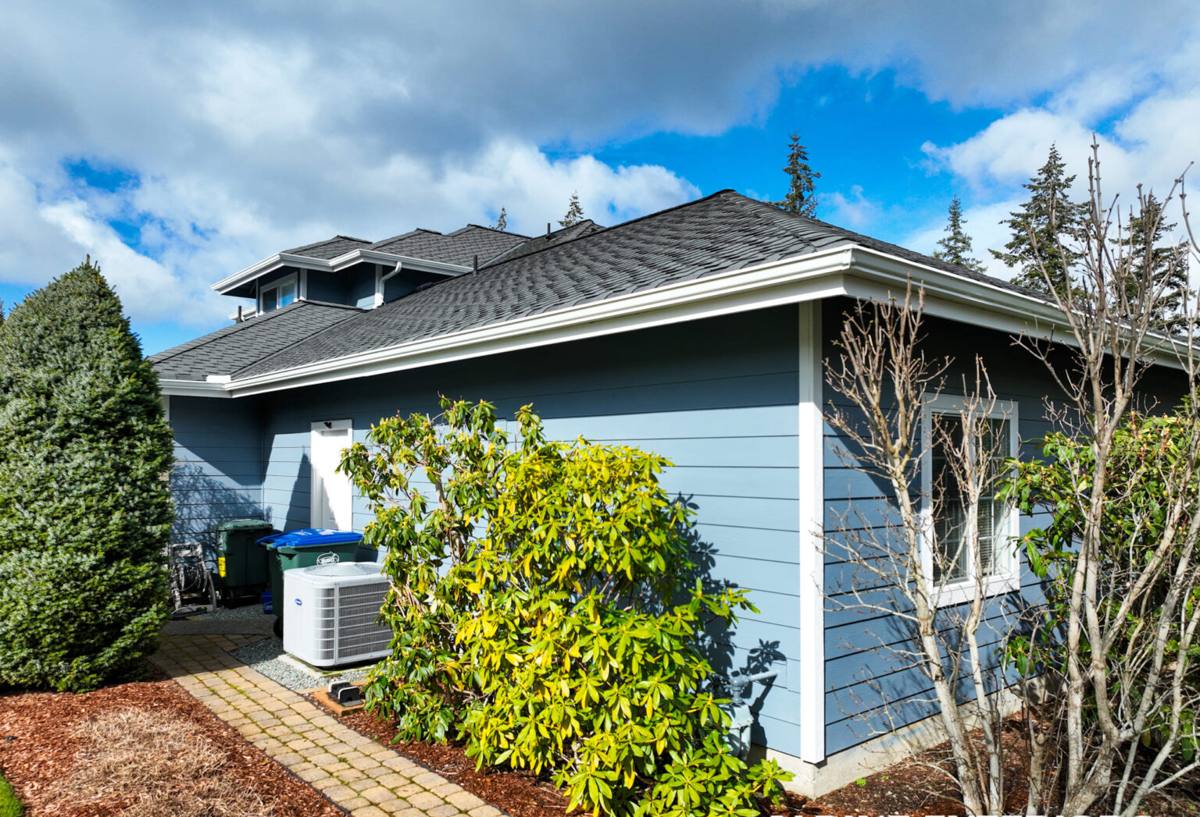
The Local Climate Factors That Drive Storm Damage
Hurricane-Force Wind and Uplift
Wind is the dominant force behind storm damage to roofs in this part of Florida, and it doesn't act evenly across a roof surface. Uplift pressure concentrates hardest at edges, corners, ridgelines, and rake ends — which is exactly where storm damage tends to start, even on roofs that look completely fine everywhere else. A gust doesn't need to tear a shingle off to cause a problem; breaking the seal strip underneath is often enough to leave that shingle vulnerable to the next storm, or to the very next stiff breeze off the bay.
Wind-Driven Rain at Roof Transitions
Straight-down rain and wind-driven rain behave completely differently on a roof. Vertical rain runs off the surface the way shingles and metal roofing are designed to shed it. Wind-driven rain gets pushed sideways and upward, into valleys, under flashing laps, and around penetrations like vent stacks and chimney bases — places engineered to shed water moving in one direction, not water being forced in from the side. That's why the transition points on a roof, not the open field, are usually where a storm-damage leak actually originates.
Year-Round UV Load
Pinellas County roofs don't get a real off-season from direct sun. That constant UV exposure dries out asphalt shingle mats and sealants faster than roofs see in milder climates, so a roof's actual storm resilience often has less to do with its age in years and more to do with how much sun-driven wear it's absorbed. A ten-year-old roof that's had heavy, unshaded sun exposure can be more storm-vulnerable than a similarly aged roof with more tree cover.
Salt Air and Fastener Corrosion
Kenneth City doesn't sit directly on the waterfront, but it's close enough to Tampa Bay and the Gulf that salt-carrying air reaches it on a regular basis, particularly on onshore wind behind a passing storm system. That salt exposure accelerates corrosion on exposed nail heads, drip edge, and flashing over time, which is part of why storm repairs here need corrosion-resistant fasteners and flashing rather than standard hardware pulled off a generic supply shelf.
Afternoon Thunderstorm Frequency
Beyond named storms and hurricane season, this stretch of Florida sees frequent, sometimes intense afternoon thunderstorm activity for much of the year. Individually, these storms are shorter and smaller than a hurricane or tropical system, but repeated wind and rain cycles add up — they're a steady source of low-grade stress that can slowly work at an already-weak point until it finally fails during a bigger event.
Recognizing Storm Damage Before It Becomes a Bigger Problem
A meaningful share of storm damage isn't visible from the ground, and waiting for an obvious sign — a stain on the ceiling, a missing shingle in the yard — often means the damage has already been sitting and spreading for a while. Worth checking for after any significant wind or rain event:
- Shingles that are missing, cracked, curled, or lifted at an edge
- Granule buildup in gutters or pooling at downspout outlets
- Flashing around chimneys, vents, or wall transitions that looks bent, lifted, or displaced
- Dented or cracked vent caps, pipe boots, or other roof penetrations
- Tree limbs, branches, or wind-blown debris resting on the roof surface
- New or spreading water stains on ceilings or interior walls
- Daylight visible through the roof deck from inside the attic
- Soft or spongy spots felt when walking the roof, suggesting decking damage underneath
Any single item on that list is worth a look. Several of them together, especially right after a named storm or a stretch of severe thunderstorms, mean the roof needs a hands-on inspection rather than a scan from the driveway.
The Difference Between a Fast Patch and a Repair That Holds
Not all "storm damage repairs" accomplish the same thing, and the gap between them usually isn't visible until the next storm exposes it.
| Repair Approach | What Gets Fixed | What Often Gets Missed | How It Tends to Hold Up |
|---|---|---|---|
| Emergency tarp only | Stops active water intrusion short-term | The actual failure point underneath | Buys time; not a permanent fix by itself |
| Visible shingle swap | Replaces shingles that are obviously missing or damaged | Underlayment and flashing condition below the surface | Can look finished while the real leak path stays open |
| Full transition-point repair | Underlayment, flashing, fastening, and surface material together | Little to nothing, when the inspection was thorough | Built to hold through the next wind and rain event |
The middle row is the most common shortcut and the easiest one to get fooled by — a freshly shingled patch can look like a complete repair and still leak at the exact same spot within a year or two, because the layer that actually let water in was never opened up and addressed.
What a Correct Storm Repair Actually Requires
Getting a storm repair right starts with tracing the water back to its real entry point, not just to where it showed up inside the house. Water frequently travels along decking or framing for a distance before it finally drips through drywall, so the stain on a ceiling and the actual failure in the roof aren't always in the same spot. A repair that skips this tracing step and just patches the area nearest the interior damage often misses the real problem entirely.
Once the failure point is identified, the rebuild has to happen in the right order — underlayment first, then flashing, then fastening, then the visible roofing material last. Jumping straight to the top layer without addressing what's underneath is exactly how a roof ends up "repaired" two or three times for what turns out to be the same original leak.
Material matching matters more than most homeowners expect. A patch that's close in color but different in profile, granule type, or manufacturing age doesn't just look mismatched — it can expand, contract, and age at a different rate than the surrounding roof, which creates a fresh weak point right at the seam between old and new material.
How Our Kenneth City Storm Repair Process Works
- Initial call to understand what happened, how bad it looks, and whether there's active water intrusion needing same-day attention
- Full on-site inspection covering the entire roof, not just the section visible from ground level
- Direct, hands-on check of valleys, flashing, and penetrations, since these areas often don't show damage from a distance
- Photo documentation of everything found, useful for our own scope and for any insurance claim
- Written repair scope and pricing provided before work starts — no verbal-only estimates
- Temporary weatherproofing the same day if there's active intrusion and the full repair can't begin immediately
- Repair of the actual damage, rebuilt in the correct order — underlayment, flashing, fastening, then surface material
- Material matched to the existing roof as closely as reasonably available
- Final walk-through with the homeowner before we call the job finished
The temporary weatherproofing step isn't just a formality. It's what keeps a contained problem from turning into a structural one while the full repair gets scheduled, which matters especially during active storm season when another system can move through before the permanent fix is complete.
Working With Insurance on a Storm Claim
Most storm damage repair work in Kenneth City ends up going through a homeowner's insurance policy, and how smoothly that claim moves usually comes down to documentation quality. We photograph the damage before any repair work begins, note the probable cause, and provide a written scope an adjuster can review alongside their own inspection. We aren't a public adjuster and don't negotiate the claim on your behalf, but a clear, on-roof repair estimate from a contractor who actually inspected the damage carries real weight in how a claim gets evaluated. If your insurer requires an adjuster visit before repairs can start, we can typically still perform emergency weatherproofing in the meantime, since that's usually treated separately from the permanent repair itself.
When Repair Isn't the Honest Answer
Storm damage repair is the right call when the damage is isolated to specific, identifiable areas on a roof that's otherwise sound. It stops being the right call when a storm has simply exposed problems that were already building — a roof near the end of its expected service life, multiple layers of prior patchwork, or granule loss spread across the entire surface rather than concentrated at one damaged spot. When that's what we find, we say so directly instead of repairing piecemeal around a roof that's fundamentally due for replacement. A storm often just reveals what was already true about a roof's condition, and an honest assessment at that point saves a homeowner from paying repeatedly for repairs on a roof that needed replacing regardless.
What Actually Drives the Cost of a Storm Repair
| Cost Factor | Why It Moves the Price |
|---|---|
| Extent of damage | One damaged valley or flashing point costs far less than damage spread across several areas of the roof |
| Decking condition found underneath | Rotted or water-damaged decking discovered during the repair adds material and labor beyond the original estimate |
| Roof pitch and access | Steep or hard-to-access roofs take longer and need more safety equipment to work correctly |
| Material availability | Matching an older or discontinued shingle line can take more sourcing time than a current, common product |
| Emergency vs. scheduled work | Same-day emergency weatherproofing is priced differently than a scheduled permanent repair |
We price off what we actually find during inspection rather than quoting a flat number sight unseen — storm damage varies too much roof to roof for a generic figure to mean anything reliable.
Why a Crew Already Working in Kenneth City Makes a Real Difference
In the days following a significant storm across the Tampa Bay region, demand for roof repair spikes across every town at once, and so does the number of unfamiliar contractors going door to door with fast-sounding offers. A crew that already has an established presence in Kenneth City and the surrounding St. Petersburg area isn't scrambling to find suppliers, source matching material, or figure out local permitting requirements for the first time under storm pressure — that groundwork is already handled, which means the repair gets done right instead of rushed because an out-of-town crew needs to move on to the next job in the next county.
Local presence also means accountability that outlasts the job. A contractor planning to keep working in this community has every reason to get a repair right the first time and stand behind it if a problem resurfaces, rather than being unreachable once the check clears. That's a fair, direct question to ask any contractor you're considering after a storm: how long have they actually worked in this specific area, and will they still answer the phone next year if the repair needs a follow-up look.
Getting Started
If your roof took damage in a recent storm, or you'd simply like an honest, no-obligation look to know where things actually stand, we're glad to come take a look. There's no cost and no pressure attached to the inspection — use the form below to schedule a free estimate.