 St. Petersburg Roofing
 Metal Roofing in Euclid-St. Paul: What the Neighborhood Actually Needs
Euclid-St. Paul sits inside St. Petersburg proper, which means the homes here carry the same exposure as the rest of Pinellas County: tropical storm and hurricane-force wind gusts several times a decade, intense year-round UV that doesn't let up in winter the way it does farther north, wind-driven rain that finds every weak seam, and salt-laden air moving in off Tampa Bay and the Gulf. Add in a mix of older bungalows, mid-century block homes, and newer infill construction, and you get a neighborhood where roofs are doing more work than most homeowners realize. A metal roof installed correctly for this specific mix of conditions can outlast two or three asphalt roofs. One installed without attention to local wind uplift requirements, fastener spacing, or coastal-grade coatings will show problems years before it should.
This page is about doing the job right for this area specifically — not a generic overview of metal roofing.
Why This Climate Is Harder on a Roof Than It Looks
Wind uplift, not just wind speed
The number that matters isn't just top wind speed during a storm — it's uplift pressure at the roof edges and corners, where wind separates from the roof plane and pulls upward. This is where under-fastened or improperly clipped panels fail first. St. Petersburg's building code reflects this with specific wind load requirements tied to the county's wind zone, and a metal roof here needs to be engineered and fastened to meet it, not just installed the way it might be in a calmer inland climate.
UV and heat cycling
Florida sun ages roofing materials faster than almost anywhere else in the country. On a metal roof, the concern isn't the metal itself breaking down — it's the paint finish chalking and fading, and the sealants and fasteners cycling through expansion and contraction thousands of times a year as the panel heats and cools.
Wind-driven rain
Florida storms rarely deliver rain straight down. Wind pushes it sideways and even upward under eaves and around penetrations. A metal roof depends on correct lap direction, sealed seams, and properly flashed penetrations (vents, pipe boots, chimneys) to keep that rain out — gravity alone isn't enough here the way it might be in a drier climate.
Salt air and corrosion
Being close to the bay means airborne salt settles on roofing metal, fasteners, and flashing year-round. Fasteners, panel coatings, and even the type of metal itself need to be chosen with corrosion resistance in mind, not just cost.
What a Correct Metal Roof Installation Actually Involves
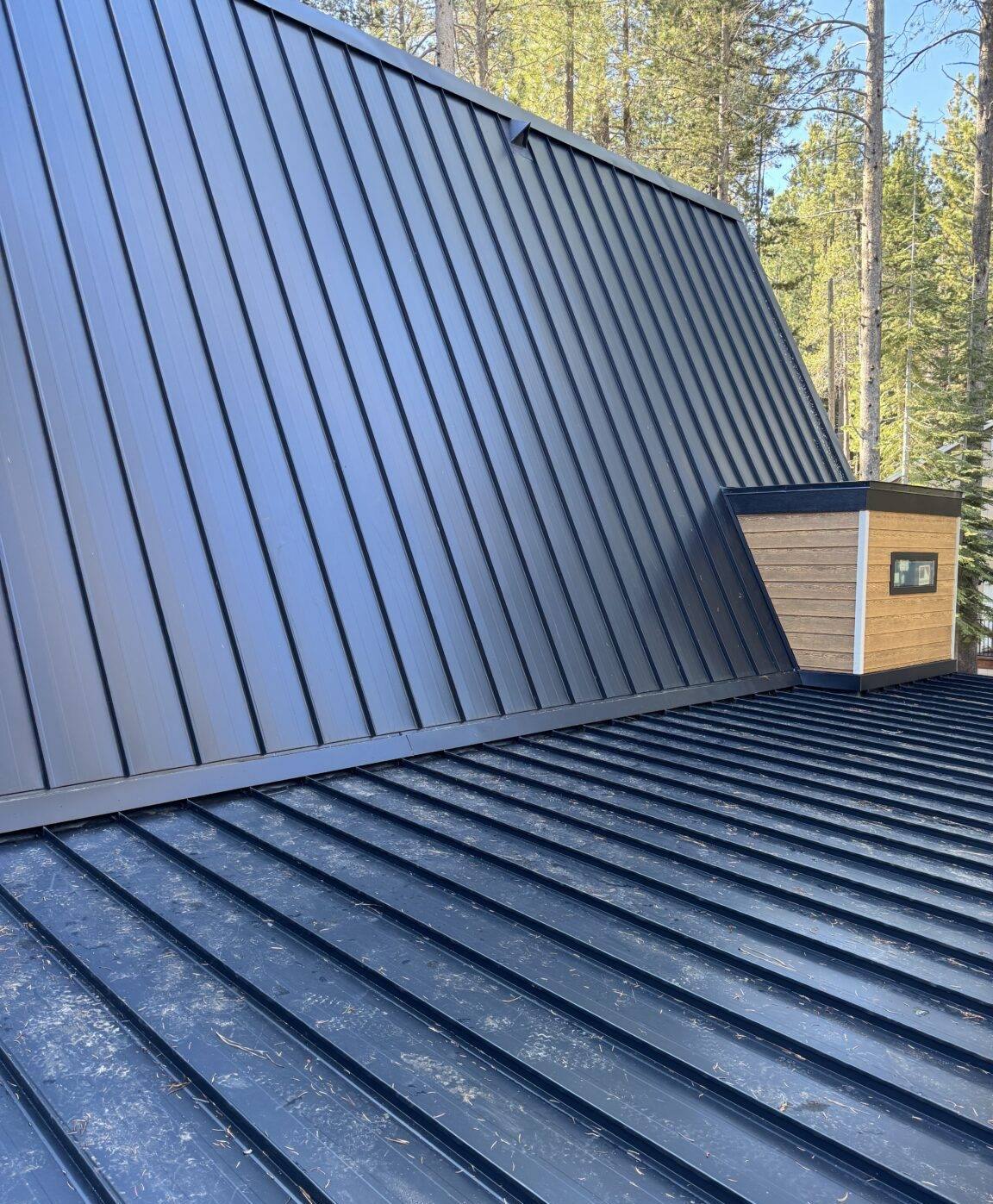
A metal roof is only as good as what's underneath and around it. The panels get the attention because they're visible, but the details that actually determine whether the roof survives its first major storm are mostly hidden once the job is done:
- Deck inspection and repair before any panel goes down — soft, rotted, or delaminated decking gets replaced, not covered up
- A code-compliant underlayment system, chosen for metal (not a generic felt) to handle heat and moisture correctly
- Fastener type, spacing, and torque matched to the panel profile and the local wind zone — this is where a lot of cut-rate installs fall short
- Proper flashing at every valley, wall transition, and roof-to-wall intersection, since these are the points where wind-driven rain gets in
- Correct treatment around every penetration — plumbing vents, exhaust fans, chimneys, skylights
- Panel overlap and seam direction that account for prevailing wind and drainage patterns specific to the roof's orientation
- Edge metal and drip edge detailing sized for uplift resistance at eaves, rakes, and ridges — the zones that fail first in high wind
Skipping or rushing any one of these doesn't necessarily show up on day one. It shows up during the first serious storm, or slowly over a few years as a leak that seems to come from nowhere.
Choosing the Right Panel and Finish
Not every metal roofing product is a good fit for a coastal Pinellas County home. The table below covers the common options and how they hold up under Euclid-St. Paul's specific conditions.
| Panel Type | Wind Performance | Salt/Corrosion Resistance | Best Fit |
|---|---|---|---|
| Standing seam (concealed fastener) | Excellent when clipped and spaced correctly | Very good, especially with aluminum or coated steel | Homes wanting maximum wind and leak resistance, longer-term ownership |
| Exposed-fastener panel | Good, but fastener seals are the weak point over time | Moderate — fasteners need periodic inspection | Budget-conscious projects, secondary structures, shorter planning horizon |
| Aluminum panels | Good | Excellent — does not rust | Homes closest to the water or with heavy salt exposure |
| Galvalume/coated steel | Excellent, strong and rigid | Good with intact coating; vulnerable once scratched through | Most inland St. Petersburg homes with standard coastal exposure |
Finish matters as much as the base metal. A quality baked-on finish resists UV fading and chalking far longer than a basic painted coating — this is where the roof's appearance five and ten years out gets decided, not just its performance.
How Our Process Works
1. On-site assessment
We look at the existing deck, current roof condition, roof geometry, and specific exposure factors for the property — orientation, tree cover, proximity to the bay, and any prior storm damage.
2. Straightforward proposal
We walk through panel options, fastening approach, and what the job will actually involve, including any deck repair that's likely needed. No pressure, no inflated urgency — just what the roof needs.
3. Permitting
Metal roof replacements in St. Petersburg require a building permit and inspection. We handle that process as part of the job rather than leaving it to the homeowner.
4. Tear-off and deck prep
Old roofing comes off, the deck gets inspected board by board, and anything compromised gets replaced before underlayment goes down.
5. Installation
Panels, flashing, and fastening go in to the specifications the roof actually needs for this wind zone — not a generic minimum.
6. Final inspection and cleanup
We walk the finished roof, confirm everything meets code, coordinate the final inspection, and clear the site of debris and stray fasteners (magnetic sweep included).
What Drives the Cost of a Metal Roof Here
Every roof is different, but the same handful of factors tend to move the price up or down on Euclid-St. Paul homes specifically:
| Factor | Why It Matters Locally |
|---|---|
| Roof complexity (valleys, dormers, angles) | More cuts and flashing points mean more labor and more potential leak points to detail correctly |
| Existing deck condition | Older homes in this area sometimes need partial deck replacement discovered only after tear-off |
| Panel and coating choice | Aluminum and premium finishes cost more upfront but handle salt air and UV longer |
| Fastening system | Standing seam with concealed clips costs more than exposed-fastener but performs better in wind |
| Access and layout | Steep pitches or tight lot access can add labor time |
As a general guide, metal roofing typically runs higher than asphalt shingles per square foot upfront, with the difference offset over time by a much longer service life and lower storm-related repair frequency. Exact numbers depend on the specifics of your roof, which is why we quote after a real on-site look rather than a phone estimate.
Maintaining a Metal Roof in This Climate
Metal roofs are low-maintenance, not no-maintenance. A short annual routine catches problems while they're still cheap to fix:
- Visually check for loose, lifted, or corroding fasteners, especially on exposed-fastener panels
- Clear debris and leaves from valleys and around penetrations so water doesn't pool
- Look at sealant around vents, pipes, and flashing for cracking or shrinkage
- Rinse off accumulated salt film periodically, particularly on homes closer to the bay
- Inspect after any major storm for lifted panels, dented flashing, or debris impact
- Keep gutters clear so water leaving the roof doesn't back up under the drip edge
Why It Matters That We Already Work This Area
A crew that regularly works St. Petersburg and Pinellas County roofs already knows the local permitting process, the wind zone requirements that apply to this specific part of the county, and how homes in this neighborhood's age range and construction style typically need to be detailed. That familiarity shows up in fewer surprises during tear-off, faster permit turnaround, and a finished roof that's built for the wind and salt exposure this property actually faces — not a one-size-fits-all install. It also means we're not disappearing after the invoice clears; we're a local outfit that expects to be reachable if a question comes up after the next storm season.
If you're weighing a metal roof for a home in Euclid-St. Paul, we're glad to take a look and give you a straightforward, no-pressure estimate — use the form below to get started.