 St. Petersburg Roofing
 Why Old Northeast's Climate Is Hard on Siding
Old Northeast sits close to Tampa Bay, in one of the most weather-exposed parts of Pinellas County. That proximity to open water is part of what makes the neighborhood desirable, and it's also exactly what breaks down ordinary siding faster than it would inland. Four things are working against your exterior walls here, all at once, all year:
- Salt air — carried in off the bay, it settles on every exterior surface and accelerates corrosion of fasteners, trim, and any material that isn't rated for coastal exposure.
- Intense, near-constant UV — St. Petersburg's sun load is high nearly every month of the year, not just in summer, and UV is what fades paint and breaks down the surface of lesser materials.
- Wind-driven rain — Florida rain rarely falls straight down. In a storm, it's pushed sideways into every seam, joint, and butt edge on a wall.
- Hurricane-force wind events — even a near-miss storm subjects siding to sustained gusts and flying debris that ordinary siding systems aren't built to take repeatedly over a 20-30 year lifespan.
None of this is unique to Old Northeast, but it's more concentrated here than in siding jobs we do further from the water. A siding system that would hold up fine in an inland Pinellas County neighborhood can fail years early this close to the bay if it wasn't rated, installed, and detailed for it.
What We See on Old Northeast Homes
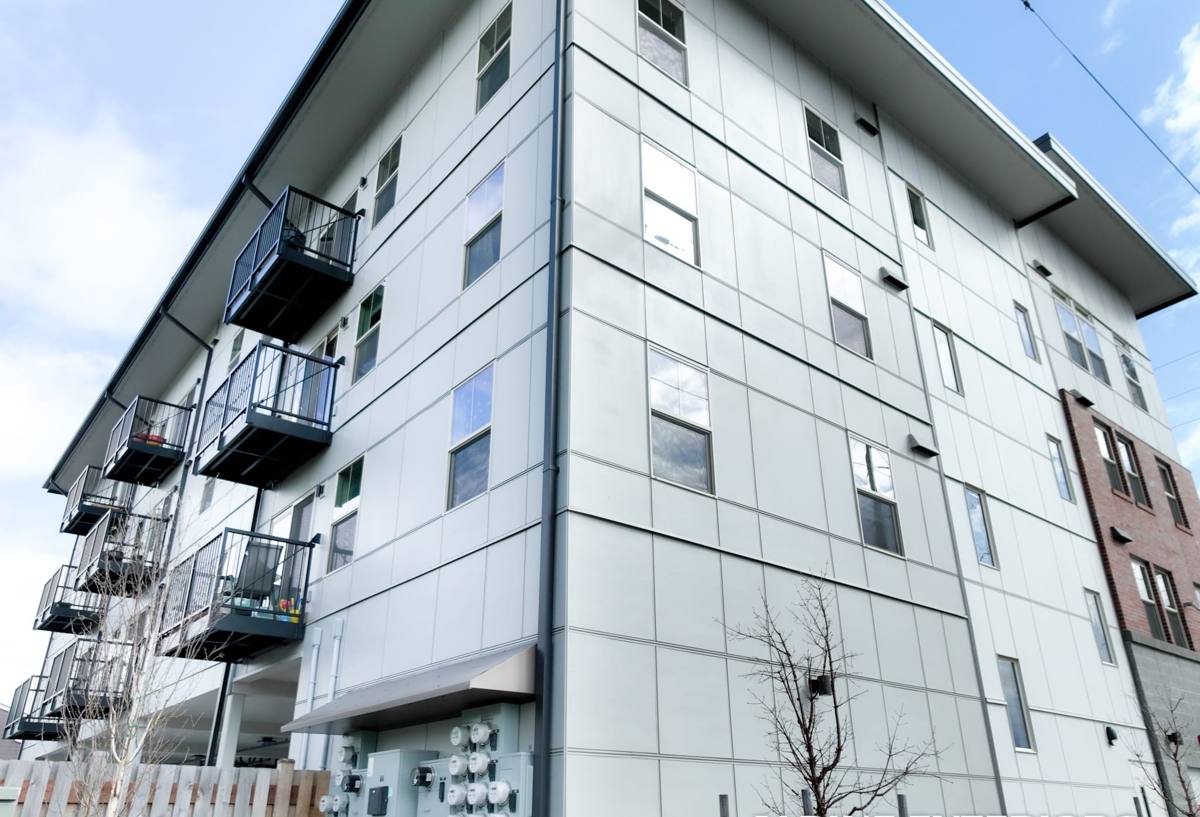
Old Northeast is one of St. Petersburg's older, established residential neighborhoods — tree-lined streets, mature landscaping, and a mix of house styles and ages typical of a historic bayside community. On siding jobs in this area we routinely find:
- Older wood or hardboard siding that has been repainted repeatedly, with soft spots at butt joints and bottom courses where moisture has worked in over the years.
- Vinyl siding that has warped, faded unevenly, or cracked at fastener points from years of UV and heat cycling.
- Trim and fascia showing early corrosion or rust streaking from salt exposure, even where the siding field itself looks intact.
- Shade from mature tree canopy that keeps some wall sections damp longer after rain — a detail that changes how a wall assembly needs to be built, not just what material goes on it.
None of that is a criticism of the neighborhood or its homeowners — it's just what decades of coastal Pinellas County weather does to exterior materials that weren't engineered for it. It's also why we treat every Old Northeast estimate as a full assessment of the wall, not just a measure-and-quote for new boards.
Why We Only Install James Hardie
We made a decision, as a company, to install James Hardie fiber cement siding exclusively — no vinyl, no LP SmartSide, no Cemplank or Allura, no primed spruce or cedar. That's not a marketing position; it's a standard we hold because of what we see coming off older siding jobs in this exact climate.
Fiber cement is non-combustible, dimensionally stable in heat and humidity swings, and doesn't rely on a paint film alone to survive UV — Hardie's ColorPlus factory finish is baked on and warrantied against fading and chipping, which matters enormously under Florida's sun load. Wood-based products (including engineered wood siding) can perform well in a controlled, well-maintained environment, but they depend on the paint and caulk staying perfect, and that's a harder ask on a bay-adjacent wall that's getting salt air and wind-driven rain from one side more than the other. Vinyl is inexpensive and easy to install, but it softens and can distort in sustained heat, and it doesn't hold up structurally the way fiber cement does in a serious wind event.
James Hardie also engineers specific product lines for different climate zones. For a coastal Gulf Coast property, that climate-specific engineering is not a marketing detail — it's the actual reason the product survives here longer than general-purpose siding does.
What "Climate-Engineered" Actually Means
Hardie's HZ5 formulation, used across the Southeast including Florida, is built to resist the moisture and humidity cycling that's constant in Pinellas County. That's different from a siding product engineered primarily for freeze-thaw climates, where the failure mode is completely different. It's a small distinction on a spec sheet that translates into a real difference in how the board behaves after ten summers of heat, humidity, and salt air.
What a Correct James Hardie Installation Involves
Hardie siding fails early almost exclusively because of installation mistakes, not because of the product itself. In a wind- and moisture-heavy environment like Old Northeast, the installation details matter more than they would in a milder climate. A correct job includes:
- Proper water-resistive barrier — a weather barrier installed and lapped correctly behind the siding, not just whatever was left over from the tear-off.
- Correct flashing at every penetration — windows, doors, hose bibs, light fixtures, and any other wall penetration need flashing detailed to shed water outward, not trap it behind the board.
- Manufacturer-specified fastener pattern and type — corrosion-resistant fasteners, placed and spaced to Hardie's published specs, not "close enough."
- Correct clearances — siding held up off roof lines, decks, and grade by the minimum gap Hardie specifies, so water has somewhere to go instead of wicking into the board's cut edge.
- Sealed and primed cut edges — every field cut exposes raw fiber cement that has to be sealed before it's painted or caulked, or it becomes the first place moisture gets in.
- Correct caulk joints — the right joints caulked, the right joints left as designed weep points, not caulked shut out of habit.
Skip any one of these and the wall can look fine for a year or two before a problem shows up — usually right at a window head, a bottom course, or a corner, which is exactly where we find failures on older homes in this neighborhood.
Our Process on an Old Northeast Job
1. Assessment and Moisture Check
We start by pulling sections of existing siding, not just looking at the surface, to check the sheathing and framing underneath for hidden moisture damage — common on older homes here where a wall has been holding water behind failing siding for years without visible signs.
2. Scope and Product Selection
We walk the whole exterior, note sun exposure, shade patterns from tree canopy, and wind exposure by elevation, and put together a written scope: which Hardie plank or panel profile, which ColorPlus color, and what flashing and trim details the house needs.
3. Tear-Off and Sheathing Repair
Old siding and any compromised sheathing come off and get replaced before anything new goes on. This is the step that gets skipped on rushed jobs, and it's the one that determines whether the new siding lasts.
4. Weather Barrier and Flashing
New water-resistive barrier goes on correctly lapped, with flashing detailed at every window, door, and penetration before a single piece of Hardie board is installed.
5. Installation to Manufacturer Spec
Boards go up with the fastener pattern, clearances, and joint treatment James Hardie specifies — the same standards that keep the manufacturer's warranty intact.
6. Final Inspection and Walkthrough
We walk the finished job with the homeowner, check every elevation, and confirm the details that matter most in this climate — clearances, caulk joints, and flashing — are done right before we call the job complete.
Comparing Siding Options for a Coastal Pinellas County Home
| Factor | Vinyl | Engineered Wood (LP SmartSide) | James Hardie Fiber Cement |
|---|---|---|---|
| Salt air / corrosion resistance | Fair — can chalk and become brittle | Fair — depends heavily on paint/caulk maintenance | Strong — non-combustible, engineered for humid climates |
| UV / fade resistance | Moderate — colors fade unevenly over time | Moderate — relies on field-applied or factory paint | Strong — factory ColorPlus finish, warrantied against fading |
| Wind/impact performance | Lower — can crack or blow off in high wind | Moderate | Strong when installed to spec |
| Moisture behavior | Doesn't absorb water, but can trap it behind panels | Wood-based core is sensitive to sustained moisture | Dimensionally stable, does not rot |
| Maintenance burden | Low, but limited repair options | Moderate to high — repainting and caulk upkeep | Low — factory finish reduces repainting cycle |
This isn't a knock on the other products — vinyl and engineered wood both have legitimate uses and reasonable price points. We simply found that on the coastal, storm-exposed homes we work on in this part of Pinellas County, the trade-offs stack up in favor of fiber cement more often than not, which is why we standardized on it.
What to Ask Before Hiring a Siding Contractor Here
- Are they James Hardie certified, or at minimum can they explain the manufacturer's fastening and clearance specs in detail?
- Will they check and repair sheathing before installing new siding, not just cover over whatever is underneath?
- Do they have experience specifically with coastal/bay-adjacent installations, not just general Florida jobs?
- Do they pull permits and know Pinellas County and City of St. Petersburg inspection requirements?
- Will they put the product line, color, fastener spec, and warranty terms in writing before work starts?
- Can they explain how they'll detail flashing around windows and penetrations before the job begins, not after something leaks?
Why a Crew That Already Works This Neighborhood Matters
Old Northeast has its own rhythm — narrower lots, mature trees close to the house, older framing behind the siding, and in some cases neighborhood or historic-district considerations that affect what changes to an exterior are allowed. A crew that already works here knows to check those details before ordering material, not after. We also know how St. Petersburg's permitting process runs for exterior work, which keeps a job from stalling mid-project waiting on paperwork a contractor should have handled up front.
Just as important: a crew that installs Hardie siding across Pinellas County sees the failure patterns specific to this climate — where flashing tends to fail first, which elevations take the worst wind-driven rain, how tree canopy affects drying time on a wall. That's knowledge that only comes from doing this work, in this climate, repeatedly.
Living With Hardie Siding in a Salt Air Environment
Once it's installed correctly, James Hardie siding in this climate needs very little from a homeowner: an occasional rinse to clear off salt residue and airborne debris, a visual check of caulk joints every year or two, and prompt attention if a joint ever needs recaulking. It does not need repainting on the schedule wood or engineered wood siding does, because the ColorPlus finish is factory-applied and warrantied. That lower maintenance burden is one of the clearest, most practical differences homeowners notice a few years in.
Get a Straight Answer for Your Home
If your Old Northeast home has siding that's showing its age — soft spots, fading, cracking, or a paint job that won't hold anymore — we'll come look at it, tell you honestly what we find, and put together a written James Hardie plan for your specific walls and exposure. There's no pressure and no cost to get an estimate; fill out the form below and we'll get you scheduled.