 St. Petersburg Roofing
 New-Construction Windows Are a Different Job Than Replacement Windows
"New-construction windows" is a specific term in our trade, and it matters that homeowners in Pinellas Park understand the difference before they start pricing a project. A new-construction window has a nailing fin (sometimes called a nail flange) around the outside edge of the frame. That fin gets fastened directly to the sheathing and integrated with the house wrap or weather-resistant barrier before siding, stucco, or trim goes back on. It's the correct approach any time you're working with a fully open stud bay — new home builds, room additions, garage or lanai conversions, or a gut renovation where the exterior wall has been stripped down to framing.
This is not the same product or process as a retrofit or "pocket" replacement window, which is designed to slide into an existing frame without disturbing the exterior wall. If your project has open framing, using a retrofit-style window is the wrong tool for the job — it skips the flashing integration that keeps water out of the wall assembly long-term. We bring this up because it's the single most common mix-up we see homeowners run into when getting quotes for additions and new builds in this area.
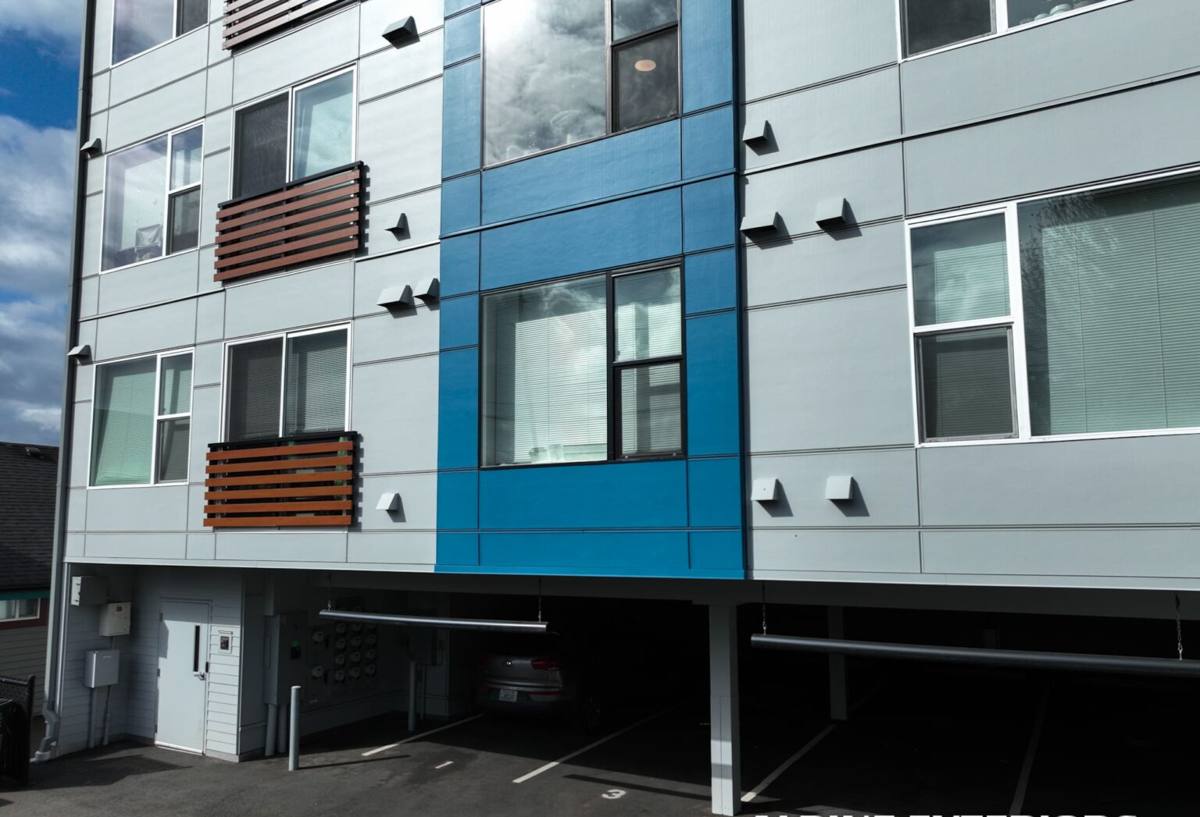
What Pinellas Park's Climate Actually Demands From a Window Opening
Pinellas Park sits inside Pinellas County, on a peninsula that takes a direct hit from everything Florida's weather throws at it. A new window opening here has to hold up against four things at once, not just one:
- Hurricane-force wind: Pinellas County is in a Wind-Borne Debris Region under the Florida Building Code, which drives both the wind pressure rating and the impact protection requirements for any new opening.
- Intense, year-round UV: Florida sun degrades cheap vinyl, fades interior finishes, and breaks down poor-quality sealants faster than in most of the country.
- Wind-driven rain: Storms here don't just drop rain straight down — wind pushes it sideways and up under trim, sills, and poorly lapped flashing. A new-construction opening lives or dies on its flashing sequence.
- Salt air: Even well inland from the Gulf, Pinellas County's air carries enough salt to accelerate corrosion on fasteners, hinges, and hardware that isn't rated for coastal exposure.
Any one of these can be designed around individually. The problem is a window opening has to survive all four for 20-plus years, which is why cutting corners on flashing or fastener quality shows up as a callback a lot sooner here than it would in a milder climate.
Florida Building Code and Wind Requirements for a New Opening
Every new window opening in Pinellas Park has to meet the wind pressure and impact requirements set by the Florida Building Code for our wind zone, and it has to carry a valid Florida product approval (or Miami-Dade NOA, which is also accepted statewide) for the specific size and configuration being installed. This isn't paperwork for its own sake — the approval number ties the actual product to lab testing that proves it holds up at the design pressures for this area.
For new construction and additions, you generally have two paths to meet the wind-borne debris requirement:
- Impact-rated glass that meets the large-missile impact test on its own, with no separate shutters needed.
- Non-impact windows paired with code-approved shutters or panels that get deployed before a storm.
Either path can be code-compliant. Which one makes sense depends on the project — a full new build often defaults to impact glass because there's no shutter storage or deployment hassle later, while some additions use non-impact units to control cost when the rest of the home already has a shutter system in place. We'll walk through both honestly rather than pushing whichever is more profitable for us.
Frame and Glass Options: What They Actually Mean for This Climate
There's no single "best" frame material — each has real trade-offs in a hot, humid, salt-exposed environment. Here's how the common options actually perform in Pinellas County conditions:
| Frame Material | UV / Heat Behavior | Salt Air Durability | Maintenance |
|---|---|---|---|
| Vinyl (quality-grade) | Good with UV-stabilized formulations; cheaper vinyl can chalk or warp over time | Very good — doesn't corrode | Low |
| Aluminum | Handles heat well structurally | Needs a proper coastal-rated finish or it will pit and corrode | Moderate |
| Fiberglass | Excellent dimensional stability in heat swings | Very good | Low |
| Wood / wood-clad | Prone to expansion and finish breakdown under intense sun | Poor unless meticulously maintained | High |
On the glass side, Low-E coatings are worth having on every new-construction window in this area — Pinellas Park gets enough direct sun that uncoated glass measurably increases cooling load. Code also requires tempered (safety) glass in specific locations, such as near doors, low sills, and certain bathroom or stairway locations, regardless of which frame material you choose.
Hardware and Fasteners
Salt air is hard on hardware. For new-construction openings we spec fasteners and hinges rated for coastal or marine-grade exposure rather than standard interior-grade hardware, because standard hardware corroding inside the wall cavity is not something you catch until there's already a problem.
What a Correct New-Construction Window Installation Actually Involves
The window unit itself is only part of the job. The flashing sequence around it is what actually keeps water out of the wall long-term, and it has to happen in the right order:
- Rough opening is checked for square, level, and correct dimensions against the window's approved specifications.
- A sill pan flashing is installed at the bottom of the opening to catch and redirect any water that gets past the window itself — this is the single most-skipped step we see on lower-quality jobs.
- The weather-resistant barrier (house wrap) is cut and integrated with the opening before the window goes in.
- The window is set, shimmed for square and level, and fastened through the nailing fin per the manufacturer's approved fastening schedule — spacing and fastener type aren't optional details, they're tied to the wind rating.
- Side and head flashing tape laps over the fin in the correct shingle-style order (bottom to top) so water is always directed outward and down, never trapped behind a lap.
- Sealant is applied at specified points only — sealing everything, including the weep points the window needs to drain, is a common mistake that traps water instead of releasing it.
- Interior and exterior trim, stucco, or siding is finished around the completed, tested opening.
Skip or reorder any of these steps and the window can look fine for a year or two before a leak shows up inside a wall where it's expensive to find and fix.
Our Process for Pinellas Park Projects
We keep the process straightforward and don't skip steps to save time:
- Site visit and measurement: We look at the actual rough openings, wall assembly, and any HOA or design-review requirements specific to the property.
- Product selection: We go over impact glass versus shutter-paired non-impact options, frame material trade-offs, and Low-E glass, matched to the wind pressures for this specific opening size and location on the house.
- Permitting: New-construction window openings require a permit and inspection. We handle the paperwork and coordinate inspections rather than leaving that on the homeowner.
- Installation: Full flashing sequence as outlined above, not just "set the window and caulk it."
- Final inspection and walkthrough: We confirm operation, sealing, and code sign-off before calling the job done.
A Homeowner's Checklist Before Hiring Anyone for This Job
- Ask to see the Florida product approval or Miami-Dade NOA number for the exact window model and size being quoted — not just a general brand brochure.
- Confirm whether the quote includes impact glass or assumes shutters, and make sure that matches what you actually want to live with during storm season.
- Ask specifically whether sill pan flashing is included — if it's not mentioned in the quote, ask why.
- Verify the contractor is pulling a permit for the work, not treating it as a cash job to skip inspection.
- Check that fastener and hardware specs are coastal-rated, especially for openings on the side of the house that takes the most weather.
Why Hiring a Crew That Already Works in Pinellas Park Matters
Wind pressure requirements, product approval numbers, and inspection expectations aren't identical everywhere in Florida — they're tied to the specific wind zone and the permitting jurisdiction covering the property. A crew that regularly pulls permits and schedules inspections in this part of Pinellas County already knows what the local building department expects to see on a new-construction window submission, which means fewer delays and fewer failed inspections. It also means we're not learning the local wind-borne debris requirements and salt-air realities on your project — we're applying what we already do on homes throughout this area.
If you're planning an addition, a new build, or a full-frame renovation in Pinellas Park and want windows installed the way this climate actually requires, we're happy to take a look and put together a free, no-pressure estimate — just fill out the form below.