 St. Petersburg Roofing
 Why Pinellas Park Roofs Wear Out on Their Own Schedule
Pinellas Park sits close enough to Tampa Bay and the Gulf that its roofs live under a different set of stresses than a roof three states north. The sun here isn't seasonal — it's a year-round UV load that breaks down asphalt oils and shingle granules faster than manufacturer test data (usually run in milder climates) assumes. Add wind-driven rain that comes in sideways during summer storms, salt-laden air drifting inland off the coast, and the occasional hurricane-force wind event, and you get a roof that can look fine from the driveway while it's already failing underneath.
We work on homes throughout Pinellas Park and the surrounding St. Petersburg area, and the pattern repeats: roofs rated for 20-25 years locally showing granule loss, brittle underlayment, and fastener corrosion well ahead of that number. That's not a knock on any one product — it's just what happens when a roof designed for "average" conditions sits in Pinellas County instead.
What This Means for a Replacement, Specifically
A replacement done right in this area isn't just "put new shingles where the old ones were." It means choosing materials and installation details that actually account for sun exposure, wind uplift, and moisture — not the cheapest combination that will pass a drive-by inspection.
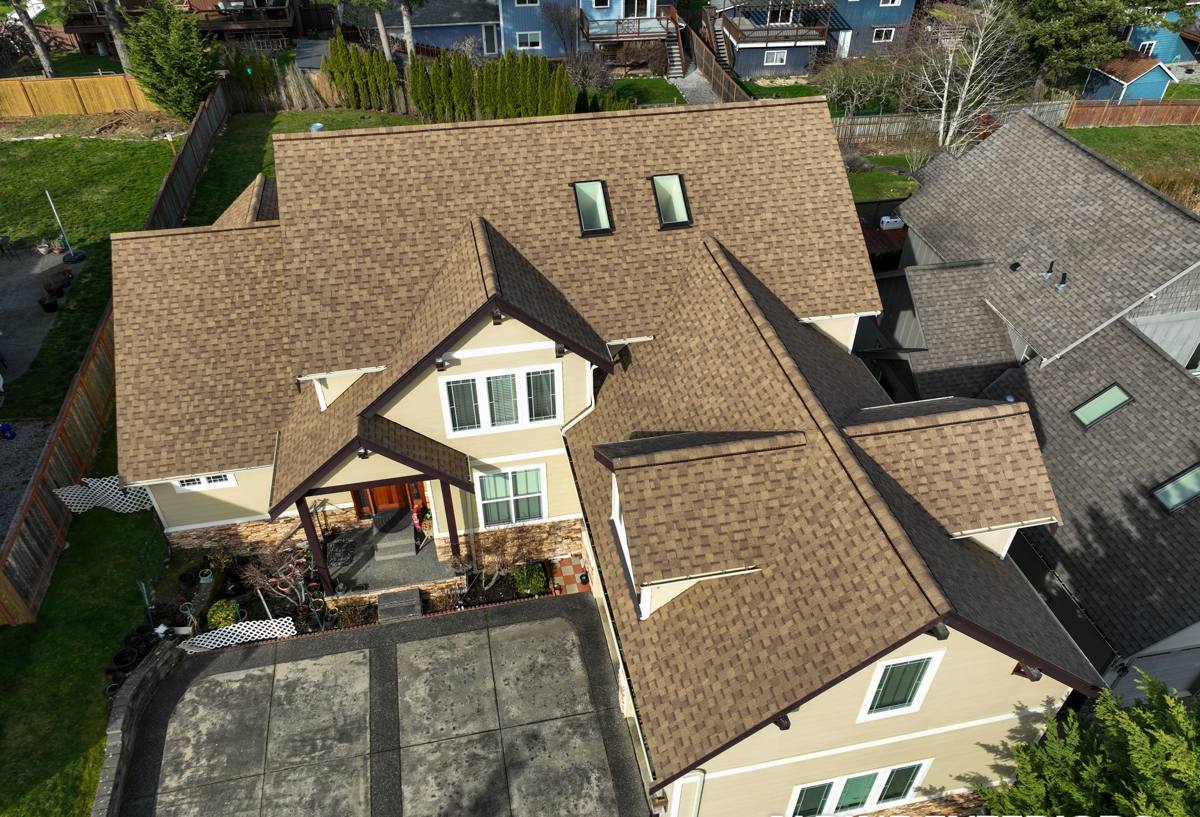
What a Correct Roof Replacement Actually Involves
A full replacement has more steps than most homeowners realize, and skipping any of them is how a "new roof" ends up with problems in year three instead of year fifteen.
- Full tear-off: Every layer of old roofing removed down to the deck — no roofing over an existing layer, which traps moisture and voids most manufacturer warranties.
- Deck inspection and repair: Plywood or OSB decking checked panel by panel for soft spots, delamination, or rot, especially around old vent boots and valleys where leaks tend to start.
- Underlayment upgrade: A synthetic or self-adhering underlayment suited to wind-driven rain, not just the minimum code layer.
- Flashing replacement: New metal flashing at chimneys, walls, skylights, and valleys — reused flashing is one of the most common causes of early leaks after a "new" roof.
- Fastening to wind code: Nailing pattern and fastener count matched to Florida Building Code wind requirements for this area, not a generic national minimum.
- Ventilation check: Intake and exhaust balanced so attic heat and moisture actually move, which protects the new roofing from the inside out.
- Final inspection and cleanup: Nail sweep, debris removal, and a walkthrough before we consider the job done.
Material Options for Pinellas Park Homes
There's no single "best" roofing material — there's a best fit for your home's roof pitch, your budget, and how long you plan to own the house. Here's how the common options compare for this climate.
| Material | Typical Lifespan (local conditions) | How It Handles Sun, Wind & Salt Air | Relative Cost |
|---|---|---|---|
| Architectural asphalt shingle | 15-22 years | Good wind rating when properly nailed; UV and heat are the main long-term wear factors | $ |
| 3-tab asphalt shingle | 10-15 years | Lower wind rating, wears faster under constant UV; we rarely recommend it here | $ |
| Standing seam metal | 30-50 years | Excellent wind performance, reflects heat, but needs coastal-rated fasteners and coatings near salt air | $$$ |
| Concrete or clay tile | 30-50 years | Handles UV and salt air very well; the underlayment beneath it is what actually fails first, so that layer matters more than the tile itself | $$$ |
Cost ranges vary block by block depending on roof pitch, number of layers being removed, decking condition, and access — anyone quoting a firm number before inspecting your roof in person is guessing.
A Note on Tile Roofs
Tile is common in this part of Florida and can genuinely last decades, but the underlayment underneath is doing most of the waterproofing work. When we replace a tile roof, the tiles are often salvageable and reset — the underlayment and flashing are what actually get renewed. We're upfront when a tile roof needs full replacement versus an underlayment renewal, because that's a real cost difference and homeowners deserve to know which one they're paying for.
Wind, Code, and Permitting in Pinellas County
Florida's building code sets wind-resistance and fastening standards that are stricter here than in most of the country, and Pinellas County enforces its own permitting and inspection process on top of that. A legitimate roof replacement in Pinellas Park requires a permit, a mid-job inspection in most cases, and a final inspection before the job is closed out.
This isn't paperwork for its own sake. Permitted, inspected work is what your insurer will actually honor if a storm damages the roof later, and it's what shows up (or doesn't) if you sell the house and a buyer's inspector pulls permit history. A contractor who offers to "skip the permit to save time" is asking you to take on that risk personally.
How We Handle a Pinellas Park Roof Replacement
1. On-Site Inspection
We walk the roof and the attic, not just the ground. Photos of decking condition, flashing, ventilation, and any soft spots go into the estimate so you can see exactly what we're basing the scope on.
2. A Written Scope and Estimate
You get a clear breakdown of tear-off, decking repair allowance, underlayment, materials, flashing, and labor — no vague "roof replacement, one price" line item.
3. Permitting
We pull the permit before work starts and schedule the required inspections. This is handled by us, not left for you to chase down.
4. The Tear-Off and Replacement
Old roofing comes off, the deck gets inspected and repaired where needed, and the new system goes on in the sequence above — underlayment, flashing, then finish material.
5. Cleanup and Walkthrough
Magnetic nail sweep of the yard and driveway, debris hauled off, and a walkthrough where we point out what was done and answer questions before we ask for final payment.
Signs Your Pinellas Park Roof Needs Replacing, Not Just Repair
Not every roof problem calls for a full replacement. But a few signs usually mean patching is a short-term fix on a roof that's past its useful life.
- Granule loss heavy enough that you find sand-like grit in gutters or downspouts regularly
- Shingles that are curling, cupping, or cracking across multiple areas of the roof, not just one spot
- Daylight visible through the roof deck from inside the attic
- Soft or spongy decking when walked on, especially near valleys or old vent penetrations
- Repeated leaks in different locations after previous patch repairs
- Visible sagging along the roofline
- The roof is at or past the manufacturer's rated lifespan and has had heavy UV and storm exposure
If you're only seeing one or two of these and the roof is otherwise young, a repair may genuinely be the right call — we'll tell you that if it's true.
Why a Crew That Already Works Pinellas Park Matters
Roofing crews that work all over the state, or fly in after a storm, don't have a reason to think past the day they finish your roof. A crew based in St. Petersburg and working Pinellas Park regularly has a different set of incentives: we're going to see this roof again, run into your neighbors, and be around next hurricane season if something needs a warranty call.
That local presence also means we already know the parts of Pinellas County permitting process that trip people up, we're not learning wind-code fastening requirements on your roof, and we're not disappearing once the check clears. It's a smaller thing than it sounds like, and it's the difference between a roof that gets fixed right the first time and one that becomes a recurring problem.
Questions Worth Asking Before You Sign a Contract
- Is the estimate itemized, or just one lump number for "roof replacement"?
- Who pulls the permit, and is that cost included?
- What underlayment and fastening schedule are being used, specifically?
- What happens if decking repair is needed beyond what was estimated?
- What's the manufacturer's warranty, and what's the workmanship warranty separately?
- Is the crew doing the work employed by the company, or subcontracted out with no local accountability?
A contractor who answers these plainly, in writing, before any money changes hands is telling you something real about how the rest of the job will go.
If your roof in Pinellas Park is showing its age or you just want an honest read on how much life is left in it, we're glad to take a look. The estimate is free, there's no pressure to sign anything on the spot, and you'll get a straight answer either way — use the form below to get started.