 St. Petersburg Roofing
 Siding in Pinellas Point Has to Answer to the Gulf
Pinellas Point sits on a peninsula surrounded by water on three sides, which means the homes here take a different kind of beating than houses even a few miles inland. Salt-laden air moves through the neighborhood constantly, the sun is overhead and intense nearly every day of the year, and when a tropical system or a strong summer squall rolls through, wind-driven rain gets forced sideways into every seam, joint, and fastener hole in a home's exterior. Siding here isn't a cosmetic decision — it's the first line of defense against moisture intrusion, and the material and installation quality determine whether that defense holds for one storm season or twenty.
We install James Hardie fiber cement siding exclusively across St. Petersburg and Pinellas County, and Pinellas Point is one of the areas where that choice matters most. This page walks through what the coastal environment actually does to exterior materials, what a correct James Hardie installation looks like on a Gulf Coast home, and how our process is built around the conditions specific to this part of the peninsula.
What Salt Air and Coastal Humidity Do to Exterior Materials
Every siding material reacts differently to a marine environment. Understanding the trade-offs is the reason we standardized on one product instead of offering several.
| Material | Behavior in salt air and high humidity | Long-term concern |
|---|---|---|
| Vinyl siding | Doesn't rot, but UV exposure and heat cycling cause fading, warping, and brittleness over time | Panels can crack or blow off in high wind once the plastic degrades; color fade is permanent |
| Primed wood or cedar | Absorbs moisture from humid air and wind-driven rain; needs a sound paint film to stay protected | Repainting cycles, rot at joints and fastener points, insect vulnerability |
| Engineered wood (e.g. LP SmartSide) | Resin-treated to resist moisture better than raw wood, but still wood-based at the core | Edge swelling and delamination risk if caulking or paint film fails at cut edges and seams |
| Fiber cement (James Hardie) | Inert to moisture absorption at the core; non-combustible; holds factory finish under UV | Requires correct installation detailing (clearances, fastening, joint treatment) to perform as engineered |
That last row is why we don't install anything but James Hardie. Fiber cement doesn't feed on moisture the way wood-based products do, and it doesn't degrade under UV the way vinyl does. But it only delivers on that promise when it goes on correctly — a wall of good material with sloppy flashing and gapped joints will still let water in.
Why We Don't Install LP SmartSide, Vinyl, or Cedar
Vinyl, engineered wood, and traditional wood siding all have legitimate uses and reasonable manufacturers stand behind them. Our objection isn't that these products are defective — it's that after years of doing exterior work on this coast, we don't want to be the crew that has to explain a fade, a warp, or a soft spot at a butt joint five years after installation. James Hardie's fiber cement composition and factory-applied finish hold up to sun and salt with less maintenance and fewer failure points, so it's the only system we put our name behind.
James Hardie's Climate-Engineered Product Lines
James Hardie manufactures its siding in different formulations engineered for different climate zones — a detail most homeowners never hear about because most siding crews only sell one line regardless of where the house sits. Homes in hot, humid coastal regions like Pinellas County get the HZ10 formulation, engineered specifically for high heat, high humidity, and the freeze-thaw-free but sun-heavy conditions typical of the Gulf Coast. That's different from the HZ5 formulation used in colder, wetter northern climates. Installing the wrong regional formulation isn't dangerous, but it means the product wasn't optimized for the conditions it's facing — one more reason the installer's product knowledge matters as much as the brand name on the box.
On top of the base panel, ColorPlus Technology bakes a multi-coat finish onto the siding at the factory under controlled conditions, rather than relying on field-applied paint. That finish is what resists the fading and chalking that field-painted siding shows after a few Florida summers, and it's backed by a separate finish warranty from James Hardie in addition to the product warranty.
What a Correct Installation Involves on a Coastal Home
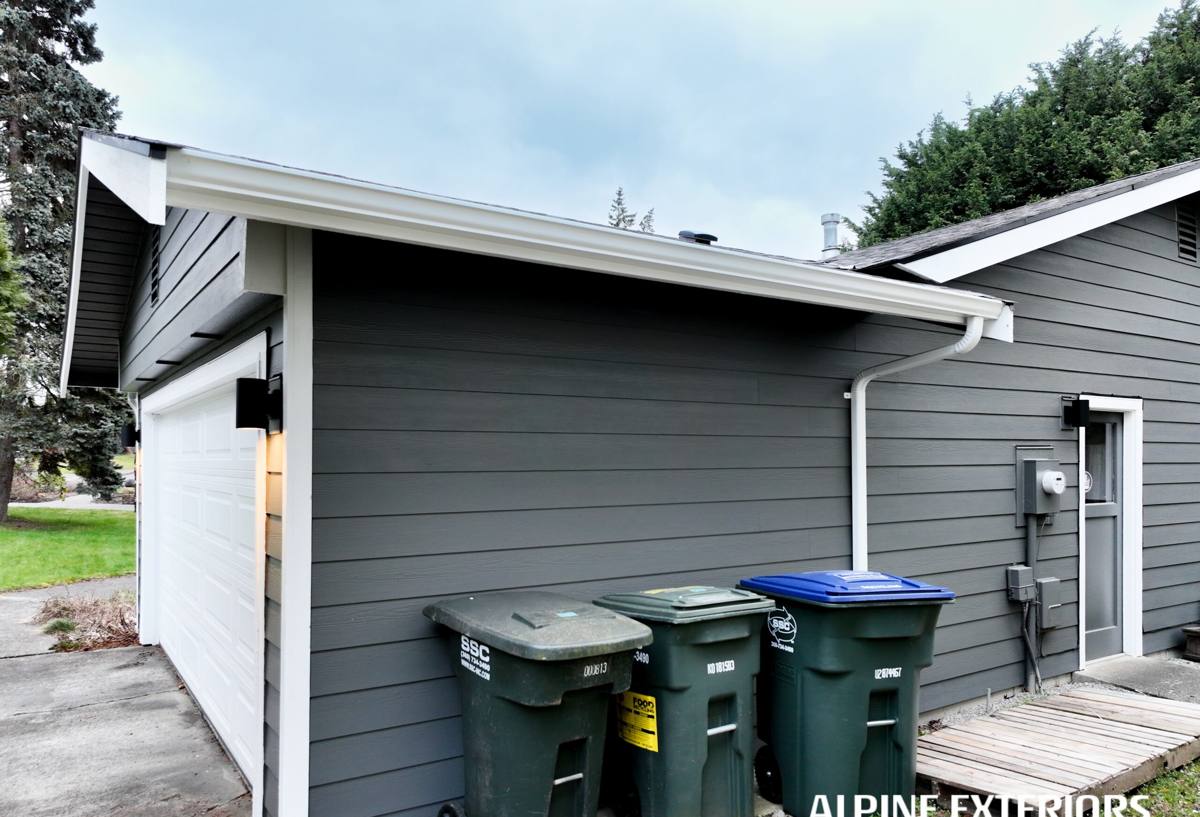
The single biggest factor in how siding performs here isn't the brand — it's the installation. Fiber cement siding fails prematurely almost exclusively because of installation shortcuts, not material defects. On a Pinellas Point home, the details we hold to include:
- Proper clearance from grade and roof lines — siding held at the manufacturer's minimum clearance so wind-driven rain and splashback don't wick into the bottom edge
- A continuous water-resistive barrier behind the siding, correctly lapped and taped at seams, so any moisture that does get past the cladding has a drainage path instead of a way into the wall assembly
- Correct fastener type, spacing, and embedment — under-driven or over-driven fasteners are one of the most common causes of panel movement and cracking in high-wind areas
- Sealed and backed joints at every butt seam and around every penetration (outlets, vents, hose bibs, light fixtures) using compatible sealant, not just caulk smeared over a gap
- Flashing integration at windows, doors, and roof-to-wall transitions so the siding works with the flashing system instead of relying on caulk alone to keep water out
- Factory-cut and factory-primed edges used wherever possible, with any field-cut edges properly sealed, since an unsealed cut edge is a moisture entry point regardless of how good the face finish is
None of this is exotic — it's the manufacturer's own installation specification. But skipping steps is faster and cheaper, which is exactly why so many "siding jobs" underperform their material's real lifespan.
Wind Exposure and Florida Building Code
Pinellas Point's exposure — open water nearby, few windbreaks on some streets — means siding here needs to be installed to the wind-load requirements in the Florida Building Code for this region, not just nailed up by feel. That includes fastener schedules tied to design wind speed and proper attachment at corners and around openings, where uplift and pressure are highest during a storm. We pull permits and install to the code requirements that apply to St. Petersburg and Pinellas County, and we don't treat wind-rated fastening as optional on hurricane-exposed streets just because a house "isn't right on the water."
Our Process for a Pinellas Point Siding Project
- On-site assessment — we look at the existing siding or cladding, check for hidden moisture damage at trim, corners, and penetrations, and evaluate wind exposure for the specific lot
- Tear-off and substrate check — old siding comes off, sheathing gets inspected and repaired as needed before anything new goes up; you can't build a good installation over a compromised substrate
- Weather barrier installation — a correctly lapped water-resistive barrier goes on before any siding panel
- James Hardie panel installation — HZ10 product installed to manufacturer spec and Florida Building Code wind requirements, with attention to clearances, fastening, and joint treatment
- Trim, flashing, and sealant detailing — the places where most siding jobs actually fail get the most attention, not the least
- Final walkthrough — we review the finished work with you before calling the job complete
Why It Matters That We Already Work This Neighborhood
A crew that's worked Pinellas Point before already knows what the wind exposure looks like street to street, has pulled permits through the same jurisdiction, and has seen how salt air ages an improperly installed job versus a correct one. That familiarity shows up in small decisions — how tight to run a fastener schedule, where to add extra sealant attention, which corners of a lot see the worst wind-driven rain — that a crew unfamiliar with the area might not think to adjust for. It also means less guesswork on permitting and inspection, since we're not learning the local process on your project.
What Drives Cost on a Job Like This
| Factor | Why it affects the estimate |
|---|---|
| Square footage of wall area | The most direct driver of material and labor cost |
| Removal of existing siding | Tear-off, disposal, and any hidden sheathing repair add labor and material |
| Home height and roof pitch | Multi-story or steep-roofed homes require more scaffolding, staging, and time |
| Trim, fascia, and soffit scope | Whether trim work is included alongside the field siding changes the total scope |
| Number of penetrations and corners | More windows, vents, and architectural details mean more flashing and sealant detail work |
| ColorPlus color selection and profile | Panel profile (lap width, shingle-style, board-and-batten) and factory finish choice affect material pricing |
We won't quote a number without seeing the house, but these are the variables that separate a straightforward re-side from a more involved project.
Maintenance and What to Expect Long-Term
One of the practical advantages of a correctly installed James Hardie system in a salt-air environment is how little upkeep it demands compared to wood or aging vinyl. There's no repainting cycle tied to preventing rot, since the fiber cement core doesn't feed on moisture the way wood does. Periodic rinsing to clear salt residue and pollen, and an eye kept on caulking at joints and penetrations over the years, is the realistic maintenance picture — along with the factory finish and product warranties that come with James Hardie's system when it's installed to spec.
If you're weighing a siding replacement or repair in Pinellas Point, we're happy to take a look at your home and walk you through what we'd recommend and why — no pressure, no obligation. Use the form below to request a free estimate.