 St. Petersburg Roofing
 Why Pinellas Point Siding Takes a Different Kind of Beating
Pinellas Point sits on a peninsula surrounded by water on three sides, which means homes here face a harsher exterior environment than properties just a few miles inland. The combination of salt-laden air drifting off Tampa Bay, intense year-round Florida sun, and the wind-driven rain that comes with every strong storm system creates conditions that most siding products simply were not engineered to handle over the long term. If you own a home in this neighborhood, your siding is doing more work than siding in a landlocked subdivision, and it shows up faster when the wrong material or a rushed installation is behind it.
We work on homes throughout St. Petersburg and Pinellas County, and Pinellas Point is one of the areas where we see the clearest evidence of climate-driven siding failure: cupping and swelling on wood-based products, chalking and fading on lower-grade finishes, and moisture intrusion at poorly flashed seams. Understanding why these failures happen is the first step to avoiding them on your own home.
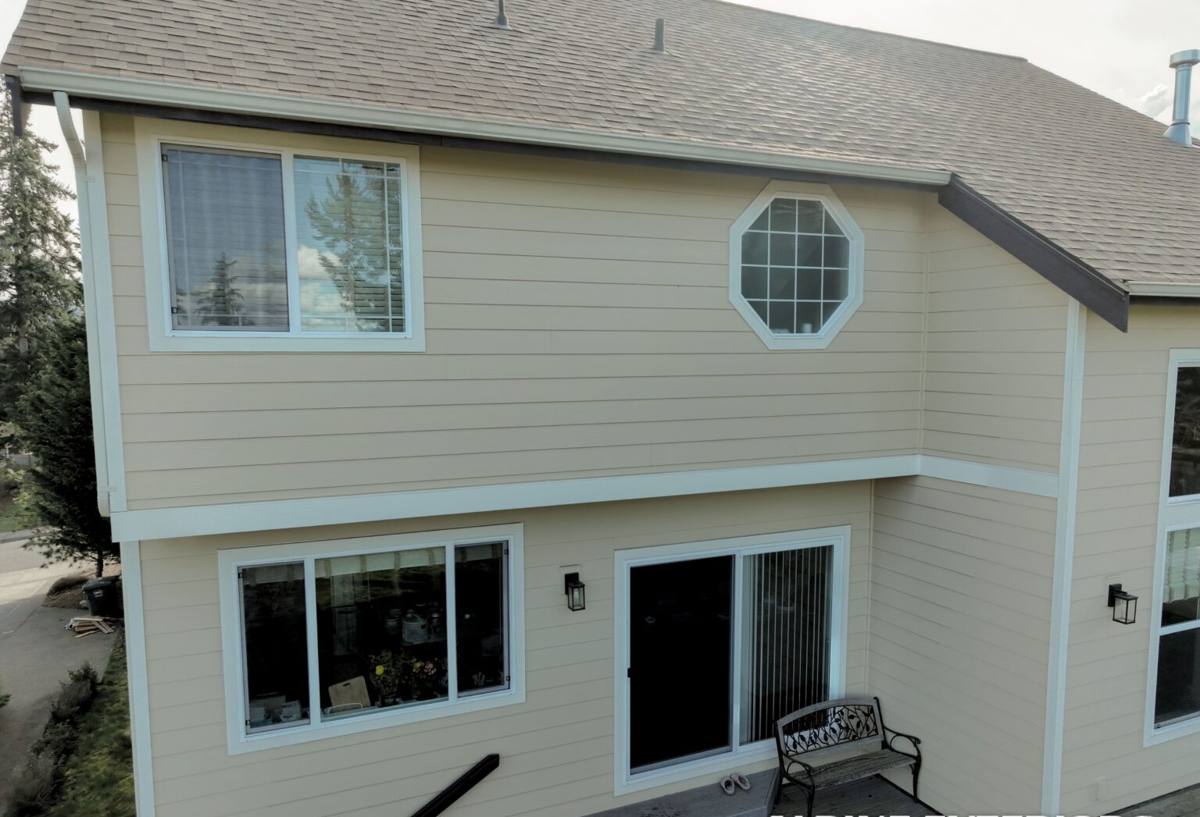
What Coastal Exposure Actually Does to Siding
Salt Air and Corrosion
Salt air doesn't just affect metal fasteners and flashing — it accelerates the breakdown of paint films and can work its way into seams and end joints, especially on products that rely on caulk and surface coatings for protection rather than a factory-engineered finish. Over years of exposure, this shows up as premature peeling, streaking, and soft spots where moisture has found a way in.
UV Degradation
Florida's sun is intense and consistent almost every month of the year. Siding finishes that aren't formulated for sustained UV exposure fade unevenly, chalk on the surface, and lose their protective integrity well before their expected lifespan. This is especially visible on south- and west-facing walls, which take the most direct sun in this part of St. Petersburg.
Wind-Driven Rain and Hurricane Exposure
During tropical storms and hurricanes, rain doesn't just fall — it's pushed sideways into walls, seams, and penetrations at high pressure. Siding that isn't rated for wind-driven rain, or that was installed with shortcuts around windows, doors, and butt joints, lets water behind the cladding. Once moisture gets behind siding in a humid coastal climate, it rarely dries out on its own, which is how you end up with hidden rot and mold long before any problem is visible from the street.
Why We Only Install James Hardie Fiber Cement
Given what Pinellas Point homes are up against, we made a deliberate decision as a company: we install James Hardie fiber cement siding exclusively. We don't install vinyl, LP SmartSide, Cemplank, Allura, or primed wood products like spruce or cedar. That's not a marketing position — it's a standard we hold because of what we've seen these products do (and not do) in coastal Florida conditions over time.
What We're Not Installing, and Why
- Vinyl siding can warp and distort in sustained high heat, and it's not rated for the wind speeds we can see during hurricane season the way engineered fiber cement is.
- LP SmartSide and other wood-strand products are engineered wood — they're dependent on caulking, paint maintenance, and cut-edge sealing to resist moisture, which is a difficult standard to maintain in a humid coastal climate.
- Primed spruce or cedar is real wood, and real wood absorbs moisture, swells, and is a food source for rot and pests. It requires the most maintenance of any siding option and the least forgiveness for a missed repaint cycle.
- Cemplank and Allura are also fiber cement products and share some of Hardie's core strengths, but we've standardized on James Hardie specifically for its ColorPlus factory-baked finish, its climate-engineered HZ5 product line built for Florida's humidity and moisture exposure, and the strength of its transferable limited warranty.
Fiber cement as a category resists what wood-based and vinyl products struggle with: it's non-combustible, it doesn't warp in heat, and it holds up to moisture without swelling the way wood does. James Hardie's HZ5 line is specifically formulated for the Gulf Coast and Southeast, engineered to perform in high-humidity, high-moisture environments like Pinellas Point.
What a Correct Siding Replacement Involves
Replacing siding on a coastal home isn't just removing old panels and nailing up new ones. A correct job addresses everything underneath the surface material, because that's where most long-term failures actually start.
Tear-Off and Substrate Inspection
Once the old siding is removed, we inspect the sheathing underneath for water damage, soft spots, or rot — problems that are often hidden behind siding for years before they're discovered. Any compromised sheathing gets replaced before new siding goes up; installing over damaged substrate just locks the problem in.
Weather-Resistive Barrier
A properly lapped and sealed weather-resistive barrier goes on before the siding itself. This is the layer that manages any moisture that gets past the cladding, and in a wind-driven-rain climate, getting the laps, seams, and penetrations right here matters as much as the siding on top of it.
Flashing at Windows, Doors, and Penetrations
Most siding failures we see trace back to flashing details around windows, doors, and roof-to-wall intersections — not the field of the siding itself. Correct flashing directs water out and away from the wall assembly instead of letting it pool or channel inward.
Fastening and Installation to Manufacturer Spec
James Hardie siding has specific installation requirements — fastener type, spacing, clearances at grade and roofline, and gapping at butt joints — that are engineered into the product's warranty. Installing it correctly, to spec, is what allows the manufacturer's warranty to actually apply if something ever does go wrong.
Our Process for Pinellas Point Homeowners
- On-site assessment: We walk the exterior, check current siding condition, look for signs of moisture intrusion, and note any trouble areas specific to your home's exposure.
- Product and color selection: We walk you through James Hardie's HZ5 product lines and ColorPlus finish options suited to coastal exposure.
- Written estimate: A clear scope of work and pricing before anything is scheduled — no surprise add-ons mid-project.
- Tear-off and substrate repair: Old siding removed, sheathing inspected and repaired as needed.
- Weather barrier and flashing installation: The moisture-management layer that protects the wall assembly long-term.
- Hardie siding installation to manufacturer spec: Correct fastening, spacing, and detailing at every penetration.
- Final walkthrough: We review the completed work with you before considering the job done.
Why Local Experience in Pinellas Point Matters
A crew that regularly works this part of St. Petersburg understands the specific exposure profile of Pinellas Point homes — proximity to the water, prevailing wind direction, and the kind of sun exposure different elevations of a home get through the year. That local pattern recognition affects real decisions: where extra flashing attention is warranted, which elevations see the harshest UV, and how to sequence a project around Florida's storm season. A crew installing siding here for the first time is learning those lessons on your house; a crew that already works this neighborhood brings that knowledge with them.
Comparing Siding Options for Coastal Florida
| Factor | James Hardie Fiber Cement | Vinyl | Wood / Engineered Wood |
|---|---|---|---|
| Wind-driven rain resistance | Engineered for high-moisture climates (HZ5) | Adequate when new; seams can be vulnerable | Dependent on maintenance and sealing |
| UV/fade resistance | Factory ColorPlus finish, long fade warranty | Can fade and chalk over time | Requires repainting on a regular cycle |
| Heat/warp resistance | Non-combustible, dimensionally stable | Can warp or distort in sustained heat | Can cup, swell, or crack |
| Moisture/rot risk | Does not rot; engineered for humidity | Low material rot risk, but moisture can hide behind it | Highest — wood absorbs and holds moisture |
| Maintenance burden | Low — factory finish, no repainting cycle | Low material upkeep, limited repair options | High — regular painting/sealing required |
What to Ask Any Contractor Before You Hire
- Are you a certified or factory-trained installer for the siding product you're proposing?
- What's your plan for inspecting and repairing sheathing if it's damaged once old siding comes off?
- How do you handle flashing at windows, doors, and roof-to-wall transitions?
- What warranty applies to the material, and what's required to keep it valid?
- Can you explain, in plain terms, why you recommend this specific product for a coastal Pinellas County home?
If your Pinellas Point home's siding is showing its age — fading, soft spots, or visible wear from salt air, sun, and storms — we'd be glad to take a look. Reach out for a free, no-pressure estimate using the form below, and we'll walk you through exactly what your home needs.