 St. Petersburg Roofing
 Building Decks That Actually Hold Up in Roser Park
Roser Park is one of the older, more distinctive neighborhoods in St. Petersburg — sloped, wooded lots, mature tree canopy, and a mix of historic and updated homes that don't always sit on flat, open ground. A deck built here has to do two jobs at once: fit a lot that isn't a flat rectangle, and survive a climate that punishes outdoor wood and hardware harder than most of the country. Between hurricane-force wind events, intense year-round UV, wind-driven rain, and salt air drifting in off the Gulf and Tampa Bay, an outdoor structure in Pinellas County ages fast if it's built to a generic spec instead of a Florida one.
We build and repair decks across St. Petersburg, and Roser Park's terrain and shade patterns show up in the work in specific ways — more moisture retention under tree cover, more variation in post heights on a sloped lot, and more attention needed on fasteners and flashing because the neighborhood's tree canopy keeps humidity around longer than it lingers on an open, sun-baked lot.
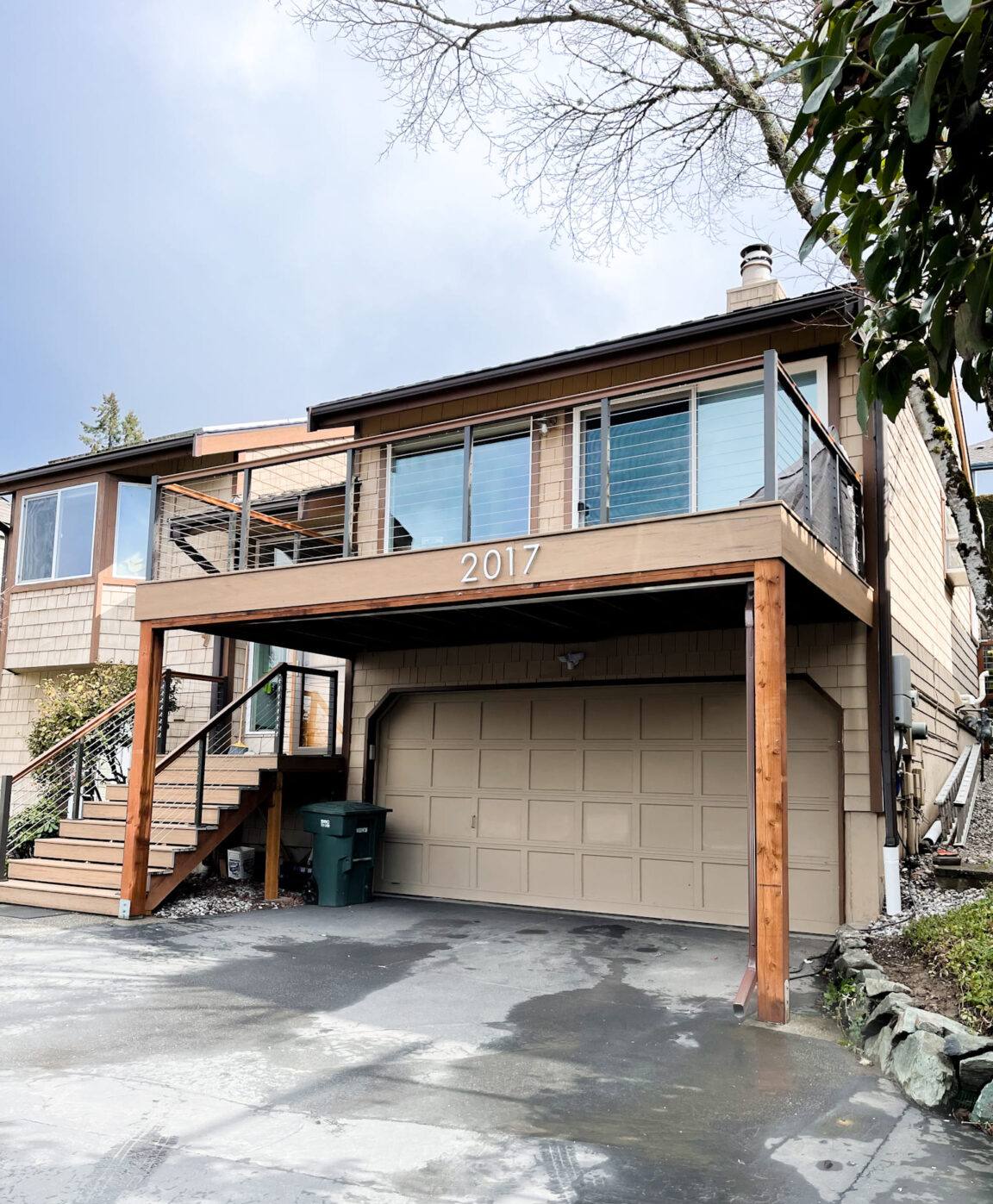
What Roser Park's Terrain and Climate Demand From a Deck
Shade, humidity, and slower drying
Mature trees are one of the best things about Roser Park, but they also mean decks here dry out slower after rain than decks on open lots elsewhere in the city. Slower drying means more time for mold, mildew, and wood rot to get a foothold, especially where decking boards meet framing or where debris collects in gaps. Material choice and airflow underneath the deck matter more here than on a sun-exposed lot.
Sloped and uneven lots
A number of Roser Park properties sit on grades that are noticeably steeper than the flat St. Petersburg norm. That changes how a deck gets supported — post heights vary across the structure, footings may need to go deeper on the low side, and stair runs often need more thought than a standard three-step approach. This is a place where a generic framing plan pulled off a shelf doesn't fit; the structure has to be engineered to the actual grade.
Storm and wind exposure
Like the rest of Pinellas County, Roser Park sits within reach of hurricane-force winds during storm season. A deck attached to a house — especially one carrying a roof, pergola, or second-story ledger connection — needs to be tied down and flashed correctly or it becomes a liability in high wind, not an asset.
Decking Material Options for This Climate
There's no single "best" decking material — there's a best material for a given budget, maintenance appetite, and sun/shade exposure. Here's how the common options actually perform in a St. Petersburg backyard:
| Material | Upfront Cost | UV & Heat Behavior | Moisture & Salt Air Behavior | Maintenance |
|---|---|---|---|---|
| Pressure-treated pine | Lowest | Fades, can warp/crack under heavy UV over years | Needs sealing to resist rot and swelling | Annual cleaning/re-sealing |
| Composite decking | Mid-high | Color-stable, some lines run hotter underfoot in full sun | Resists rot; hardware and hidden fasteners still need to be corrosion-rated | Occasional wash, no sealing |
| PVC/capped polymer | Highest | Very UV- and heat-stable, minimal fading | Fully moisture-resistant, best option under heavy shade/humidity | Wash only, no sealing |
| Tropical hardwood (e.g., ipe) | High | Very durable, will gray without maintenance | Naturally rot- and insect-resistant | Periodic oiling to keep color, or allow natural graying |
Under Roser Park's tree cover, we lean toward steering clients away from untreated or minimally-treated pine as a standalone surface and toward composite or PVC where budget allows, simply because those materials don't feed the mold and mildew that shaded, humid lots encourage. That's a maintenance-and-moisture call, not a knock on wood decking done right — a well-built and well-maintained wood deck still has a long service life here.
Framing and Structural Details That Matter
Fasteners and hardware
Salt air corrodes standard steel hardware faster near the coast, and St. Petersburg's whole peninsula gets some level of salt exposure carried on the wind. We use stainless steel or heavy hot-dip galvanized fasteners, joist hangers, and structural screws rather than cheaper coated options that can start rusting and staining within a couple of seasons.
Ledger attachment and flashing
Where a deck attaches to the house, the ledger board connection and its flashing are the single most important — and most commonly done wrong — part of the build. Poor flashing here lets wind-driven rain track behind the ledger and into the house framing, which is exactly the kind of slow, hidden damage that shows up as rot years later. We flash this connection properly every time, not as an upcharge.
Wind resistance
Post-to-beam and beam-to-joist connections get hurricane ties and structural screws sized for our wind zone, not just nails. On an elevated or multi-level deck, uplift and lateral bracing get engineered in from the start rather than added after the fact.
Footings on sloped ground
On Roser Park's graded lots, footing depth and post height get calculated per post rather than assumed uniform across the structure. This is more layout work up front, but it's what keeps a deck level and stable on uneven ground instead of settling unevenly over time.
Permits and Local Code
Decks attached to a home, elevated decks, and anything with stairs or a railing above a certain height typically require a permit through the City of St. Petersburg or Pinellas County, depending on the property, along with an inspection before the structure is closed in or covered. Because Roser Park is a historic district, some exterior changes may also draw additional review depending on visibility from the street and the scope of the project — that's worth checking early, not after materials are ordered.
We pull the required permits, schedule inspections at the right points in the build, and handle the paperwork side so it doesn't become the homeowner's problem. Skipping permits on an attached deck is a common shortcut some contractors take to move faster and cheaper — it also becomes a real headache at resale, when a permit history gap gets flagged during a home sale inspection.
How Our Process Works
Every deck project follows the same sequence, whether it's a simple ground-level platform or a multi-level structure on a sloped lot:
- On-site visit to assess grade, drainage, tree roots, and the existing structure the deck will attach to
- Design and material discussion based on budget, sun/shade exposure, and maintenance preference
- Written estimate with material and labor broken out, no vague allowances
- Permit pulled and submitted before any demolition or ground work begins
- Footings, posts, and framing built to the engineered spec for the site's grade and wind exposure
- Ledger flashing, joist hangers, and fasteners installed to corrosion-resistant standard
- Decking, railing, and stairs installed and squared
- Final inspection scheduled and passed before we call the job complete
- Walkthrough with the homeowner covering care and maintenance specific to the material chosen
What Drives the Cost of a Deck in This Area
| Cost Factor | Why It Matters Here |
|---|---|
| Square footage and shape | Irregular shapes to match a sloped or wooded lot add cutting and framing time |
| Decking material | Pressure-treated, composite, and PVC span a wide price range per square foot |
| Elevation and stairs | Grade changes on hillier lots often mean more posts, deeper footings, and longer stair runs |
| Railing type | Wood, aluminum, and cable railing carry different material and labor costs |
| Attachment to structure | Ledger flashing and tie-in work on an attached deck adds detail work a freestanding deck doesn't need |
| Permit and engineering | Additional review for historic-district properties or complex framing can add time to the front end of a project |
We give a written, itemized estimate before any work starts, so the homeowner knows what's driving the number rather than getting a single lump figure.
Keeping a Deck Sound in Pinellas County's Climate
Whatever material goes down, a few habits keep it performing for the long haul in this climate:
- Sweep leaves and debris out from between boards regularly — under tree cover, trapped organic matter is the main driver of mildew staining
- Rinse salt residue off periodically, especially on hardware and railing connectors
- Check and re-tighten structural screws and railing connections annually
- Reseal or re-oil wood decking on the schedule the manufacturer recommends for intense UV exposure
- Keep gutters and downspouts near the deck clear so runoff isn't dumping extra water onto or under the structure
- Have the substructure inspected every few years, particularly the ledger connection and any framing under heavy shade
Why It Helps to Hire a Crew That Already Works This Neighborhood
A deck built to a flat-lot, low-humidity spec doesn't hold up the same way on a shaded, sloped Roser Park lot, and a crew that hasn't dealt with the neighborhood's terrain will learn that on your project. We've built and repaired decks on sloped and wooded St. Petersburg lots, we know what the local permitting process expects, and we build the framing, flashing, and hardware to handle Gulf Coast wind and salt air rather than a generic national spec. That's the difference between a deck that needs real attention after a few seasons and one that's still solid a decade in.
If you're planning a new deck or need an honest look at an existing one, we're happy to come out, walk the site, and put together a straightforward, no-pressure estimate — just fill out the form below.