 St. Petersburg Roofing
 Roofing a Waterfront Neighborhood Like Shore Acres
Shore Acres sits close to Tampa Bay, and that proximity to open water shapes what a roof has to survive here. Homes in this part of St. Petersburg deal with a combination most inland Pinellas County neighborhoods don't see at the same intensity: near-constant onshore breezes that carry salt inland, direct sun exposure off the water for most of the day, and the periodic threat of tropical storm or hurricane-force winds pushing rain sideways into every seam and vent on the roof. An asphalt shingle roof installed for this neighborhood needs to be built with all of that in mind from the first course of underlayment to the final ridge cap.
We're not describing anything exotic. Asphalt shingles remain a sound, cost-effective choice for St. Petersburg homes when the installation accounts for coastal conditions. The problem isn't the material — it's when a roof gets installed the same way it would be in a landlocked market, without the extra attention to fastening, flashing, and ventilation that salt air and wind load demand.
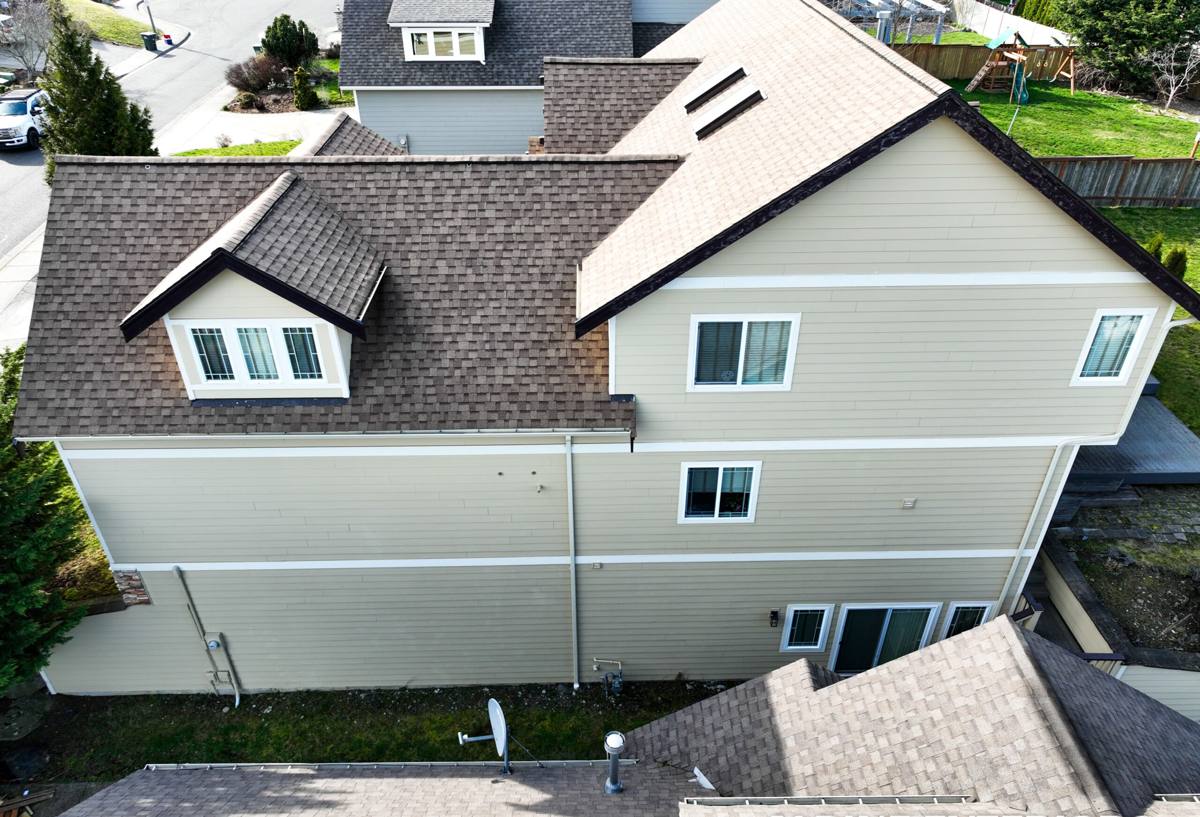
What Salt Air, UV, and Wind Actually Do to a Roof
Salt Air
Airborne salt doesn't just affect metal fixtures. It accelerates the breakdown of exposed sealants and can contribute to granule loss on shingles over time, especially on roof faces that catch prevailing wind off the bay. Metal flashing, vent boots, and fasteners are where salt exposure shows up first — corrosion at these points is often the real cause of a leak that looks, at first glance, like a shingle failure.
UV Exposure
Florida sun is intense year-round, not just in summer. UV breaks down the asphalt binders in shingles over time, which is why shingle quality and proper attic ventilation both matter more here than in cooler climates — a hot, poorly ventilated attic bakes shingles from underneath at the same time the sun is working on them from above.
Wind and Wind-Driven Rain
Pinellas County sits in a wind-borne debris region, and roofs here are built to a wind standard for a reason. It's not just about a shingle staying nailed down in a storm — it's about whether wind-driven rain can find its way under a lifted tab, through an under-sealed vent boot, or along a flashing edge that wasn't lapped correctly. Most storm-related roof leaks we see didn't start as a total blow-off; they started as water intrusion at a detail that wasn't sealed for sideways rain.
What a Correctly Installed Asphalt Shingle Roof Includes
A roof that's going to hold up near the water needs every layer doing its job, not just the shingles on top. Here's what we consider non-negotiable on a Shore Acres re-roof:
- Deck inspection and repair — plywood or OSB decking is checked for soft spots, delamination, or old fastener damage before anything new goes down.
- Self-adhered underlayment at eaves and valleys — this is the secondary water barrier that matters most when wind pushes rain up under the shingle line.
- Synthetic or felt underlayment across the field — a continuous second layer of protection under the shingles themselves.
- Corrosion-resistant flashing — at chimneys, walls, skylights, and roof-to-wall transitions, using materials suited to coastal air.
- Correct nailing pattern and fastener count — matched to the shingle manufacturer's high-wind installation instructions, not just the standard pattern.
- Sealed and properly flashed roof penetrations — every vent pipe, exhaust vent, and roof-mounted fixture is a potential entry point if it's rushed.
- Balanced intake and exhaust ventilation — so the attic isn't trapping heat and moisture under the new roof.
- Drip edge and starter strip at all edges — often skipped or under-specified on lower-quality installs, and one of the first places wind can get a grip on a shingle.
Choosing a Shingle for This Climate
Not every asphalt shingle product is built the same way, and the differences matter more in a coastal wind zone than they do in most parts of the country. The table below outlines the general categories homeowners in this area typically choose between.
| Shingle Type | Typical Wind Rating | Best Suited For | Trade-Offs |
|---|---|---|---|
| Standard 3-tab | Lower end of rated range | Budget-conscious re-roofs on less exposed structures | Shorter lifespan in coastal sun and wind; fewer style options |
| Architectural (laminated) | Mid-to-high rated range | Most Shore Acres homes; balances cost, durability, and appearance | Higher upfront cost than 3-tab; still needs correct install detailing |
| Impact-rated (Class 4) architectural | High rated range | Homes prioritizing storm resilience and potential insurance credits | Higher material cost; benefit depends on your insurer's discount structure |
We generally steer clients in this neighborhood toward architectural shingles rated for high wind, because the cost difference over a 3-tab product is modest relative to the added service life and wind performance. Impact-rated shingles are worth a conversation too — some Florida insurance carriers offer premium credits for Class 4 roofing, and it's worth checking with your insurance agent before you finalize a product choice.
Our Process, Start to Finish
- On-site inspection — we walk the roof, check the attic, and assess the deck condition, not just the shingle surface.
- Written estimate — a clear scope covering materials, underlayment system, flashing work, and ventilation, so you know exactly what's being installed and why.
- Permitting — re-roofs in St. Petersburg and unincorporated Pinellas County require a permit and inspection; we handle that paperwork as part of the job.
- Material delivery and site protection — landscaping, driveways, and pool areas are protected before tear-off begins.
- Tear-off and deck inspection — old roofing is fully removed so the deck can be properly inspected and repaired, not covered over.
- Underlayment and flashing installation — the water-management layers go in first, correctly lapped and sealed.
- Shingle installation — installed to the manufacturer's high-wind fastening specification.
- Ventilation check — intake and exhaust venting is confirmed or upgraded as part of the job.
- Final inspection and cleanup — including a magnetic sweep for stray nails and a final walk-through with you.
Ventilation: The Part of the Roof You Don't See
An asphalt shingle roof is only as good as the attic underneath it. In Pinellas County's climate, an attic that can't exhaust heat and humidity works against the roofing system in two ways: it shortens shingle life from below through sustained heat, and it can contribute to moisture problems that show up as mold, warped decking, or higher cooling bills long before the shingles themselves fail. When we re-roof a home in Shore Acres, we check ridge and soffit ventilation as a standard part of the job — not an upsell — because it directly affects how long the new roof will actually last.
Building for Storm Season
Hurricane season is a fact of life on the Gulf Coast, and a roof here should be built assuming it will eventually face sustained high winds and hours of wind-driven rain, not just an average afternoon thunderstorm. That means following the manufacturer's high-wind fastening specification (often six nails per shingle rather than four in coastal wind zones), using sealed starter strips at every edge, and making sure every penetration is properly flashed rather than just caulked. It also means pulling the required permit and passing inspection — that process exists to confirm the roof was actually built to current wind-resistance code, which matters both for safety and for insurance purposes if a claim ever comes up.
What Affects Cost and Lifespan
| Factor | Why It Matters in This Area |
|---|---|
| Roof pitch and complexity | More valleys, hips, and penetrations mean more flashing detail and labor |
| Shingle class chosen | Standard vs. architectural vs. impact-rated changes both material cost and expected service life |
| Deck condition | Rotted or soft decking found during tear-off adds repair cost but is essential to address, not skip |
| Ventilation upgrades needed | Older homes often need added intake or exhaust venting to perform well long-term |
| Wind exposure of the specific lot | Homes with more open exposure toward the water may warrant the higher end of the wind-rated product range |
Every one of these factors is something we walk through with you during the estimate, so the final number reflects your actual roof rather than a generic per-square rate.
What to Check Before You Hire a Roofer Here
- Florida state roofing license and proof of insurance, verifiable before work starts
- Experience specifically with coastal wind-zone installations, not just general roofing
- Willingness to pull the permit themselves rather than asking you to pull it
- A written scope that names the underlayment system and fastening spec, not just "new roof, materials included"
- Clear answers about how they handle deck repair if rot is found during tear-off
- Manufacturer certification if you're considering an extended warranty option
A crew that regularly works in Shore Acres and the surrounding St. Petersburg waterfront neighborhoods already understands the local permitting process, knows what Pinellas County inspectors are looking for, and has a practical sense of how exposed a given lot is to wind and salt. That familiarity shows up in fewer surprises during the project and a roof that's genuinely built for where it sits, not just installed to a generic spec.
Get a Free, No-Pressure Estimate
If your Shore Acres home is due for a new roof or you want a second opinion on a quote you've already received, we're happy to take a look. The estimate is free, there's no pressure to commit on the spot, and you'll get a clear, written scope of exactly what's being proposed and why. Use the form below to get started.