 St. Petersburg Roofing
 Bartlett Park Siding Takes a Different Kind of Beating
Homes in Bartlett Park deal with a specific combination of stresses that siding in a drier, milder climate never has to survive. St. Petersburg sits in Pinellas County, on a peninsula surrounded by water on three sides, which means the air itself is working against your exterior walls almost every day of the year. Salt-laden humidity settles into seams and fasteners. Intense, near-constant UV exposure bakes paint and breaks down weaker materials from the outside in. Summer thunderstorms bring wind-driven rain that gets pushed sideways into laps and joints instead of simply running down the wall. And when a tropical system or hurricane-force wind event comes through, siding that was already compromised is usually the first thing to fail.
None of this is unique to Bartlett Park specifically, but it's the reality every home in this part of St. Petersburg lives with. A repair approach that works fine in a milder climate — caulk over the gap, paint over the stain, call it done — tends to fail fast here. Correct siding repair in this neighborhood has to account for moisture intrusion, UV degradation, and wind uplift all at once, not just the cosmetic issue sitting in front of you.
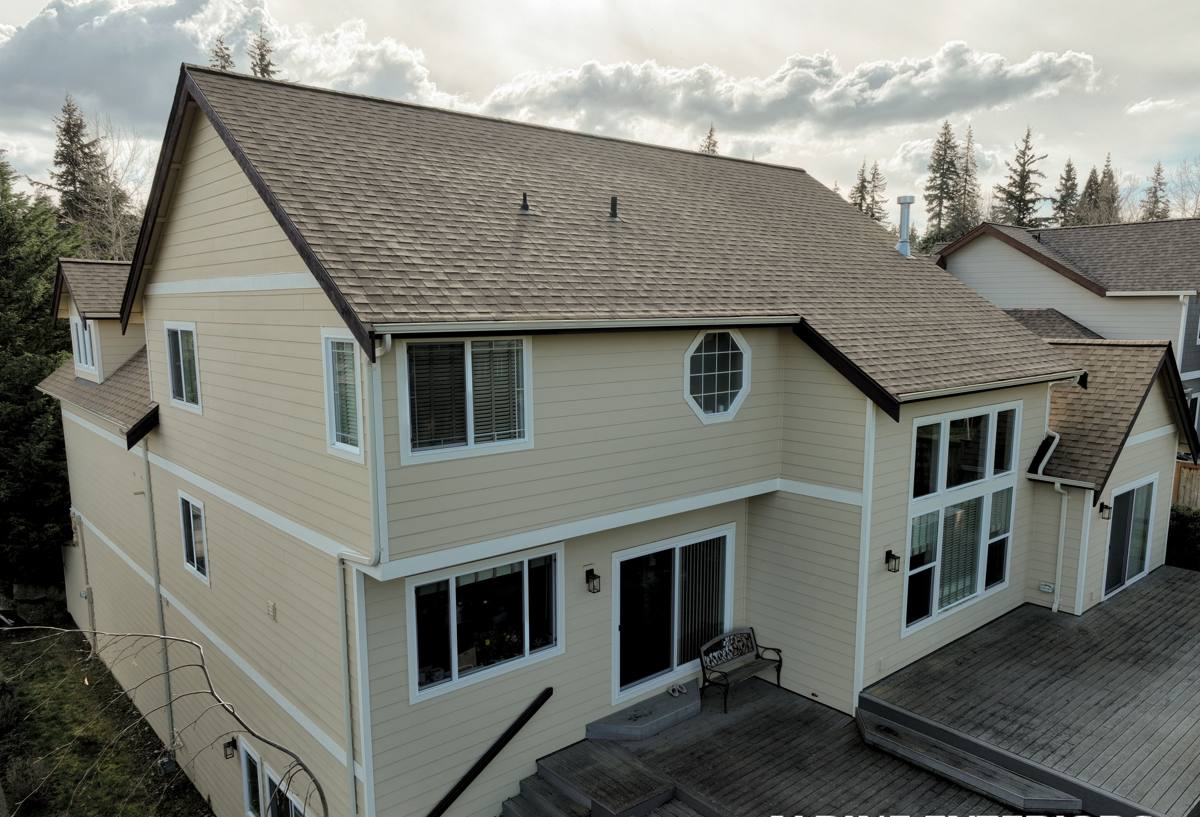
Signs Your Siding Needs Repair, Not Just Paint
A lot of siding problems get missed because they look like a paint issue at first glance. Homeowners repaint, the discoloration comes back in a season or two, and the underlying damage keeps spreading. Here's what actually points to a repair need rather than a cosmetic touch-up:
- Soft or spongy spots when you press on the siding, especially near the bottom courses or around window and door trim
- Visible cracking, splitting, or buckling in individual boards or panels
- Persistent staining or dark streaking that returns shortly after cleaning or repainting
- Gaps opening up at seams, corners, or where siding meets trim, flashing, or the roofline
- Bubbling or peeling paint concentrated in one area rather than spread evenly across the wall
- Boards that have visibly shifted, warped, or pulled away from the wall after a storm
- A musty smell or visible mold/mildew growth on interior walls that back up to exterior siding
Any one of these can be isolated and minor. Several together, especially on a wall that takes direct afternoon sun or catches prevailing wind and rain, usually means moisture has already gotten behind the siding and the damage is more than skin deep.
What a Correct Repair Actually Involves
Siding repair done right is not just about replacing the piece that's visibly broken. A proper repair has three parts, and skipping any of them is how the same spot ends up failing again in a year or two.
1. Find the actual cause
Damaged siding is often a symptom, not the root problem. Failed flashing, a gap in the house wrap, a clogged gutter dumping water down one section of wall, or a caulk joint that gave out years ago can all be the real source. Replacing the siding without addressing what let water in behind it just resets the clock on the same failure.
2. Inspect what's underneath
Once damaged material is removed, the sheathing, house wrap, and framing behind it need to be checked for rot, mold, or moisture saturation. This is the step that gets skipped when a repair is done too quickly — and it's the step that determines whether you're looking at a straightforward board swap or a larger repair involving the wall assembly itself.
3. Match and integrate the new material correctly
New siding has to be installed with proper fastening, correct overlap, and sealed transitions at every joint, corner, and penetration — not just nailed up and caulked around the edges. This is also where color and profile matching matters. A patch that doesn't match texture, reveal, or finish stands out for the life of the house and can also behave differently in sun and rain than the surrounding material, creating a new weak point.
Repair vs. Replace: How to Think About the Decision
Not every damaged section needs full replacement, but not every repair is worth doing either. The table below outlines the factors that typically tip the decision one way or the other.
| Factor | Leans Toward Repair | Leans Toward Replacement |
|---|---|---|
| Extent of damage | Isolated to one or two sections | Spread across multiple walls or elevations |
| Underlying sheathing | Dry, solid, no rot found | Soft, rotted, or water-stained |
| Age of existing siding | Relatively recent, otherwise sound | Nearing or past its expected service life |
| Material condition overall | Rest of the siding is stable | Repeated repairs already done in multiple spots |
| Storm history | Single, identifiable event | Cumulative wind and moisture damage over years |
| Material type | Hardie fiber cement, patchable and stable | Wood or vinyl with warping, fading, or matching issues |
When a home has already had several rounds of patch repairs on different walls, that pattern itself is worth paying attention to. It usually means the original material or original installation wasn't holding up to St. Petersburg's climate in the first place, and repeated spot repairs are treating the same underlying issue over and over instead of solving it.
The Matching Problem With Non-Hardie Siding
One of the most common frustrations in siding repair has nothing to do with workmanship — it's the material itself. Vinyl siding fades unevenly over years of UV exposure, so a brand-new piece next to sun-faded original panels almost never blends, even when it's the "same" color off the shelf. Wood siding — cedar, primed spruce, and similar products — moves with humidity and temperature, and a fresh board patched into an older wall can shrink, swell, or take stain differently than its neighbors, especially in Pinellas County's humidity swings. Engineered wood products like LP SmartSide are more stable than raw wood but still rely on a factory or field-applied finish that can be difficult to match once the original has weathered for several seasons in this climate.
This is a large part of why we standardized on James Hardie fiber cement siding for the work we do. Hardie's ColorPlus factory finish is baked on and engineered for UV and moisture resistance, and the HZ5 product line is specifically formulated for high-humidity, high-moisture climates like Florida's Gulf Coast. Fiber cement doesn't absorb water the way wood does, and it's non-combustible, which matters in a region where wind-driven debris and lightning-sparked fires are a real consideration. When a repair calls for new material, Hardie gives us a far better shot at a patch that matches now and continues to match years down the road — because the finish and the substrate are both engineered to hold up rather than fade or warp at different rates.
We don't install vinyl, LP SmartSide, Cemplank, Allura, primed spruce, or cedar. That's not a knock on every homeowner who has one of those products already on their house — we still repair and assess whatever siding you currently have. But when a repair reaches the point of replacing sections, or when a home has had enough repeat damage that a larger discussion makes sense, Hardie is what we recommend and what we put on the wall.
Our Siding Repair Process in Bartlett Park
Every repair starts with an honest, on-site look at the actual damage — not a phone estimate based on a description. Here's what that process typically looks like:
- On-site inspection. We walk the exterior, check the damaged area from both outside and, where accessible, from inside the wall cavity or attic, and look for signs of moisture that extend beyond the visibly damaged siding.
- Root-cause diagnosis. Before we talk about the fix, we identify why the damage happened — flashing failure, gutter overflow, a failed seam, storm impact, or long-term UV and moisture breakdown.
- Honest scope and estimate. We tell you plainly whether you're looking at a contained repair or something more extensive, and why. No inflating the scope, and no downplaying a problem that's going to come back.
- Repair or replacement of affected sections. Damaged material and any compromised sheathing or house wrap get removed and replaced correctly, with proper flashing and sealing at every transition.
- Finish and integration. New material is installed to match the surrounding siding as closely as the situation allows, with attention to reveal lines, corners, and trim so the repair reads as part of the wall, not a patch on top of it.
- Final walkthrough. We go over what was found, what was done, and what to watch for going forward — including anything upstream (gutters, grading, roof flashing) that contributed to the original damage.
Why a Crew That Already Works Bartlett Park Matters
Siding repair isn't just a materials question — it's a judgment question, and local experience shapes that judgment. A crew that regularly works homes in St. Petersburg and across Pinellas County has a working sense of how salt air, sun exposure on different elevations, and storm patterns typically show up in siding damage here, which speeds up an accurate diagnosis instead of a guess. That familiarity also extends to practical matters like permitting requirements and inspection expectations with the city and county, so the repair doesn't stall on paperwork you didn't know you needed.
Just as important is accountability. A contractor who works this area consistently has a reputation to protect with the neighbors, homeowners, and property managers they'll be back in front of again. That's a different incentive than a crew that's in town for one storm-chasing job and gone. When you're trusting someone to identify hidden moisture damage correctly — not just patch what's visible — that local accountability is worth something.
Keeping Repaired Siding in Good Shape
A correct repair should last, but a little routine attention afterward goes a long way in this climate, especially with salt air and heavy seasonal rain in the mix. A basic maintenance checklist for St. Petersburg homeowners:
- Rinse siding periodically to clear salt residue and airborne grime, particularly on walls facing open water or prevailing wind
- Keep gutters clean and downspouts directed away from the foundation so water isn't pooling or sheeting down siding
- Trim back landscaping that traps moisture against exterior walls or blocks sun and airflow needed for drying
- Walk the exterior after major storms and note any new gaps, cracking, or displaced sections while they're still small
- Re-caulk trim joints and penetrations (vents, hose bibs, light fixtures) as sealant ages and shrinks
- Address any new staining or soft spots promptly rather than waiting for the next full inspection cycle
None of this requires special expertise — it's mostly about catching small issues before wind-driven rain and Florida's UV load turn them into bigger ones.
Get an Honest Look at Your Siding
If you're seeing cracking, staining, soft spots, or storm damage on your Bartlett Park home, it's worth having someone look at it before the next round of Florida weather makes the problem bigger. We offer free, no-pressure estimates — we'll tell you plainly what we find, what it will take to fix it correctly, and what your options actually are. Fill out the form below to get started.