 St. Petersburg Roofing
 Bartlett Park sits close enough to Tampa Bay that its homes take a different kind of beating than roofs a few miles inland. Salt-laden air moves through the neighborhood daily, the sun sits high and hard for most of the year, and when a tropical system tracks anywhere near Pinellas County, these older and newer homes alike get tested by wind-driven rain and gusts that find every weak seam in a roof. Asphalt shingle roofing remains the most practical choice for the majority of homes here, but "asphalt shingles" is not a single product or a single installation method — and the difference between a roof that holds up for its full warranty life and one that fails at year twelve almost always comes down to material selection and workmanship, not the shingle brand printed on the wrapper.
This page covers what a correctly built asphalt shingle roof looks like for a Bartlett Park home specifically, what our process involves from first call to final inspection, and why local experience with this exact neighborhood matters more than a generic statewide roofing pitch.
Why Bartlett Park's Climate Changes the Job
Every roof in St. Petersburg deals with Florida sun and rain. What sets neighborhoods like Bartlett Park apart is proximity to open water. That combination shows up in a few specific ways homeowners should understand before choosing materials or a contractor.
Salt Air and Metal Fatigue
Salt-laden air corrodes exposed metal faster than it does further inland. Nails, flashing, drip edge, and vent stacks are all vulnerable if they're not rated for coastal exposure. A shingle roof can look fine on the surface while its flashing and fasteners are quietly failing underneath — which is why we spec corrosion-resistant metal and fasteners on every coastal-zone job, not just the ones closest to the water.
UV Load, Almost Year-Round
Pinellas County gets intense, sustained UV exposure for most of the calendar year. Asphalt shingles are petroleum-based products, and UV breaks down the asphalt binder over time, causing granule loss and brittleness. A shingle rated for a 30-year life in a milder climate may not deliver that same lifespan under Florida sun without the right underlayment and attic ventilation supporting it from below.
Wind-Driven Rain
Hurricane-force wind events don't just test a roof's ability to stay attached — they test its ability to shed water that's being pushed sideways and even upward under the shingle tabs. This is where sealant strips, nailing pattern, and underlayment choice matter as much as the shingle itself. A roof that's rated for high wind speed on paper can still leak in a sideways storm if the underlayment and flashing details weren't built for wind-driven water intrusion.
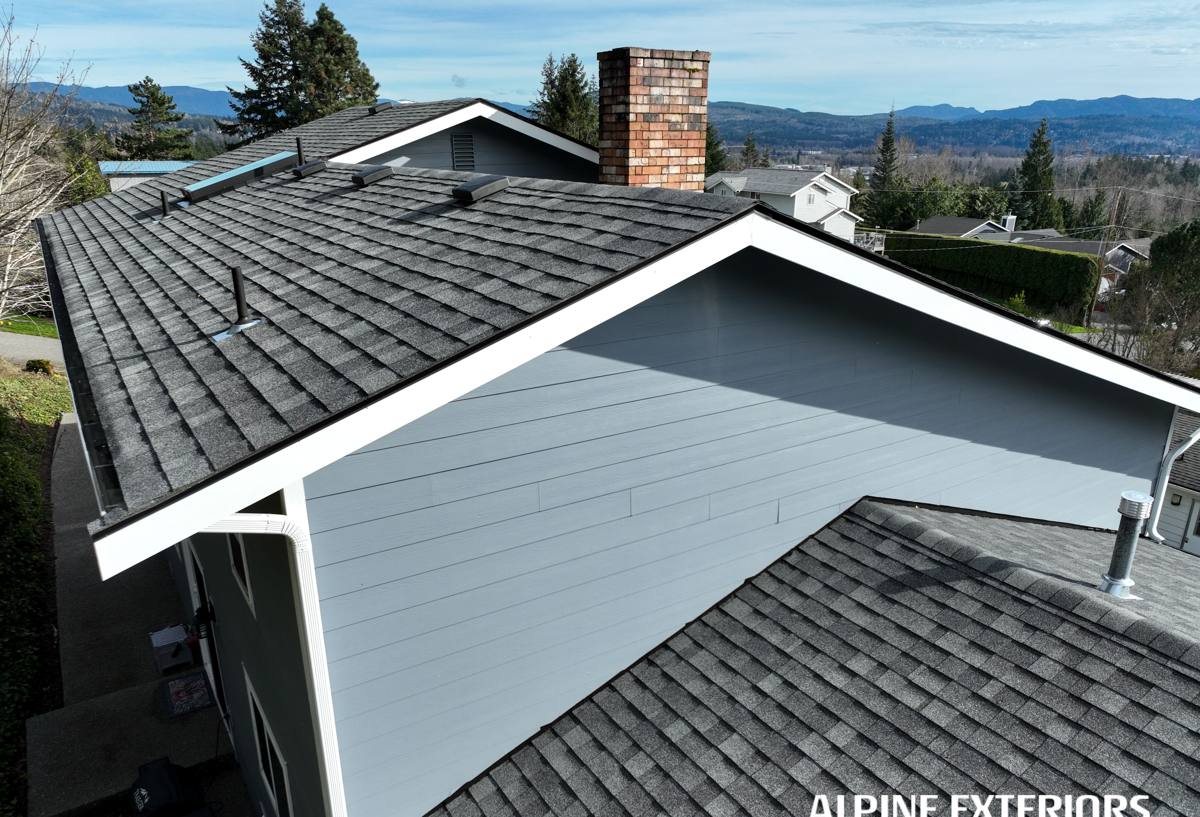
What a Correct Asphalt Shingle Job Includes
A shingle roof is a system, not a single layer. Skipping or downgrading any one component is usually where premature failures start. Here's what we consider non-negotiable for a Bartlett Park re-roof or new installation.
- Deck inspection and repair — every section of exposed decking is checked for soft spots, delamination, or water staining before anything new goes down.
- Self-adhering underlayment at eaves and valleys — these are the areas most exposed to wind-driven rain and ice-dam-style water backup (relevant here mainly during wind-driven storms rather than winter freeze).
- Synthetic or felt underlayment across the field — a full secondary water barrier, not just a base for the shingles to sit on.
- Corrosion-resistant drip edge and flashing — metal that's rated to hold up against salt air, not standard-grade material.
- Proper nailing pattern and fastener count — matched to the wind rating the manufacturer specifies, not a generic pattern used everywhere regardless of exposure.
- Balanced attic ventilation — intake and exhaust working together so heat and moisture don't get trapped under the deck, which accelerates shingle aging from underneath.
- Pipe boots and penetration flashing rated for UV and heat — cheap rubber boots crack and split years before the shingles around them fail.
Choosing the Right Shingle for This Neighborhood
Not every asphalt shingle product is built the same way, and the differences matter more in a coastal, high-UV climate than they would in a milder one. We walk homeowners through the real trade-offs rather than just upselling the most expensive option.
| Shingle Type | Typical Wind Rating | Best Fit For | Trade-Offs |
|---|---|---|---|
| Standard 3-tab | Lower end of rated range | Budget re-roofs, rental or investment properties | Shorter service life under sun and wind exposure; fewer style options |
| Architectural (laminate) | Mid-to-high rated range | Most owner-occupied Bartlett Park homes | Higher upfront cost than 3-tab, but better UV and wind performance for the price |
| Impact-resistant architectural | Higher rated range, often with impact rating | Homes prioritizing insurance credits and storm resilience | Highest material cost of the three; may qualify for insurance premium discounts |
Actual wind ratings vary by manufacturer and product line, so we confirm the specific rating and installation requirements for whichever shingle a homeowner chooses rather than relying on a general number.
Our Process, Start to Finish
Homeowners in Bartlett Park generally want the same things from a roofing job: a clear answer about what's actually wrong, a fair price with no surprise change orders, and a crew that shows up when they say they will. Here's how we structure the work to deliver that.
1. Roof Inspection and Honest Assessment
We walk the roof (not just look from the ground), check the attic where accessible, and document actual conditions — soft decking, granule loss, flashing corrosion, ventilation problems. If a roof can be reasonably repaired instead of replaced, we say so.
2. Written Scope and Material Selection
Before any work starts, the homeowner gets a written scope covering the shingle product, underlayment type, flashing and ventilation plan, and total cost — no vague line items.
3. Tear-Off and Deck Repair
Old roofing comes off down to the deck. Any damaged decking is replaced, not covered over — installing new shingles over a compromised deck is one of the most common shortcuts that leads to early failure.
4. Underlayment, Flashing, and Ventilation Install
This is the stage that determines how the roof performs in a storm, not just how it looks. We install underlayment and flashing to the standard described above, and correct any ventilation imbalance found during inspection.
5. Shingle Installation
Shingles go down to manufacturer nailing specifications for the wind rating being installed — this affects warranty validity as much as it affects real-world wind performance.
6. Final Walkthrough and Cleanup
We walk the finished roof with the homeowner, cover warranty paperwork, and make sure the property is clear of debris and stray fasteners before we consider the job done.
Repair, Recover, or Full Replacement?
Not every roof in Bartlett Park needs a full tear-off. The right call depends on the age of the existing roof, the extent of deck damage, and how the current roof was originally installed.
- Repair makes sense when damage is localized — a section of storm-lifted shingles, a failed flashing detail, or isolated leaks — and the rest of the roof is structurally sound and within its usable life.
- Recover (installing new shingles over existing ones) is rarely something we recommend in this climate, since it traps heat against the old layer and makes it harder to catch deck damage underneath — we're upfront when a homeowner asks about it as a cost-saving option.
- Full replacement is the right call when the roof is near or past its expected service life, when there's widespread granule loss or multiple leak points, or when storm damage is extensive enough that patch repairs won't hold.
Insurance and Storm Damage Considerations
After a wind event, homeowners in this part of Pinellas County often need documentation that clearly separates storm damage from ordinary wear. We provide detailed photos and written assessments that hold up in an insurance claim review, and we're straightforward about what does and doesn't qualify as storm-related — inflating a claim to include unrelated wear isn't something we'll do, and it's not in a homeowner's long-term interest either.
What to Ask Before Hiring Any Roofing Contractor Here
Bartlett Park has seen plenty of storm-chasing outfits show up after major weather events and disappear once the check clears. A local, established crew is accountable in a way an out-of-town operation simply isn't.
- Do they carry current Florida roofing licensure and liability insurance, and will they provide documentation without being pressured?
- Do they pull the required local permits, or do they suggest skipping that step?
- Will they put the shingle brand, underlayment type, and flashing details in writing before work starts?
- Do they have a physical presence and a track record in this area, or did they arrive right after the last storm?
- Do they explain trade-offs honestly, including when a repair is the more sensible option than a full replacement?
Why Local Experience in Bartlett Park Matters
A crew that regularly works this neighborhood already understands its housing stock, typical roof ages, and the specific exposure patterns tied to its distance from the water. That translates into faster, more accurate inspections, fewer surprises once tear-off starts, and material choices that are already matched to what actually holds up here — instead of a one-size-fits-all approach borrowed from inland Florida or out-of-state playbooks. It also means being reachable after the job is done, not just during the sales pitch.
If your roof is showing granule loss, aging flashing, or storm damage, or you're simply planning ahead for a replacement, we're happy to take a look. Request a free, no-pressure estimate using the form below and we'll give you a straight answer about what your roof actually needs.