 St. Petersburg Roofing
 Building a Deck That Actually Holds Up in Bartlett Park
Bartlett Park sits close enough to Tampa Bay and the Gulf that every outdoor structure on a property deals with the same combination of stresses: intense sun nearly every day of the year, sudden downpours that drive rain sideways, tropical storm and hurricane-force wind loads, and a steady dose of salt-laden air. A deck is one of the most exposed things you can build on a home — no roof overhang protecting it, full sun on the boards, and structural connections that have to survive wind uplift year after year. Building one correctly here isn't about upgrading for looks. It's about making sure the framing, fasteners, and decking material are matched to what this specific part of Pinellas County throws at them.
A lot of deck problems we get called out to inspect weren't built badly on the day they went up — they were built for a milder climate than the one they actually sit in. That's the gap we focus on closing for homeowners in this neighborhood.
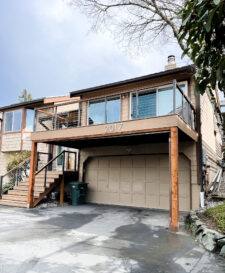
What Bartlett Park's Climate Actually Does to a Deck
UV and Heat
Year-round sun exposure breaks down finishes and dries out wood fibers faster than in most parts of the country. Untreated or poorly sealed wood will gray, crack, and splinter noticeably sooner here than the same board would inland or up north. Dark composite decking can also run hotter underfoot than lighter colors, which matters if the deck gets afternoon sun with no shade structure.
Wind-Driven Rain and Humidity
Storms here rarely just fall straight down — wind pushes rain into every gap, seam, and fastener hole. Combined with Florida's humidity, that means any spot where water can collect against wood or metal becomes a slow rot or corrosion problem instead of a fast, obvious one. By the time it's visible, the damage is usually already structural.
Salt Air
Being close to the coast means airborne salt accelerates corrosion on anything metal — screws, joist hangers, bolts, and railing hardware. Standard hardware not rated for coastal exposure can start rusting from the inside of a connection point long before it shows on the surface.
Wind Load
Pinellas County building code accounts for high wind speeds, and a deck attached to your house is part of that structural picture. Ledger attachment, post spacing, and railing anchoring all have to be engineered to resist uplift and lateral load, not just support the weight of people standing on it.
What a Correctly Built Deck Involves
Footings and Framing
Footings need to be sized and set to local frost-free, load-bearing standards for our soil conditions, with post bases that keep wood from sitting directly in standing water after a storm. Joist spacing and beam sizing should be calculated for the actual span and load, not just built to "what's always worked" — undersized framing is one of the most common issues we find on older, owner-built decks in the area.
Fasteners and Hardware
This is where coastal construction really diverges from inland building. We use stainless steel or hot-dip galvanized fasteners and connectors rated for coastal/salt exposure throughout — not just at the ledger, but at every joist hanger, post base, and railing bracket. Mixing metals (for example, standard hardware with treated lumber, which is corrosive to certain coatings) is a common shortcut that leads to hardware failure years before the wood itself would have failed.
Ledger Attachment and Flashing
Where the deck ties into the house is the single most important — and most commonly botched — connection on the whole structure. Proper flashing keeps wind-driven rain from getting behind the ledger board and into the house's wall framing. This is also usually where local permitting and inspection pays the closest attention, for good reason.
Decking Surface
The board choice affects heat, maintenance, and lifespan more than almost any other decision on the project — covered in detail below.
Choosing a Decking Material for This Climate
There's no single "best" decking material — it's a real trade-off between upfront cost, maintenance commitment, and long-term appearance. Here's how the common options actually perform under Gulf Coast sun, humidity, and salt air:
| Material | Upfront Cost | Maintenance | How It Handles Sun & Moisture Here |
|---|---|---|---|
| Pressure-treated wood | Lowest | Needs re-sealing/staining every 1-2 years | Prone to graying, splitting, and splintering without regular upkeep; treatment resists rot but doesn't stop UV damage |
| Composite decking | Mid to higher | Occasional cleaning, no staining/sealing | Resists rot and doesn't splinter; quality varies by product line, and darker colors run hotter in direct sun |
| PVC/capped polymer decking | Highest | Lowest — mostly just cleaning | Fully resists moisture absorption and rot; performs well in humidity but is the most expensive option upfront |
| Tropical hardwoods | High | Periodic oiling to maintain color | Naturally dense and rot-resistant, but still needs UV protection to avoid graying |
For a lot of Bartlett Park homeowners, the deciding factor isn't which material is "better" in the abstract — it's whether you want to spend a weekend a year maintaining a wood deck, or pay more up front for something you can mostly ignore. We'll walk through the real cost difference over 10-15 years, not just the sticker price, so you're deciding with full information.
Permitting and Code Requirements in Pinellas County
Deck construction in St. Petersburg requires a building permit in the vast majority of cases, and inspections at key stages — typically footings/framing before decking goes down, and a final inspection. Because Pinellas County's wind zone requirements affect railing attachment, post-to-beam connections, and ledger fastening schedules, a deck that would pass inspection in a lower wind-zone area may not meet code here.
Skipping or mishandling permitting isn't just a legal risk — it can create real problems at resale, since unpermitted structural work often has to be disclosed and can complicate a home sale or insurance claim. We pull permits and handle inspections as a standard part of every deck build; it's not an add-on service.
Our Process for a Bartlett Park Deck Project
- Site visit and assessment — we look at drainage, sun exposure, house structure at the attachment point, and how the space will actually be used before recommending anything.
- Design and material selection — sizing, layout, and material options laid out with honest cost and maintenance trade-offs, not just the option with the best margin.
- Permitting — we handle the permit application and coordinate required inspections with the county/city.
- Construction — footings, framing, ledger flashing, decking, and railing built to the standards described above, with coastal-rated hardware throughout.
- Final walkthrough — we go over the finished deck with you, including what maintenance it will need and when.
Maintaining a Deck Once It's Built
Even a well-built deck needs some ongoing attention in this climate. A short seasonal routine catches small issues before they become expensive ones:
- Rinse off salt residue and debris periodically, especially after storms blowing in off the water
- Check fastener heads and hardware for early rust or corrosion at least once a year
- Reseal or re-stain wood decking on the schedule the product calls for — don't wait until it visibly grays
- Keep gutters and downspouts near the deck clear so runoff isn't draining directly onto or under it
- Inspect the ledger board area and any spots where the deck meets the house for signs of moisture intrusion
- Check post bases and footings after major storms for shifting or standing water pooling around them
Common Problems We Find on Older Bartlett Park Decks
Repeat issues we see on existing decks in this neighborhood tend to come from the same handful of causes: hardware that wasn't rated for coastal exposure and has started corroding at connection points; ledger boards without proper flashing that have let moisture into the house framing; undersized joists or post spacing that were fine for the load initially but flex or sag over time; and decking boards that were never sealed or resealed on schedule and are now splitting or cupping. None of these are unusual failures — they're predictable results of building for an easier climate than the one the deck is actually in.
Why Local Experience Matters for This Job
A crew that already works in and around St. Petersburg knows the Pinellas County permitting process, the wind zone requirements that apply here, and which hardware and materials actually hold up to Gulf Coast conditions instead of just meeting a generic spec sheet. That's the difference between a deck that needs attention again in a few years and one that's genuinely built for where it stands. We're not guessing at what this climate does to a structure — it's what we deal with on every project.
If you're planning a new deck or need an honest look at an existing one, we're glad to come take a look. Reach out for a free, no-pressure estimate using the form below.