 St. Petersburg Roofing
 Coquina Key's Waterfront Setting Is Hard on Decks
Coquina Key is a canal-front community, and that waterfront exposure changes what a deck has to survive compared to a yard a mile inland. Homes here sit closer to open water and reflected sun, which means more direct salt-laden air moving across the deck surface, more UV bouncing off the water, and more moisture sitting in the wood grain or fastener holes after a storm rolls through. Add in the wind-driven rain and occasional hurricane-force gusts that every Pinellas County homeowner plans around, and you've got a deck environment that punishes shortcuts fast.
We've worked on enough decks in this part of St. Petersburg to know the failure points aren't hypothetical. Fasteners corrode where installers used the wrong hardware. Boards cup or split where drainage wasn't considered. Railing posts loosen where blocking wasn't sized for wind uplift. None of that is unique to any one brand of decking — it's about whether the installation respected the site conditions.
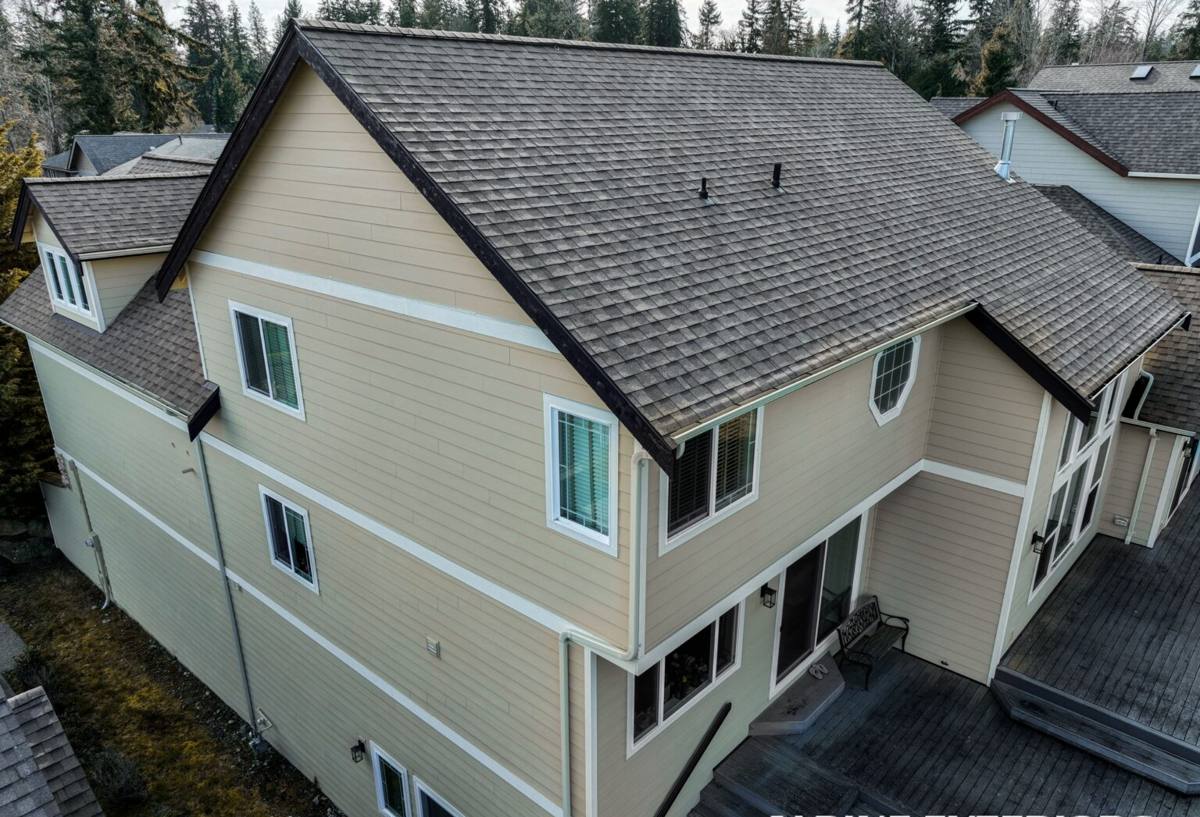
Why Composite Makes Sense for This Location
Composite decking is a blend of wood fibers and plastic (usually polyethylene or polypropylene), and the better products add a polymer cap around some or all of the board. That cap is the part that matters most in a coastal neighborhood like Coquina Key — it's what keeps salt spray, humidity, and UV from getting into the board's core the way they would with untreated or even pressure-treated wood.
That doesn't mean composite is maintenance-free or immune to every issue. It still needs a substructure built to handle moisture and coastal wind loads, and it still needs to be installed with the right gaps, fasteners, and drainage path. What it does give you, done correctly, is a board that won't rot, won't need annual staining, and holds up to repeated wet-dry cycling far better than wood over the years we're used to seeing decks last (or fail) around here.
What composite doesn't fix on its own
A composite board sitting on an undersized or poorly fastened frame will still fail — just more slowly and less visibly than a rotting wood deck would. The framing, hardware, and fastening pattern matter as much as the decking material itself, especially where wind uplift and salt exposure are both in play.
What a Correct Installation Actually Involves
A lot of deck problems we get called out to inspect trace back to the install, not the material. For Coquina Key specifically, here's what we treat as non-negotiable:
- Stainless steel or coated, corrosion-rated fasteners and hardware — standard galvanized hardware degrades faster in salt air and leaves ugly staining on light-colored boards
- Joist spacing sized to the manufacturer's spec for this climate, not stretched to save material
- Proper expansion gaps between boards, since composite still moves with heat and humidity even though it doesn't rot
- A ledger board attachment (where the deck meets the house) that's properly flashed so wind-driven rain can't work its way behind the siding
- Blocking and post connections sized for wind uplift, not just vertical load
- A substructure — pressure-treated lumber or, better, an aluminum or composite frame system — that won't become the weak link under a deck surface rated to last decades
None of this is exotic. It's just easy to skip when a crew is moving fast, and it's the kind of thing that only shows up as a problem two or three years later, after the warranty conversation gets complicated.
How We Approach a Coquina Key Composite Deck
1. On-site assessment
We look at the existing structure (if there is one), the ledger connection to the house, drainage under and around the deck footprint, and how exposed the location is to prevailing wind and water. Waterfront and canal-adjacent lots often need a closer look at post footings and moisture at grade.
2. Permitting
Deck work in St. Petersburg and unincorporated Pinellas County generally requires a permit, and waterfront lots can carry additional review depending on setbacks and flood zone designation. We handle that process rather than leaving it to the homeowner to sort out.
3. Framing and structure
This is where most of the long-term durability is decided. We build or repair the substructure to spec before a single composite board goes down, using corrosion-resistant hardware throughout.
4. Decking installation
Boards go down with the manufacturer's specified fastening system, correct gapping, and attention to how water will move off and away from the deck rather than pooling under it.
5. Railing, stairs, and trim
Railing posts and stair stringers get the same corrosion-resistant hardware and structural attention as the deck field itself — these are common failure points in coastal installs precisely because they're easy to under-build.
6. Final walkthrough
We check board spacing, fastener seating, railing rigidity, and drainage before calling the job done, and go over basic care with the homeowner.
Comparing Decking Materials for a Waterfront Lot
| Factor | Composite | Pressure-Treated Wood | PVC/Vinyl |
|---|---|---|---|
| Upfront cost | Moderate to higher | Lowest | Highest |
| Maintenance | Periodic cleaning only | Annual staining/sealing | Minimal cleaning |
| Salt air / moisture resistance | Strong with capped boards | Weak without diligent upkeep | Very strong |
| UV fading over time | Slight fading possible, varies by brand | Fades and grays without refinishing | Minimal fading, some brands can chalk |
| Feel underfoot in summer heat | Warmer than wood, varies by color | Moderate | Can run hot in dark colors |
| Typical warranty | 25–30 years, varies by product line | Structural lumber warranty only | Long, varies by manufacturer |
There's no single "correct" material for every homeowner. Wood is cheaper up front but demands real upkeep in a salt-air environment or it degrades quickly. PVC handles moisture extremely well but costs more and can feel less natural underfoot. Composite lands in the middle for most Coquina Key homeowners — a reasonable upfront cost with low ongoing maintenance, provided it's installed correctly for this climate.
Maintenance That Actually Matters Here
Composite decking is low-maintenance, not no-maintenance, and salt air changes the maintenance conversation a little compared to an inland deck.
- Rinse the deck periodically to clear salt residue, especially after dry, windy stretches that carry more salt spray
- Sweep away leaves, pollen, and debris regularly so organic buildup doesn't trap moisture against the board surface
- Wash with mild soap and water once or twice a year, or per your product's care guide, to prevent surface film
- Check railing posts and stair connections annually for any looseness — hardware is the first thing to show wear in this environment
- Inspect under the deck after major storms for standing water or debris blocking drainage
- Avoid pressure-washing at high pressure directly into board seams, which can drive water where it doesn't belong
Why Hiring a Crew That Knows Coquina Key Matters
A contractor who mostly works inland jobs isn't necessarily going to think about fastener corrosion ratings, ledger flashing against wind-driven rain, or how close a lot sits to open water. We work throughout St. Petersburg and Pinellas County, and the waterfront neighborhoods — Coquina Key included — get treated differently in how we spec hardware, framing, and drainage, because the climate here isn't the same as a deck three miles from the bay.
There's also the practical side: knowing the local permitting process, having a working relationship with the inspectors who sign off on the job, and understanding how HOA or neighborhood expectations play into material and color choices. That local familiarity shortens the timeline and avoids the back-and-forth that slows down out-of-area crews.
Common Mistakes We See on Older Coquina Key Decks
When we're called out to look at a failing deck before a rebuild, a handful of issues show up again and again:
- Standard (non-coated) fasteners used on a waterfront lot, leaving rust streaks and weakened connections
- Boards installed tight against each other with no expansion gap, causing buckling
- Ledger boards attached without proper flashing, letting water into the house structure over time
- Undersized footings or posts that were adequate for vertical load but not for wind uplift
- No drainage plan, leading to standing water and premature substructure decay
Every one of these is preventable with a correctly planned install — it just takes doing the unglamorous parts of the job right the first time.
Get a Straight Answer on Your Coquina Key Deck
If you're planning a new composite deck, replacing an aging wood deck, or just want a second opinion on something that doesn't look right, we're happy to take a look. We'll walk the site, talk through what your home actually needs given its exposure to sun, wind, and salt air, and give you a straightforward estimate — no pressure, no upsell. Fill out the form below and we'll get back to you.