 St. Petersburg Roofing
 Crescent Lake's Siding Problem Isn't Like Inland Florida's
Crescent Lake sits close enough to Tampa Bay that homes here take on a different kind of weather load than siding fifteen or twenty miles inland. The neighborhood's mix of early-to-mid-20th-century bungalows and later infill homes, clustered around the park at its center, means a lot of exterior walls have already been through several rounds of Florida weather — some of them poorly protected the first time around. When we talk about siding replacement in this part of St. Petersburg, we're talking about four things working against the wall assembly at once: salt-laden air moving in off the bay, UV exposure that runs twelve months a year instead of a summer season, wind-driven rain that gets pushed sideways into seams and laps, and the occasional hurricane-force wind event that tests every fastener and joint at once.
Any one of those factors is manageable. All four, compounding year after year, are what actually cause siding to fail early in Pinellas County. A replacement that doesn't account for all four isn't really a fix — it's a delay.
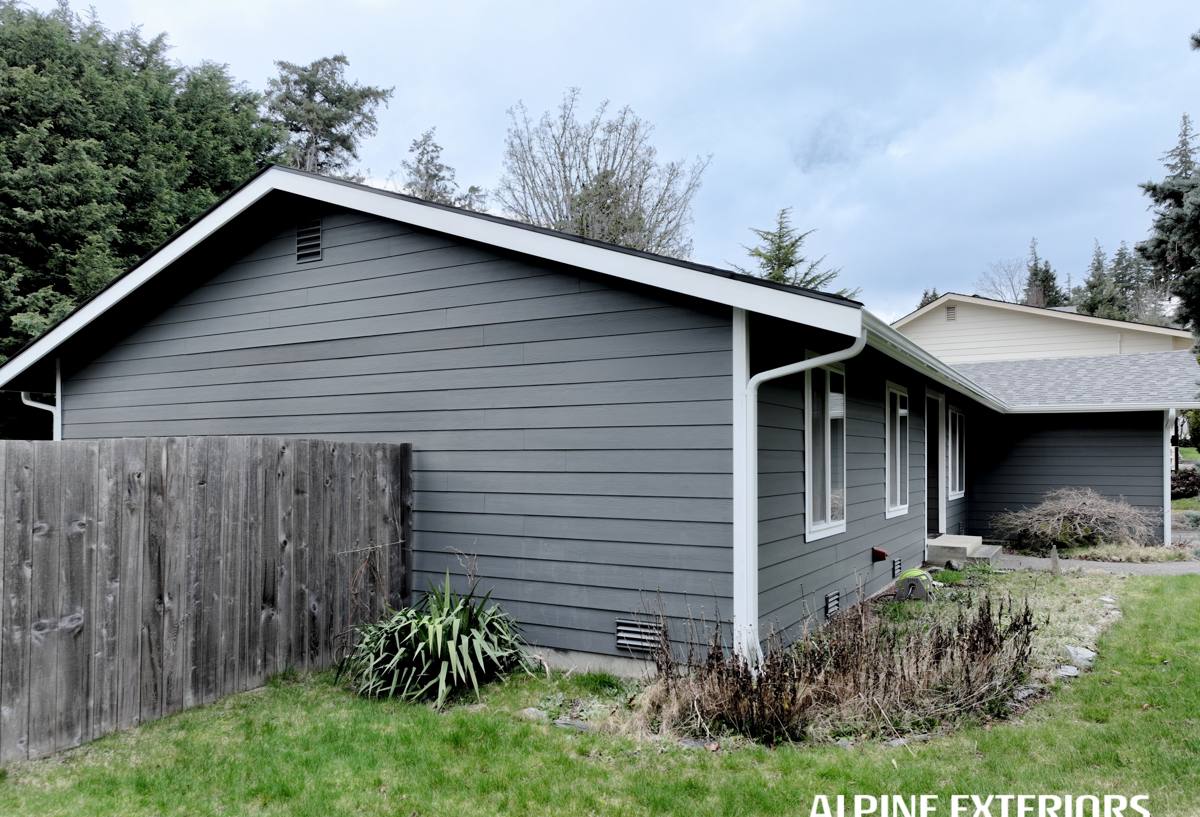
How Salt Air, Sun, and Wind-Driven Rain Actually Damage Siding
Salt air
Airborne salt is corrosive to exposed metal fasteners, trim flashing, and hardware, and it accelerates the breakdown of lower-grade coatings and caulks. Siding that looks fine from the street can have fastener heads or flashing edges quietly corroding underneath, which shows up later as staining, streaking, or a panel that's come loose at one corner.
UV exposure
Constant sun bleaches paint, dries out caulk until it cracks, and breaks down the surface of materials that weren't engineered for it. On a product with a painted-on finish rather than a baked-in one, this shows up as chalking, fading, and eventually peeling — usually first on the sides of the house that get the most afternoon sun.
Wind-driven rain
Rain that falls straight down is easy to shed. Rain that's being pushed sideways at 40-plus mph finds every gap in a lap joint, every under-caulked seam, and every spot where flashing was skipped to save time. Once water gets behind the siding, the sheathing and framing underneath start absorbing moisture long before anything visible shows up on the surface.
Hurricane-force wind
Wind doesn't just push rain around — it pulls at the siding itself. Panels that are under-fastened, or fastened into rotted sheathing, are the ones that come off first in a storm. Correct fastening schedule and sound substrate matter more here than almost anywhere else in the installation.
Signs a Crescent Lake Home Needs Siding Replaced, Not Just Patched
Repair makes sense when the damage is isolated and the rest of the wall assembly is sound. Replacement is the honest answer when the problems below show up in more than one spot, or when they keep recurring after a patch:
- Soft, spongy, or visibly warped sections when you press on the siding
- Paint that's peeling or bubbling rather than just fading
- Persistent staining below seams, corners, or window trim
- Visible gaps, buckling, or panels that have separated from the wall
- A musty smell or interior wall staining on the other side of the exterior wall
- Fasteners that are rusted, backed out, or missing entirely
- Siding that's original to a home built before modern wind-load and moisture codes
What a Correct Siding Replacement Actually Involves
Siding replacement done right is a wall-assembly project, not a cosmetic swap. Skipping steps is exactly how a house ends up needing this same work again in eight or ten years instead of thirty or more.
The sequence that matters
- Full tear-off of the old siding and trim, not an overlay on top of it
- Inspection of the sheathing underneath for rot, water damage, or soft spots, with any compromised sections replaced before anything new goes on
- A correctly lapped weather-resistive barrier, installed so water is directed out and down, not trapped behind the new siding
- Flashing at every penetration — windows, doors, vents, hose bibs, light fixtures — since this is where wind-driven rain finds its way in
- Siding installed to the manufacturer's fastening schedule and clearances, including the gap required at the bottom edge above roofing, decks, and grade
- Factory-finished panels rather than field-painted ones, so the coating that fights UV and salt exposure was applied and cured under controlled conditions
- Final inspection and cleanup, with warranty paperwork registered in the homeowner's name
Every one of those steps is easy to shortcut and hard to verify after the fact — which is exactly why the crew doing the work matters as much as the material.
Why We Install Only James Hardie Fiber Cement
We don't install vinyl, LP SmartSide, primed spruce, cedar, or other fiber-cement brands. That's a deliberate standard, not a lack of options, and it's worth explaining honestly rather than just asserting it.
Vinyl is inexpensive and easy to install, and in a lot of the country it holds up fine. On the Pinellas coast, it softens and can distort under sustained heat and direct sun, its seams are a weak point against wind-driven rain, and it's not rated for the wind speeds this area can see. Wood siding — cedar or primed spruce — looks good on day one, but it's the material most vulnerable to the combination of moisture, insects, and UV that this climate throws at it, and it demands a repainting and recaulking schedule most homeowners underestimate. LP SmartSide is an engineered wood product with real strengths, but it's still wood-based at its core, meaning cut edges and fastener penetrations need diligent sealing to keep moisture out — a maintenance-sensitive detail in a climate this humid.
James Hardie fiber cement doesn't share those vulnerabilities. It's non-combustible, it doesn't rot or support insect damage, and Hardie engineers specific product lines (the HZ5 line is built for this kind of climate) for high-humidity, high-moisture regions like Florida's Gulf Coast. The ColorPlus finish is baked on at the factory, not brushed on at the house, which is why it resists the fading and peeling that plain painted siding shows first. It carries a strong, transferable warranty when installed to Hardie's specification — which is also why installation accuracy isn't optional for us. We standardized on one material because we can stand behind installing it correctly, house after house, rather than juggling five products with five different failure modes.
How Materials Compare for a Crescent Lake Home
| Material | Salt air resistance | UV / fade resistance | Wind-driven rain tolerance | Typical upkeep |
|---|---|---|---|---|
| James Hardie fiber cement | Strong | Strong (factory finish) | Strong when correctly flashed | Low — periodic wash, recaulk as needed |
| Vinyl | Fair | Fades over time | Weak at seams | Low, but distorts/cracks under heat and impact |
| Wood (cedar/primed spruce) | Weak without diligence | Weak — needs repainting | Weak if not sealed | High — paint, seal, inspect regularly |
| Engineered wood (LP SmartSide) | Fair with sealed edges | Fair (painted finish) | Fair if edges/seams sealed well | Moderate — edge sealing is critical |
Our Process for a Crescent Lake Siding Replacement
The steps don't change from house to house, but knowing what to expect makes the project a lot less stressful.
What happens, in order
- An on-site walk-around to assess the current siding, look for water damage, and measure the home
- A written estimate that breaks out material, labor, and any sheathing repair allowance
- Scheduling that accounts for South Florida's rain patterns, so tear-off and dry-in happen quickly
- Tear-off, sheathing inspection and repair, weather barrier, and flashing before a single new panel goes up
- James Hardie installation to fastening and clearance specification
- A final walk-through with the homeowner and warranty registration
Why a Crew That Already Works Crescent Lake Matters
Siding replacement in this neighborhood isn't generic exterior work. A crew that's worked Crescent Lake and the surrounding St. Petersburg neighborhoods already knows the housing stock — older bungalows with settled framing, additions with mismatched sheathing, homes where the last siding job cut corners that only show up once the old material comes off. That familiarity means fewer surprises mid-project, faster and more accurate estimates, and a realistic sense of what Pinellas County's permitting and wind-load requirements actually mean for a given house rather than a boilerplate answer.
It also means a shorter distance for warranty follow-up and service calls. A siding job is only as good as the company still being reachable five or ten years later, and a crew based in the area rather than working out of a distant zip code is one that's positioned to actually be there.
What Affects the Cost
Every home is different, so we won't quote a number without seeing the house, but the factors that move the price are consistent:
- Total square footage of exterior wall area and the number of stories
- How much of the existing sheathing needs repair or replacement once the old siding comes off
- The complexity of the trim — window and door surrounds, corner boards, soffit and fascia details
- Whether the job is a straightforward lap-siding replacement or includes accent details like board-and-batten sections
- Access — a single-story home with clear ground access is faster to work than a two-story home with tight side yards
Living With New Siding in a Salt-Air Climate
Correctly installed James Hardie siding is low-maintenance, not zero-maintenance. A periodic rinse to clear salt residue and dust, a visual check after major storms for loose trim or damaged caulk lines, and prompt attention to any caulk that's cracked around windows and penetrations will keep the wall assembly doing its job for decades. That's a much shorter list than what wood or vinyl typically demand in this same climate, but it's still worth keeping on a homeowner's yearly checklist.
If your Crescent Lake home is showing any of the warning signs above, or the siding is simply original and due, we're glad to take a look and put together a straightforward, no-pressure estimate — just fill out the form below.