 St. Petersburg Roofing
 Disston Heights is one of St. Petersburg's older, established neighborhoods, with a mix of home ages and architectural styles that have weathered decades of Pinellas County summers, storm seasons, and everything the Gulf Coast throws at an exterior wall. When it's time to replace tired, damaged, or outdated siding, the material and the installation matter just as much as the neighborhood it's going on. This page covers what Disston Heights homes specifically need from their siding, what a correct installation actually involves, and why we install only James Hardie fiber cement siding on every home we work on.
What Florida's Climate Does to Siding in Disston Heights
St. Petersburg sits in a climate that is genuinely hard on exterior building materials. It's not one stress, it's several, stacked on top of each other year-round:
- Hurricane-force wind: Even homes that never take a direct hit still face repeated tropical storm and hurricane-season wind events that test every fastener and seam in a siding system.
- Wind-driven rain: Florida storms rarely fall straight down. Rain gets pushed sideways into laps, joints, and trim, which is where most siding failures actually start.
- Intense, near-constant UV: Sun exposure here is stronger and more consistent than in most of the country, and it's the main reason paint and lower-grade siding finishes chalk, fade, and break down years ahead of schedule.
- Salt air: St. Petersburg's proximity to Tampa Bay and the Gulf means airborne salt is a factor even away from the immediate waterfront. Salt accelerates corrosion of fasteners and trim and speeds up finish degradation on materials that aren't built to handle it.
- Heat and humidity: Constant moisture in the air keeps siding materials damp longer after rain, which matters a great deal for anything that can absorb water.
None of these stresses are unique to Disston Heights, but they don't skip it either. A siding product and installation that would hold up fine in a drier, milder climate can fail here in a fraction of the time.
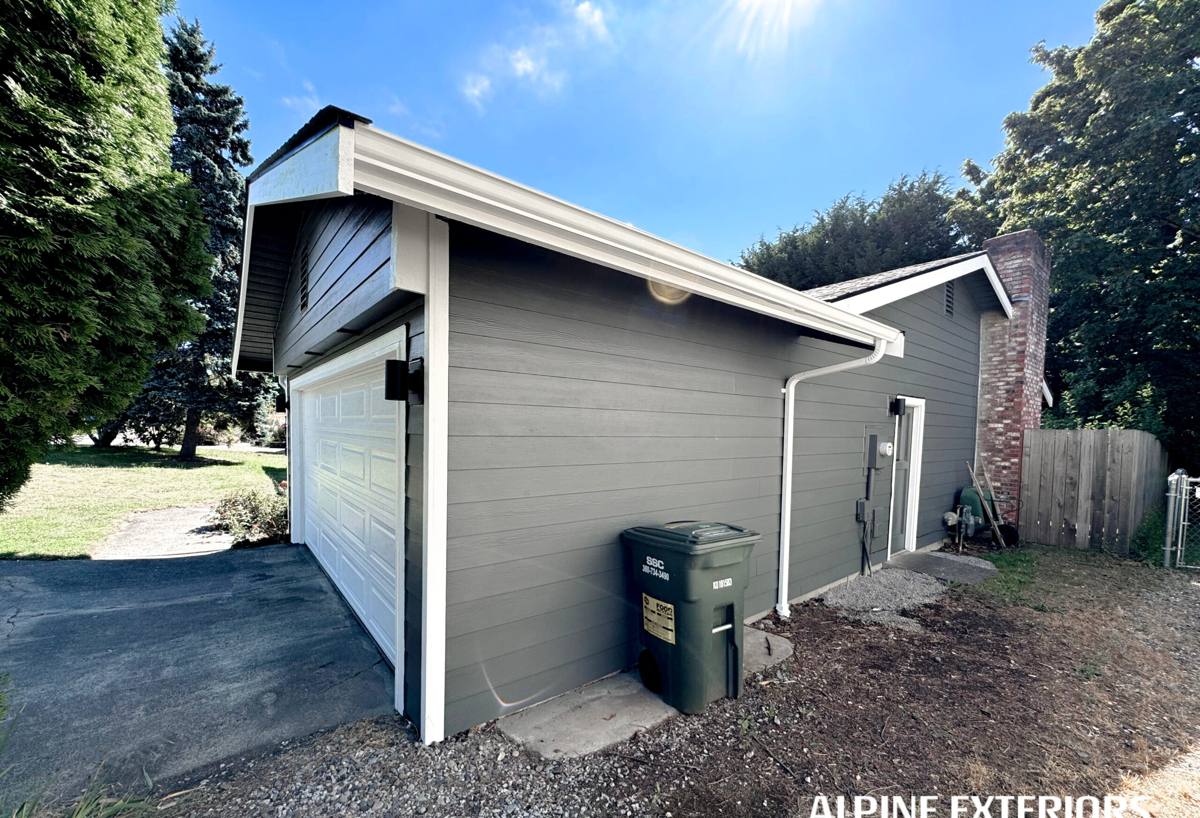
What Disston Heights Homes Specifically Need
Like many established St. Petersburg neighborhoods, Disston Heights includes a range of home ages, from mid-century block and frame houses to newer construction and additions. That mix means siding needs vary house to house, but a few things hold true across the neighborhood:
- A siding material that doesn't absorb and hold water, since damp siding sitting through a humid Florida summer is a recipe for rot and mold behind the wall.
- A finish that's engineered to resist UV fading, not just painted and hoped for.
- Fastening and installation details rated for our local wind exposure, not generic national minimums.
- Low ongoing maintenance, since most homeowners don't want to be re-caulking or repainting every few years in this climate.
- Non-combustible material, which matters for both safety and, increasingly, insurance considerations in Florida.
Why We Install Only James Hardie Fiber Cement Siding
We made a decision years ago to standardize on one product line for every siding job we do, and that product is James Hardie fiber cement siding. We don't install vinyl, LP SmartSide, primed wood, or other engineered wood or composite sidings. That's not a marketing position, it's a practical one built around what actually holds up in Pinellas County conditions.
Built for Florida's Climate
James Hardie makes climate-specific product lines, and the HZ5 line is engineered for hot, humid, high-moisture regions like ours. Fiber cement itself is made from cement, sand, and cellulose fibers, which means it doesn't absorb water the way wood-based products can, doesn't provide a food source for pests or fungus, and doesn't warp or swell with humidity swings the way engineered wood products sometimes do over time.
A Factory Finish, Not a Field Paint Job
Hardie's ColorPlus finish is baked on in a controlled factory environment, not brushed or sprayed on-site. That matters here specifically because Florida's UV load is one of the fastest ways to break down a field-applied paint job. A factory finish is more consistent and holds its color longer under the kind of sun exposure Disston Heights gets nearly every day of the year.
Non-Combustible
Fiber cement doesn't burn, which is a real, meaningful difference from wood-based or vinyl siding and one more reason we don't hedge on this material for the homes we work on.
What a Correct Siding Installation Actually Involves
The product is only half the equation. A lot of siding failures we get called out to inspect aren't a product problem at all, they're an installation problem. A correct James Hardie installation includes:
- Full tear-off and substrate inspection: Old siding comes off, and the sheathing underneath gets checked for rot, water damage, or pest issues before anything new goes up.
- Proper water management: Correct flashing at windows, doors, and any wall penetrations, plus a weather-resistant barrier installed to manufacturer spec, so water that gets behind the siding has somewhere to go.
- Manufacturer-spec fastening: Nail type, spacing, and placement per James Hardie's installation guidelines and our local wind exposure, not just "close enough."
- Correct clearances: Proper gaps between siding and grade, roofing, decks, and other transitions to keep moisture from wicking into the material.
- Caulking only where it belongs: Over-caulking joints that are designed to allow drainage is a common mistake that traps water instead of shedding it.
- Code-compliant permitting: Siding replacement in St. Petersburg typically requires a building permit, and the installation needs to meet Florida Building Code wind-load and fastening standards for our area.
Skipping any one of these steps can shorten the life of even the best siding product by years.
Our Siding Installation Process
- On-site inspection and estimate: We walk the exterior, check the current siding and substrate condition, and talk through what we're seeing before we quote anything.
- Product and color selection: We help you choose the right James Hardie profile and ColorPlus color for the home's style and the neighborhood.
- Permitting: We handle the permit application and make sure the scope of work meets local code requirements.
- Tear-off and repair: Old siding comes off, and any damaged sheathing or framing found underneath gets repaired before installation starts.
- Installation: Siding goes up to manufacturer spec, with proper flashing, fastening, and clearances at every stage.
- Trim and detail work: Fascia, soffit, corner boards, and trim are finished to match, with attention paid to every joint and transition.
- Final walkthrough: We inspect the completed work with you and register the manufacturer warranty.
What Drives the Cost of a Siding Installation
Every home is different, so we don't quote sight unseen, but these are the main factors that move the number up or down on most Disston Heights projects:
| Cost Factor | Why It Matters |
|---|---|
| Home size and layout | More square footage and more corners, gables, or dormers mean more material and labor. |
| Tear-off and substrate condition | Rot or water damage found under old siding adds repair time before new siding can go up. |
| Story height and access | Two-story sections and tight side yards require more setup, staging, and time. |
| Trim and accessory scope | Fascia, soffit, corner boards, and window/door trim add labor beyond the flat wall siding itself. |
| Siding profile chosen | Lap width and style (traditional lap, board and batten, shingle-style accents) affect material and labor cost. |
| Color selection | Standard ColorPlus colors versus custom or premium color options can shift pricing. |
Why It Matters to Hire a Crew That Already Works in Disston Heights
Siding installation is a trade where local experience shows up in the details. A crew that already works in Disston Heights and the surrounding St. Petersburg neighborhoods knows the local permitting process at City Hall, understands the wind and moisture demands specific to Pinellas County, and has likely already worked on homes of a similar age and construction type nearby. That familiarity cuts down on surprises during tear-off, keeps the permitting timeline moving, and means the crew isn't learning the local code requirements on your project. It also means faster response if you have a question after the job is done, since we're not driving in from across the region to take a look.
Getting Ready for Your Siding Project
A little preparation on your end helps the project move smoothly and keeps your property protected during the work:
- Trim back shrubs, bushes, or tree limbs close to exterior walls so crews have clear access.
- Move patio furniture, grills, planters, and decorations away from the work areas.
- Note any outdoor electrical fixtures, spigots, or cameras mounted on the siding so they can be worked around or reinstalled properly.
- Let neighbors know if you share a fence line or a tight side yard where equipment or materials will be staged.
- Plan for pets to be kept away from open work areas and gates during the day.
- Confirm your permit is posted as required before work begins.
If you're weighing a siding replacement for your Disston Heights home, we're happy to take a look and walk you through what we're seeing, what it would take to do the job right, and what James Hardie siding would look like on your specific house. Reach out for a free, no-pressure estimate using the form below.