 St. Petersburg Roofing
 Siding Repair Built for How Disston Heights Homes Actually Age
Disston Heights is one of St. Petersburg's older established residential neighborhoods, with a housing stock that spans decades of Florida building styles. That mix matters when it comes to siding. A home built decades ago may still be wearing its original siding material, a later owner's vinyl or wood-composite retrofit, or a partial repair from a prior storm. Before any repair crew touches a wall, we need to know exactly what's underneath the surface layer — because in Pinellas County's climate, what's hidden usually matters more than what's visible.
Siding here doesn't fail for just one reason. It's the combined, repeated stress of hurricane-force wind events, near-constant UV exposure, wind-driven rain that gets forced sideways into seams and laps, and salt-laden Gulf air that corrodes fasteners and trim long before most homeowners notice. A siding repair that only addresses the visible crack or gap, without accounting for those four stressors, tends to fail again within a season or two.
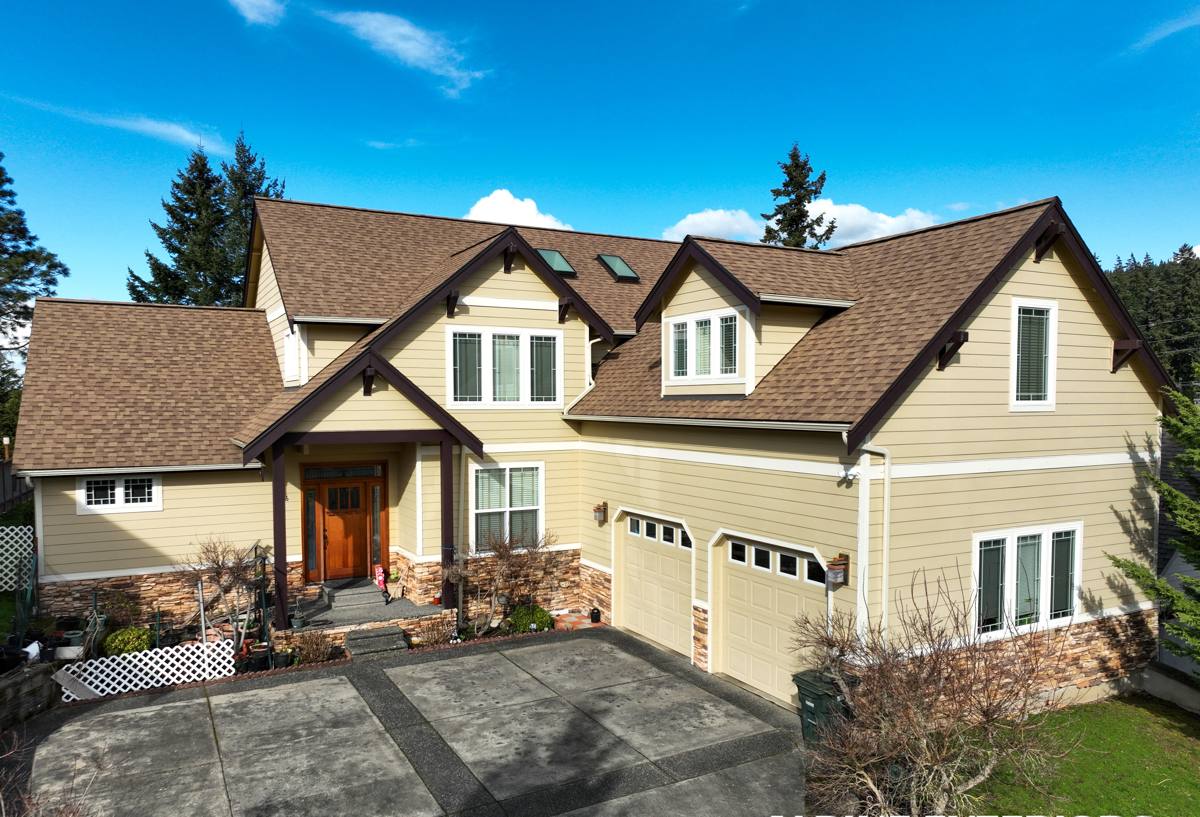
Why This Climate Is Harder on Siding Than People Expect
Wind and Wind-Driven Rain
Tropical systems and seasonal storms don't just push wind against a wall — they drive rain horizontally, forcing water up under laps, around fastener heads, and into any gap where two panels or trim pieces meet. Siding that looks intact from the ground can still be letting water behind it every time a storm rolls through, which is how hidden rot and sheathing damage develop over multiple seasons without an obvious warning sign.
Year-Round UV Exposure
St. Petersburg gets more sun exposure than most of the country, and that UV load breaks down caulking, paint film, and lower-grade composite materials faster than manufacturers' national warranty language usually accounts for. Sun-facing walls typically show fading, chalking, and joint failure well ahead of shaded elevations on the same house.
Salt Air, Even Away From the Water
Disston Heights isn't a beachfront neighborhood, but Pinellas County is a narrow peninsula, and Gulf breezes carry salt-laden moisture well inland. Over years, that salt content accelerates corrosion on nails, screws, and metal trim, and it speeds up the breakdown of caulk and sealant joints — one more reason a "just patch it" repair without fastener and flashing inspection tends to be short-lived here.
Signs Your Siding Needs Repair — Not a Full Re-Side
Not every damaged section means the whole house needs new siding. Knowing the difference saves money and avoids unnecessary work. Common repair-stage signs include:
- Cracked, chipped, or missing panels in an isolated area (often from wind-thrown debris or impact)
- Soft or spongy spots when pressed, usually near the bottom courses or around windows and doors
- Visible gaps at seams, corners, or trim where caulking has failed
- Bubbling, peeling, or chalky paint concentrated on one or two elevations
- Staining or discoloration below a specific joint, suggesting water intrusion at that point
- Loose or rattling panels after a storm, indicating failed or corroded fasteners
If damage is isolated and the underlying wall sheathing and framing are still sound, a targeted repair is usually the right call. If moisture has spread behind multiple panels, or the siding material itself is failing broadly rather than in one spot, repair becomes a stopgap rather than a fix — and we'll tell you that honestly instead of billing you for repeated patch visits.
What a Correct Siding Repair Actually Involves
A repair that holds up through another hurricane season involves more than swapping the damaged piece. Every repair we do in Disston Heights follows the same sequence, regardless of how small the visible damage looks:
1. Diagnose Before Removing Anything
We check for moisture intrusion behind the damaged section, not just at it. A single cracked panel is often the entry point for water that has already spread to neighboring courses or the sheathing behind them.
2. Inspect the Sheathing and Framing
Once panels are pulled, we look at what's underneath. Soft or discolored sheathing gets addressed before any new siding goes back on — covering compromised sheathing with new siding just hides the problem for a future owner or a future storm.
3. Correct the Flashing and Water Management
A large share of siding failures we see trace back to flashing that was missing, undersized, or installed incorrectly around windows, doors, and roof-to-wall transitions. Repair work is the opportunity to correct that detail, not just replace the panel above it.
4. Match or Upgrade the Material
Where the existing siding is still a viable, sound material, we match it as closely as possible. Where the damaged section calls for replacement material — because the original product is discontinued, deteriorated, or simply due for an upgrade — we use James Hardie fiber cement, which is the only siding product we install.
5. Fasten and Seal for This Climate
Corrosion-resistant fasteners and marine-grade sealants matched to Gulf Coast conditions, not generic hardware-store caulk, are what keep a repair from needing to be redone in two years.
The Range of Siding We Find on Disston Heights Homes
Because the neighborhood spans multiple building eras, we regularly repair a mix of materials on the same street — sometimes on the same house. Each behaves differently once it's damaged, which changes what an honest repair looks like.
| Existing Material | Common Failure Mode | Repair Approach |
|---|---|---|
| Original wood lap siding | Rot, insect damage, paint failure | Assess remaining sound wood; replace failed sections, often with fiber cement to stop the recurring rot cycle |
| Vinyl siding | Cracking, warping, fading, wind-lifted panels | Match existing panels where possible for isolated damage; broader failure signals it's time to discuss replacement |
| Older fiber cement | Caulk joint failure, edge chipping, fastener corrosion | Straightforward patch and reseal; durable base material holds up well to targeted repair |
| Wood-composite (LP-type) siding | Swelling, delamination at cut edges and seams | Repair moisture-damaged sections; we do not replace with more of the same composite material |
When a repair calls for new material rather than a like-for-like patch, we install James Hardie fiber cement — engineered specifically for hot, humid, storm-prone climates, factory-finished so the color doesn't rely on field-applied paint, and non-combustible. We don't stock or install vinyl, LP SmartSide, primed wood, or cedar as replacement material, because those products carry maintenance and moisture trade-offs that don't hold up as well to this specific climate over the long run. That's a standard we hold for every job, not just this one.
Our Siding Repair Process
- On-site inspection — we examine the damaged area and check adjacent sections and interior walls for signs of moisture intrusion.
- Honest scope and estimate — you get a clear explanation of what's damaged, what's causing it, and whether repair or partial replacement is the right call.
- Careful removal — damaged panels and trim come off without unnecessary disruption to sound surrounding material.
- Sheathing and framing check — any moisture damage found underneath is addressed before new material goes on.
- Flashing and water management correction — the actual cause of the failure gets fixed, not just the symptom.
- Material installation — matched existing material or James Hardie fiber cement, installed to manufacturer spec and fastened for coastal wind exposure.
- Final seal and cleanup — proper caulking, paint or finish touch-up, and a clean job site when we leave.
Repair vs. Replacement: What Drives the Decision
| Factor | Favors Repair | Favors Replacement |
|---|---|---|
| Extent of damage | Isolated to one or two sections | Spread across multiple elevations |
| Age of existing siding | Mid-life, otherwise sound material | Near or past expected service life |
| Moisture findings | Contained, sheathing intact | Widespread intrusion or rot found behind panels |
| Material availability | Matching material still viable | Original product discontinued or degraded |
| Storm history | First significant damage event | Repeat damage from multiple storm seasons |
We won't push a full replacement when a repair genuinely solves the problem, and we won't recommend patching a house that's structurally past the point where repair makes financial sense. The inspection findings drive the recommendation, not the other way around.
Why Hiring a Crew That Already Works in Disston Heights Matters
Siding repair quality depends heavily on local knowledge that doesn't show up in a generic estimate. A crew that regularly works St. Petersburg neighborhoods understands the wind-exposure differences between an open lot and a tree-shaded street, knows what wind-driven rain damage typically looks like on homes of a given era, and can move quickly when storm-damage repair timelines matter. Familiarity with Pinellas County permitting requirements for exterior work also keeps a repair project from stalling on paperwork it didn't need to hit in the first place.
Just as important is accountability. A local, established crew is still reachable next season if a repair doesn't perform as expected — which matters far more with siding than with most other trades, since siding failures are often slow and only become obvious after another storm cycle has already done additional damage.
A Quick Checklist Before You Call Anyone
- Note exactly where the damage is and whether it's isolated or spread across the wall
- Check for soft spots, staining, or bubbling paint near the damaged area, not just at it
- Take photos before any storm cleanup disturbs the site, especially for insurance purposes
- Ask any contractor what they found underneath the surface, not just what they replaced on top
- Confirm what replacement material will be used if the existing product can't be matched
- Get the scope and findings in writing before work begins
If you're dealing with damaged, aging, or storm-affected siding on a Disston Heights home, we'd rather look at it in person than guess over the phone. Reach out for a free, no-pressure estimate — the form below gets you on our schedule for an honest inspection and a straight answer on repair versus replacement.