 St. Petersburg Roofing
 Board & Batten Siding Built for Roser Park's Climate
Roser Park sits close enough to Tampa Bay that its homes take on every layer of what Pinellas County weather has to offer over the course of a year. Hurricane-force winds test how well siding is actually fastened down, not just how it looks going up. Intense, near-constant UV exposure works on paint and caulk lines every single day, whether or not a storm ever shows up. Wind-driven rain gets pushed sideways and forced up under panel edges and seams instead of simply running off. And salt air drifting in off the bay speeds up corrosion on any metal component that wasn't specified to handle it. Board and batten siding can hold up beautifully against all of that, but only when it's installed by someone treating those conditions as the baseline, not an afterthought.
This page covers what a correct board and batten install actually looks like for a home in Roser Park — the details that matter given the neighborhood's older housing stock and this stretch of St. Petersburg's climate, what separates an install that lasts decades from one that fails early, and how we run the job from first look to final walkthrough.
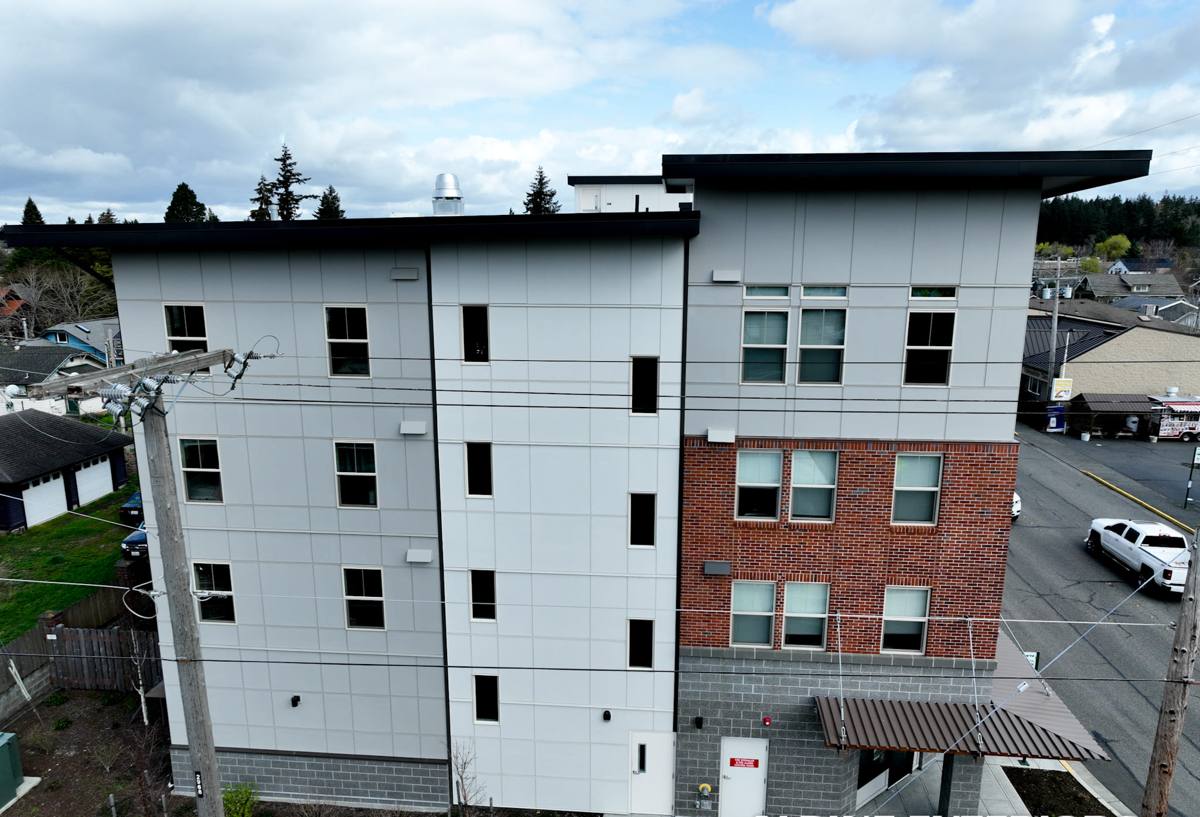
Why Board & Batten Fits Roser Park Homes
Roser Park is one of St. Petersburg's older, more architecturally distinctive neighborhoods, with a mix of early-20th-century home styles that don't always fit neatly into whatever siding profile happens to be trending. Board and batten — wide vertical panels with narrow battens covering the seams — has a clean, defined look that reads as intentional rather than generic, which is part of why it shows up so often as an accent on porches, gables, and dormers, and sometimes as the primary siding on a whole elevation.
The vertical lines also do something practical, not just decorative: they shed water differently than horizontal lap siding, with fewer overlapping horizontal ledges for wind-driven rain to catch and work its way under. That doesn't make board and batten maintenance-free, but it does mean the profile itself is a reasonable structural fit for a climate that throws a lot of sideways rain at a house, provided the underlying installation is done right.
What Local Climate Actually Demands
- A wind rating that matches the fastening schedule: Panels and battens need to be nailed to a pattern engineered for local wind exposure, not a generic spacing pulled from a national average.
- A continuous weather-resistive barrier: Behind every panel, a proper drainage plane gives wind-driven rain a way out if it gets past the surface, instead of trapping it against the sheathing.
- UV-stable, factory-applied finish: Field-applied paint fades and chalks under sustained Florida sun far sooner than a factory finish engineered to hold color under UV.
- Corrosion-resistant fasteners and flashing: Standard fasteners degrade faster this close to the bay, and a corroded fastener head is a common, quiet source of water intrusion years down the line.
What a Correct Board & Batten Install Involves
Board and batten looks simple from the street — wide boards, narrow battens, clean vertical lines — but the system behind that look has more moving parts than most homeowners expect, and each one matters more in this climate than it would somewhere drier and calmer.
Weather-Resistive Barrier and Flashing
Every board and batten job starts with a continuous weather-resistive barrier installed over the sheathing, lapped correctly at every seam so water is always directed downward and outward. Flashing at windows, doors, and any roof-to-wall transitions has to be integrated with that barrier as one connected system — not caulked on top after the siding is already up. This is the layer nobody sees once the job is finished, and it's also the layer that determines whether the wall behind the siding stays dry for the next thirty years.
Fastening Schedule and Wind Rating
Panel and batten fastening has to follow a schedule engineered for the wind exposure of the specific wall it's going on, with nail spacing and embedment that actually matches manufacturer specification rather than a shortcut pattern. This is where a lot of underbid jobs quietly cut corners, because it's invisible once the battens go on, and it's exactly the detail that separates siding that stays put in a tropical storm from siding that starts lifting at the edges.
Batten Spacing and Panel Layout
Consistent batten spacing and layout planned around window and door openings is what makes board and batten look deliberate instead of improvised. Panel joints need to land over solid backing and be flashed or sealed correctly, and battens need enough width and consistent reveal to actually cover and protect those joints rather than just decorate over them.
Caulking and Sealant Joints
Sealant at panel joints, trim, and penetrations does real structural work in this climate, not just cosmetic work. It has to be a product rated to stay flexible and adhered under sustained UV and heat, because a sealant joint that cracks or pulls away in year three opens a direct path for wind-driven rain to get behind the siding.
Trim, Corners, and Penetrations
Outside corners, window and door trim, and any penetrations for vents or fixtures are where board and batten installs most often fail early if they're rushed. Each of these details needs its own flashing and sealant plan, worked out before the siding goes up, not solved on the fly with a bead of caulk after the fact.
Comparing Board & Batten Siding Materials
| Material | Typical Lifespan in This Climate | How It Holds Up Here |
|---|---|---|
| Fiber Cement (James Hardie) | 30+ years | Non-combustible, engineered for high-humidity and high-wind climates, holds a factory finish under sustained UV far longer than field-painted materials |
| Vinyl | 15-25 years | Lower upfront cost, but can warp or fade under intense, sustained Florida UV and is more prone to cracking in wind-driven debris impacts |
| Primed Wood or Cedar | 10-20 years with upkeep | Attractive natural look, but needs frequent repainting and is vulnerable to moisture absorption, rot, and insect damage in this humidity |
| Engineered Wood Composites | 20-30 years | Better moisture resistance than raw wood, but edge and joint sealing is critical, and performance varies significantly by product and installer |
We install James Hardie fiber cement exclusively, and this table is a big part of why. Wood and engineered wood products carry ongoing maintenance burdens that don't match up well with a climate this humid, and vinyl's UV and impact performance tends to show its limits over time in coastal Pinellas County conditions. Hardie's fiber cement formulation and factory-applied finish are built specifically to hold up under exactly the stresses a Roser Park home deals with year-round.
Cost Factors Worth Understanding
Two board and batten bids for the same house can land far apart in price, and the gap is almost always real differences in scope, not one contractor simply guessing lower. Knowing what drives cost makes it much easier to compare estimates that look nothing alike on paper.
| Factor | What It Affects |
|---|---|
| Removal and substrate condition | Whether hidden rot or moisture damage behind old siding gets found and repaired before new panels go up |
| Weather-resistive barrier quality | How well the wall assembly resists wind-driven rain getting behind the finished siding |
| Panel thickness and product line | Wind rating, durability, and long-term appearance of the finished job |
| Trim and flashing scope | How thoroughly corners, openings, and penetrations are protected against water intrusion |
| Batten spacing and layout complexity | Labor time and how clean the finished vertical lines look, especially around windows and gables |
| Home access and elevation | Staging, scaffolding needs, and labor time on multi-story or tightly set homes |
Ask any contractor to break their estimate down by these components rather than handing over a single lump-sum number. A bid that specifies barrier type, panel product, and flashing scope tells you far more about what you're actually paying for than one that just says "board and batten siding" with a price attached.
How Our Process Works
We keep the process straightforward, because a job that changes the entire exterior of your home deserves clear communication at every step.
- In-person assessment: We walk the exterior of the home ourselves to evaluate substrate condition, existing siding, and any moisture concerns before writing a scope.
- Written estimate: You get an itemized bid covering removal, weather barrier, panel and batten product, flashing, and trim — not a single vague line item.
- Scheduling around weather: We build reasonable flexibility into the timeline, because wet-season delays are a normal part of exterior work in this region, not an excuse we reach for later.
- Removal and substrate repair: Old siding comes off, and any rot or damage underneath gets addressed before anything new goes up.
- Barrier, flashing, and siding installation: Each layer goes on to manufacturer specification, with particular attention paid at joints, corners, and openings.
- Final walkthrough: We review the finished exterior with you in person and do a full site cleanup before we consider the job done.
Why Hiring a Crew That Already Works in Roser Park Matters
A crew that regularly installs siding in and around Roser Park has already seen how salt air corrodes underspecified fasteners, how wind-driven rain finds its way through improperly lapped barriers, and how older homes in this part of St. Petersburg tend to be built underneath their existing siding. That kind of earned, local knowledge shows up in small decisions throughout a job — decisions a crew unfamiliar with this specific climate and housing stock might not think to make at all.
It also matters once the job is finished. A workmanship warranty only means something if the company behind it is still around and reachable years later, and a contractor with an established, ongoing presence in the St. Petersburg area is one you can actually call if a question comes up down the road.
A Practical Checklist Before You Choose a Siding Contractor
- Do they specify the exact siding product and manufacturer, not just "board and batten siding"?
- Does the estimate call out weather-resistive barrier type and fastening schedule?
- Is flashing at corners, openings, and penetrations explicitly written into the bid?
- Do they carry current Florida contractor licensing, liability insurance, and workers' compensation?
- Can they point to recent, real work in or near St. Petersburg and Pinellas County?
- Does the bid clearly separate manufacturer material warranty from the contractor's own workmanship warranty?
Signs Your Roser Park Home's Siding May Need Attention
Board and batten siding rarely fails all at once. It usually gives warning signs first, often well before a real problem shows up inside the walls, and catching those signs early is frequently the difference between a repair and a full re-side.
- Cracked, peeling, or chalking paint at battens and panel joints, especially on sun-exposed elevations
- Caulk that's pulled away, cracked, or gone brittle at seams, trim, and window or door edges
- Soft or spongy spots when panels are pressed, which can point to moisture damage behind the siding
- Visible gaps, warping, or buckling along battens or panel edges after storm season
- Staining or discoloration streaking down from panel joints, often a sign water is getting behind the surface
If any of that sounds familiar, it's worth having the siding looked at before the next stretch of storm season rather than waiting for damage to show up inside the house.
If you'd like an honest, no-pressure look at your Roser Park home's siding and a written estimate you can compare against anything else you've received, we're glad to come take a look. Use the form below to request a free estimate.