 St. Petersburg Roofing
 Building a Deck in Euclid-St. Paul: A Different Climate Problem Than Most Contractors Admit
Euclid-St. Paul is one of St. Petersburg's older, established neighborhoods — mature tree canopy, a mix of classic Florida bungalows and mid-century homes, and lots that were laid out long before anyone was thinking about composite decking or stainless fasteners. A lot of the outdoor living space in this neighborhood was added on later, which means when we get called out for a custom deck here, we're usually either replacing something that failed early or building fresh on a house where the original footprint never had one.
What makes decks in this part of Pinellas County different from decks built inland or up north isn't the design — it's what the deck has to survive. St. Petersburg sees hurricane-force wind gusts, intense sun nearly every month of the year, wind-driven rain that gets pushed sideways under eaves and railings, and salt-laden air coming off Tampa Bay that doesn't care whether your house is technically waterfront. A deck built to a generic national spec sheet will show fastener corrosion, ledger board rot, and UV-cracked boards years before it should. A deck built for this specific climate, on this specific kind of lot, holds up.
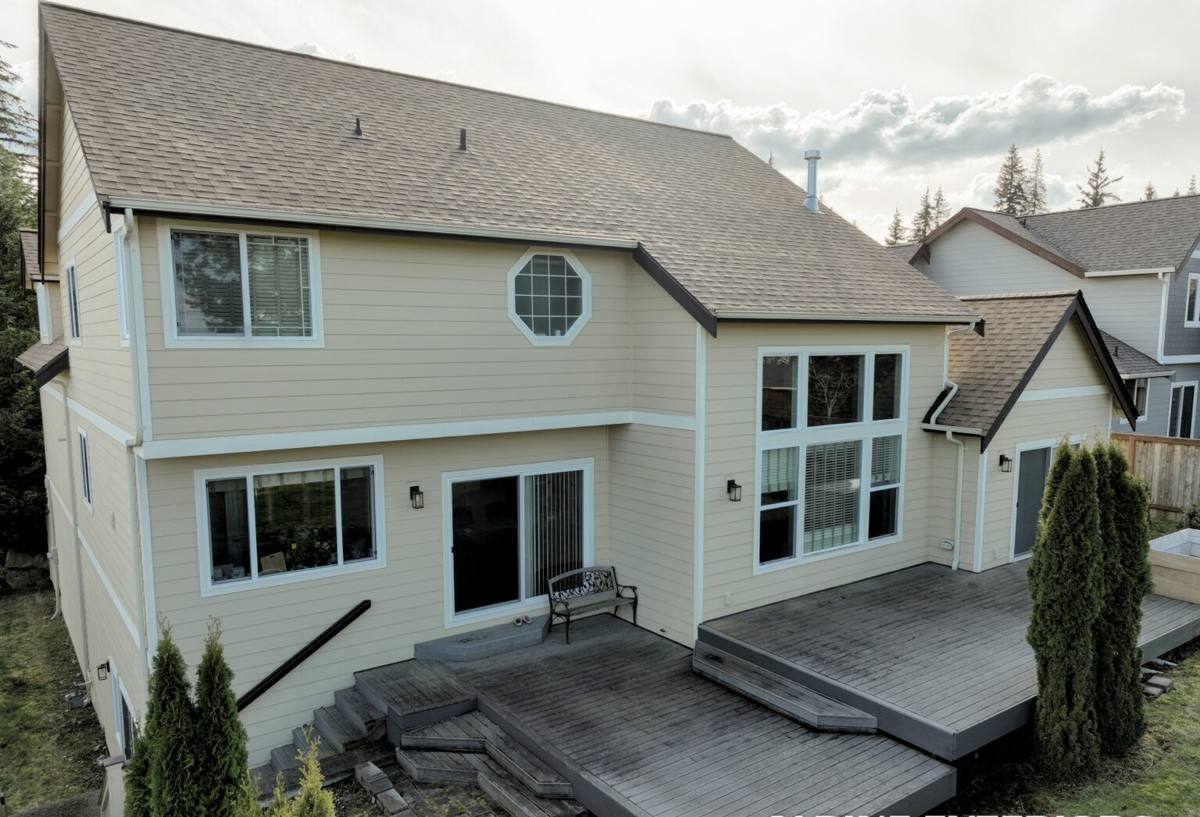
What Local Homes Actually Need From a Deck
The ledger and framing connection
The single most common failure point on older decks we get called to inspect or replace isn't the decking itself — it's the ledger board connection to the house and the framing hardware underneath. Humidity and wind-driven rain work into any gap in that connection, and once moisture gets behind a ledger board, rot spreads quietly under the boards where nobody sees it until the deck feels spongy. A correct build uses proper flashing, a moisture barrier between the ledger and the house, and lag bolts or through-bolts rated for the load — not just nailed on and caulked.
Fasteners and hardware
Salt air off Tampa Bay accelerates corrosion on standard galvanized fasteners faster than most homeowners expect, even several miles inland. We use stainless steel or high-grade coated fasteners rated for coastal exposure on every deck we build in St. Petersburg, including Euclid-St. Paul. It costs more up front than mill-standard hardware. It's also the difference between hardware that's still tight in ten years and hardware that's rust-streaked and failing in three.
Footings and wind uplift
A deck isn't just weight sitting on posts — in a hurricane-prone area, wind can create uplift forces that try to lift a structure off its footings. Footings need to be sized and depth-rated for local soil and wind load requirements under the Florida Building Code, with proper post-to-footing anchoring, not just a post set in a tube of concrete. This is also the part of the job a permit and inspection actually checks, and for good reason.
Decking Material Options for a Bay-Adjacent Climate
There's no single "best" decking material — there's a best material for your budget, your maintenance appetite, and how much direct sun and moisture your specific lot gets. Here's how the common options actually perform in St. Petersburg conditions:
| Material | UV / Fade Resistance | Moisture & Salt Air Behavior | Maintenance |
|---|---|---|---|
| Pressure-treated pine | Fades and grays within 1-2 years without upkeep | Prone to cupping/splitting if not sealed regularly | Annual sealing/staining recommended |
| Tropical hardwood (e.g. ipe-type species) | Very good; naturally dense | Excellent moisture resistance; needs oiling to hold color | Periodic oiling; otherwise low |
| Capped composite | Good to very good, brand-dependent | Doesn't rot; resists salt air well | Occasional washing, no sealing |
| PVC decking | Excellent | Fully moisture-immune; unaffected by salt air | Lowest of all options |
Our standard is to walk homeowners through the honest trade-offs rather than push one product line. Real wood gives a warmer, traditional look that fits a lot of Euclid-St. Paul's older architecture, but it demands consistent upkeep in this climate or it shows it fast. Composite and PVC cost more per square foot up front and can run hotter underfoot in direct summer sun, but they remove the sealing and staining cycle entirely — which matters a lot to homeowners who travel or don't want a recurring maintenance chore.
Railings, Fasteners, and the Details That Actually Fail First
Railings take a disproportionate amount of wind and UV load because they're the tallest, most exposed part of the structure. Aluminum and vinyl railing systems generally outperform painted wood railings in this climate because they don't require repainting to keep moisture out of end grain. Where we do install wood railings for aesthetic reasons, we detail the post caps and end grain carefully, because that's where rot starts.
Stair stringers and any framing member close to grade also deserve extra attention here — ground moisture combined with Florida humidity is a slower but just as real threat to untreated or poorly sealed wood contact points.
How We Handle a Custom Deck Project in Euclid-St. Paul
- Site visit and design conversation. We look at sun exposure, drainage, tree canopy, and how the deck will connect to the house before we talk materials.
- Material and layout selection. We give straight comparisons — cost, upkeep, look — instead of steering you toward whatever we happen to have on hand.
- Permitting. We pull the required City of St. Petersburg and Pinellas County permits and handle inspections; we don't build decks off the books.
- Framing and hardware install. Ledger flashing, coastal-rated fasteners, and properly sized footings go in first — this is the part that determines whether the deck lasts.
- Decking, railing, and finish work. Boards, railings, stairs, and any built-in features are installed to the layout you approved.
- Final walkthrough and inspection. We confirm everything passes inspection and walk you through basic care for whatever material you chose.
Permitting in Pinellas County: Why It's Not Optional
Any structural deck attached to a home in St. Petersburg requires a permit, and inspectors are specifically checking the things that matter most in this climate: ledger attachment, footing depth, and structural connections rated for local wind load. Skipping the permit doesn't just risk a fine — it means nobody with training ever verified the framing that's holding your deck up in the next tropical storm. It can also create real problems at resale, when a buyer's inspector or insurer asks for permit records that don't exist. A local crew that pulls permits routinely in this county moves through the process faster than one encountering St. Petersburg's requirements for the first time.
Maintaining a Deck in Salt Air and Year-Round Sun
Whatever material you choose, a little seasonal attention goes a long way in this climate. A basic maintenance routine we recommend to every Euclid-St. Paul customer:
- Rinse salt residue and pollen off the deck surface every few weeks, more often if you're close to the water
- Check fastener heads and railing connections once or twice a year for corrosion or loosening
- Reseal or restain wood decking on the schedule the product calls for — don't wait until it's visibly gray
- Keep gutters and downspouts near the deck clear so water isn't dumping directly onto framing or footings
- Trim back tree canopy that keeps boards damp and shaded longer than the rest of the yard
- After any major storm, do a quick visual check of railings and stair connections before heavy use
Cost Factors for a Custom Deck in This Area
Every deck is priced around a handful of real variables, not a flat per-square-foot number. The factors that move the price most in Euclid-St. Paul projects:
| Factor | Why It Matters Here |
|---|---|
| Decking material | Pressure-treated pine costs least up front; PVC and premium composite cost more but need far less upkeep in salt air |
| Deck height and footing depth | Taller decks and certain soil conditions require deeper, more robust footings for wind uplift resistance |
| Railing system | Aluminum/vinyl systems generally cost more than painted wood but avoid recurring repainting |
| Roof or lot tree cover | Heavier shade reduces UV wear but can increase moisture retention on the deck surface |
| Permitting and inspections | Built into every legitimate quote; not an optional add-on |
We give a written estimate that breaks these out so you can see exactly where the cost is going, rather than a single lump number.
Why Hiring a Crew That Already Works This Neighborhood Matters
A contractor who's worked in Euclid-St. Paul and elsewhere around St. Petersburg already knows how the city and county permitting offices operate, what inspectors here look for, and how the older housing stock in this part of town tends to be built — which matters when you're tying a new deck into an existing structure. That familiarity shows up in fewer surprises: fewer permit delays, fewer redesigns because a footing plan didn't account for local soil, and a finished deck that's actually built for Tampa Bay's wind and salt air rather than a generic spec from somewhere that doesn't deal with either.
If you're weighing a custom deck for your Euclid-St. Paul home, we're happy to walk the property, talk through material options honestly, and put together a free, no-pressure estimate — just fill out the form below.