 St. Petersburg Roofing
 Siding That Has to Work in Pinellas Park's Climate, Not Just Look Good
Pinellas Park sits inland from the open Gulf but still gets the full weather package that defines Pinellas County: long stretches of intense UV, sudden wind-driven downpours, and salt-laden air that drifts in off both Tampa Bay and the Gulf coast. None of that is dramatic on any single day, but siding on a Pinellas Park home takes that punishment every day, year after year, and the cumulative wear is what separates a wall system that lasts two decades from one that starts failing in five or six years.
The products that struggle here are the ones built for a milder climate and shipped everywhere without modification. Siding that swells with humidity, siding that chalks and fades under constant sun, siding with seams and edges that let wind-driven rain behind the surface — those problems show up faster in St. Petersburg and Pinellas Park than almost anywhere else in the country. That's the backdrop for every recommendation on this page.
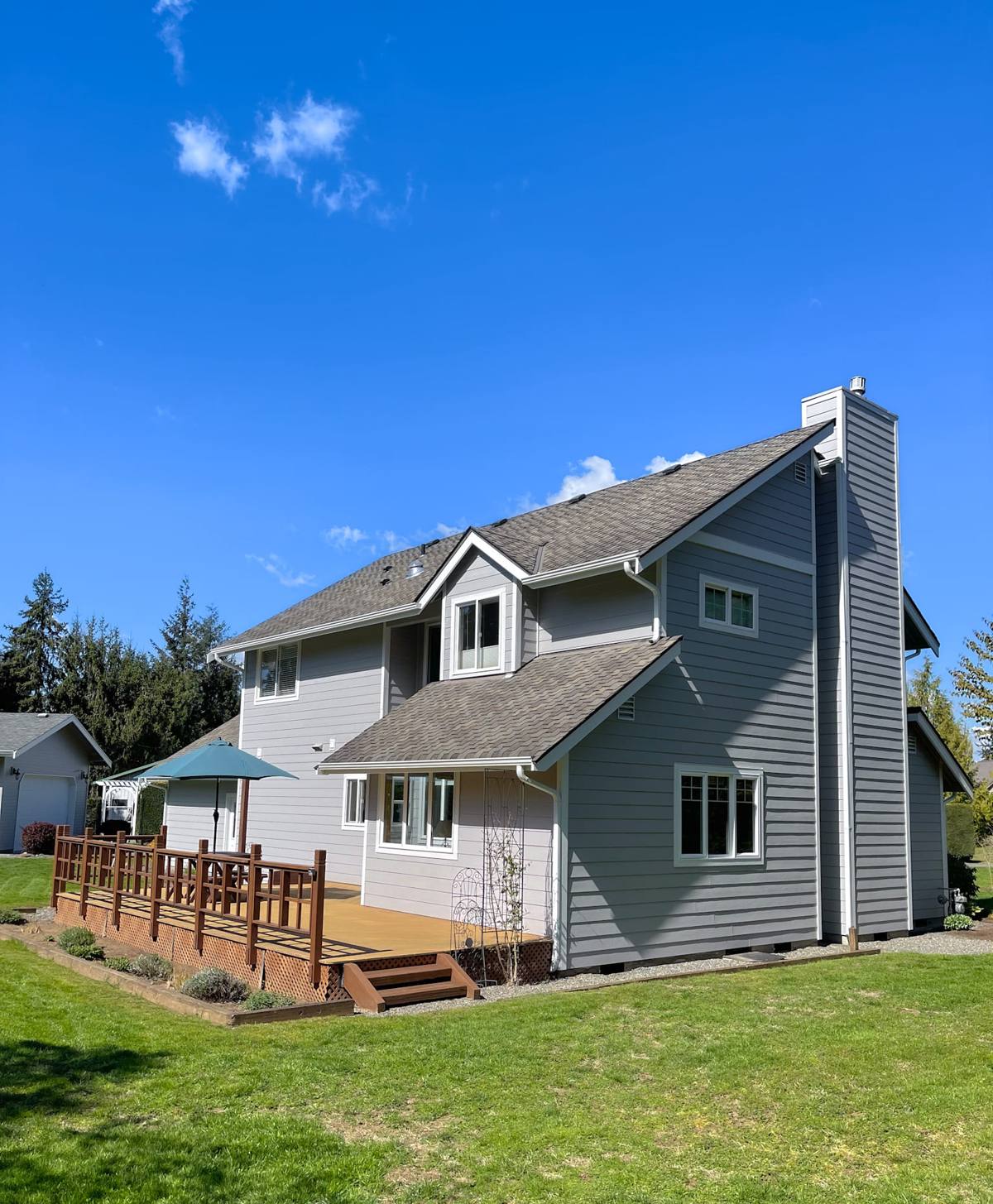
Why We Only Install James Hardie Fiber Cement
We install one siding system on every home we work on: James Hardie fiber cement. We don't carry LP SmartSide, vinyl, Cemplank, Allura, or unfinished wood siding, and that's a deliberate professional standard, not an oversight. Fiber cement is non-combustible, dimensionally stable in humidity swings, and — when it's Hardie's engineered HZ product line — built specifically for high-humidity, storm-exposed climates like ours. Vinyl can warp and become brittle under sustained UV and heat. Wood-based composite products depend on unbroken paint and caulk lines to keep moisture out, which is a hard promise to keep on a house that faces salt air and wind-driven rain. Hardie's factory-applied ColorPlus finish is baked on under controlled conditions, so it resists fading and chipping in a way field-applied paint struggles to match, and it comes with a real, transferable warranty backing it.
That's the honest case for standardizing on one product: fewer callbacks, fewer premature failures, and a material that was engineered with exactly this climate in mind.
The HZ5 Distinction
James Hardie makes region-specific formulations. The HZ5 line is engineered for humid, high-moisture climates, which includes all of Pinellas County. It's manufactured to hold up against the freeze-thaw non-issue we don't have but the moisture and humidity cycling we do — swelling, mold resistance, and impact durability are all tuned for a Gulf Coast environment rather than a generic national spec.
What a Correct James Hardie Installation Actually Involves
Fiber cement siding is only as good as the installation behind it. Hardie's own installation instructions are detailed for a reason: skip a step and you can end up with moisture intrusion, premature cracking, or a voided warranty even though the material itself is sound. A correct install on a Pinellas Park home includes:
- A water-resistive barrier installed and lapped correctly behind the siding, not just tacked up as an afterthought
- Proper flashing at every window, door, and roof-to-wall intersection so wind-driven rain has nowhere to travel
- Correct clearances — siding held up off roof lines, decks, and grade so it never sits in standing water or trapped moisture
- Fastener patterns and spacing that match Hardie's specifications for our wind zone, not just "close enough"
- Butt joints and seams treated and caulked to Hardie's standard, not left as raw cut edges facing the weather
- Factory-primed cut edges re-sealed on site whenever a board has to be trimmed to fit
Every one of those items is invisible once the siding is up. That's exactly why they matter — a rushed or careless install can look identical to a correct one for the first year, and then the difference shows up as moisture damage, streaking, or panel movement a few years down the road.
How We Approach a Pinellas Park Job
Assessment First
Before any material goes on order, we walk the exterior and look at what's actually happening underneath the current siding — soft spots, prior water intrusion around windows and trim, and how the existing weather barrier is holding up. Pinellas Park has a real mix of housing stock and additions, so no two homes have identical exposure or existing conditions.
Prep and Weather Barrier
Old siding comes off, sheathing gets inspected and repaired where needed, and a proper weather-resistive barrier goes on with correct lapping and sealed penetrations. This step is where most long-term failures either get prevented or get built in — it's not optional and it's not something we shortcut to save a day.
Install to Hardie Spec
Boards, panels, and trim go up following Hardie's fastening, clearance, and joint-treatment requirements for our climate zone, with flashing detailed at every penetration.
Finish and Walkthrough
Trim, caulking, and touch-up happen last, followed by a walkthrough so you can see the work before we consider the job done.
Signs Your Current Siding Is Already Behind the Curve
Homeowners often call after noticing something specific rather than because they were shopping for new siding. Common signals worth a look in this climate:
- Visible warping, bubbling, or soft spots, especially near ground level or under windows
- Paint that's peeling, chalking heavily, or fading unevenly across a wall
- Gaps opening up at seams, corners, or trim boards
- A musty smell or discoloration on interior walls that share an exterior wall with visible siding damage
- Siding that flexes or feels hollow/spongy when pressed
None of these are emergencies on their own, but they're the early signs of the moisture problems that fiber cement, installed correctly, is specifically designed to resist.
Cost Factors on a Pinellas Park Home
Every home is different, so we won't quote a number without seeing the house, but these are the variables that actually move the price:
| Factor | Why It Matters |
|---|---|
| Home size and wall complexity | More corners, dormers, and trim detail mean more cut edges, more flashing, and more labor time |
| Existing siding removal and sheathing condition | Rotted or water-damaged sheathing needs repair before new siding goes on — this is usually the biggest wildcard |
| Board profile and product line | Lap siding, shingle-style panels, and board-and-batten all price differently, and HZ5-rated products are the right call here |
| Color program | Factory ColorPlus finishes cost more up front than primed-only boards but remove the need for a full-house repaint later |
| Trim and accent work | Window and door trim, fascia, and accent bands add material and installation time |
Why a Crew That Already Works This Area Matters
Salt air exposure, typical wind loads, and the humidity cycling in Pinellas Park aren't the same everywhere in the country, and they're not identical to inland Florida either. A crew that regularly works St. Petersburg and Pinellas County has already seen how homes here age, what flashing details actually hold up, and where prior installations in this area tend to fail. That's not a marketing point — it changes real decisions on the job, like how much clearance to leave at grade, how aggressively to seal penetrations, and which trim details need extra attention given our storm season and wind exposure.
It also means faster response if something needs a look after the job is done. A company with local roots doesn't disappear after final payment.
Maintenance After Installation
James Hardie siding, installed correctly, is genuinely low-maintenance — that's a large part of its appeal here. Still, a few habits extend its life:
- Rinse the exterior periodically to clear salt residue and airborne grime, especially on sides facing prevailing wind
- Keep an eye on caulking at trim and seams and have it touched up if it starts to crack or pull away
- Trim vegetation back from walls so leaves and moisture don't sit against the siding
- Have gutters and downspouts checked so roof runoff isn't dumping directly onto a wall section
A Practical Checklist If You're Comparing Siding Contractors
- Do they install to Hardie's published specifications, including HZ5-rated products for this climate?
- Will they inspect and repair sheathing before siding goes on, not just cover over problems?
- Do they detail flashing at every window, door, and roofline intersection?
- Can they explain their fastener pattern and clearance approach, not just "we've done this before"?
- Do they regularly work in Pinellas Park and the surrounding St. Petersburg area?
If you're weighing new siding for a Pinellas Park home, we're happy to take a look and give you a straight, no-pressure estimate. There's a form below — reach out and we'll walk the exterior with you and tell you what we actually see, not just what sells a job.