 St. Petersburg Roofing
 Why Pinellas Point Decks Wear Out Faster
Pinellas Point sits on a peninsula section of south St. Petersburg, close to open water on multiple sides. That waterfront exposure is part of what makes the neighborhood desirable — and part of what shortens the life of an outdoor deck. Salt-laden air moves through constantly, the sun sits nearly overhead for most of the year, and wind off the water hits decks and railings with more force and more moisture than a deck fifteen minutes inland. A deck built to a generic spec, without those factors accounted for, tends to show fastener corrosion, board cupping, and railing wobble years before it should.
We work on decks throughout St. Petersburg and Pinellas County, and the ones in Pinellas Point consistently show the same early-failure patterns: rusted or bleeding fasteners, soft spots where ledger boards meet the house, and railings that have loosened at the posts. None of that means the neighborhood is a bad place to have a deck — it means the deck has to be built for the environment it's actually in, not a catalog spec sheet.
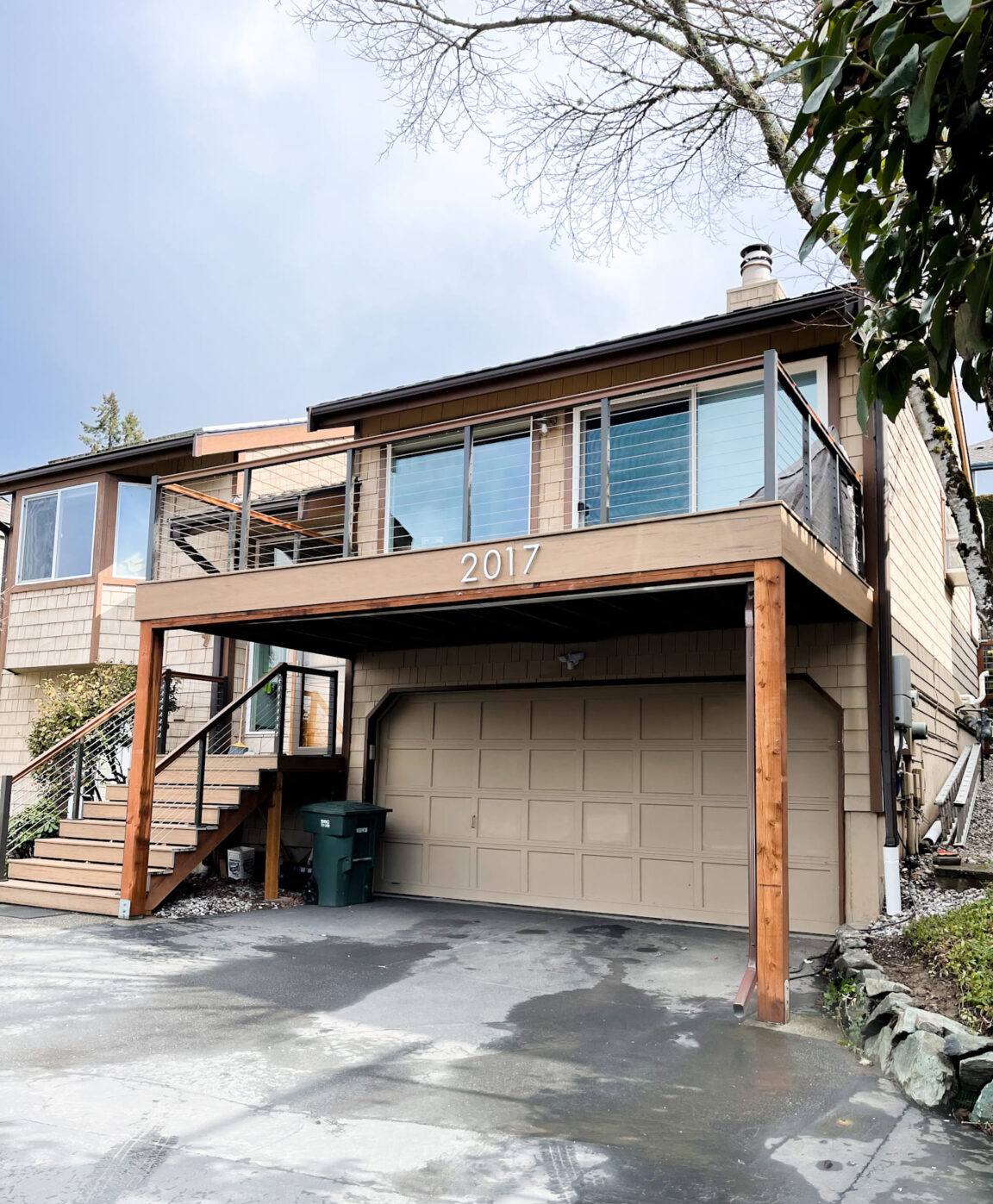
What Salt Air, Sun, and Storms Actually Do to a Deck
Salt Air and Metal Fasteners
Airborne salt accelerates corrosion on any exposed metal — nails, screws, joist hangers, and railing brackets included. Standard coated fasteners that hold up fine inland can start rusting within a few years this close to the water. Once fasteners weaken, the connections holding the deck together weaken with them, even if the boards on top still look fine.
UV Exposure
St. Petersburg gets strong, direct sun for most of the year. UV breaks down the surface fibers of wood decking and the resin binders in some composite products, leading to graying, splintering, or fading well before the structure underneath is actually compromised. Finish and material choice matter more here than in a shadier or cooler climate.
Wind-Driven Rain and Moisture Cycling
Rain in this part of Florida rarely falls straight down — it comes in sideways, driven by onshore wind, and it gets into gaps, end grain, and ledger connections that a vertical rain would never reach. Add Florida's humidity and the wet-dry cycling is constant, which is exactly the condition that causes wood to swell, crack, and eventually rot from the inside out.
Hurricane-Force Wind Loads
A deck is a structural attachment to the home, and in a storm it has to resist uplift and lateral load, not just hold up a grill and some patio furniture. Railings, guard posts, and the ledger connection to the house are the parts most likely to fail first under wind load if they weren't built with that load in mind.
Signs a Pinellas Point Deck Needs Replacement, Not Just Repair
Not every issue means a full tear-off. But there's a point where patching individual boards or fasteners stops being cost-effective and starts being a temporary fix on a structure that's failing overall. Signs it's time to talk about replacement rather than repair:
- Rust staining running down from multiple fasteners, not just one or two
- Soft, spongy, or dark-stained wood at the ledger board where the deck meets the house
- Railing posts that flex or move when pushed
- Visible gaps opening up between joists and the ledger or beam
- Boards that are cupping, splitting, or delaminating across a wide area rather than in isolated spots
- A deck more than 15–20 years old that has never had its structural framing inspected
- Stairs that feel less solid than they used to, especially at the stringer connections
If you're only seeing one or two of these on an otherwise sound deck, a repair may genuinely be the right call — we'll tell you that if it's true. We'd rather do an honest repair estimate than sell a full replacement that isn't needed yet.
Choosing Materials for a Waterfront-Exposed Deck
There's no single "best" decking material — there's a best fit for how exposed the deck is, what upkeep you're willing to do, and what budget you're working with. Here's how the common options actually perform in a salt-air, high-UV environment like Pinellas Point:
| Material | Upfront Cost | Maintenance | Coastal Durability |
|---|---|---|---|
| Pressure-treated pine | Lowest | Needs re-sealing every 1–2 years | Fair — vulnerable to moisture cycling if not maintained |
| Composite decking | Mid to high | Low — periodic cleaning | Good — resists rot, but check UV/fade warranty terms |
| Tropical hardwood | High | Moderate — oiling to maintain color | Very good density, but fasteners must be corrosion-rated |
| Aluminum/PVC decking | Highest | Very low | Excellent — immune to rot and most corrosion |
Whatever decking material goes on top, the framing underneath and the fasteners holding it together matter just as much — arguably more, since that's what actually fails first in this climate. We'll walk through the honest trade-offs for your budget and how the deck is used rather than pushing whatever has the best margin.
What a Correct Deck Replacement Actually Involves
Ledger Board and Flashing
The ledger board — where the deck attaches to the house — is the single most common failure point on Florida decks, and it's also where water intrusion into the home itself can start if it's flashed wrong. A correct installation uses proper flashing to direct water away from the house structure, not just lag bolts into the siding.
Footings and Framing
Footings need to be sized and set to local code for the soil and load conditions, not guessed at. Framing lumber, joist spacing, and beam sizing all need to account for both the deck's actual use (furniture, hot tub, foot traffic) and Florida's wind load requirements.
Fasteners and Hardware
This close to the water, we use corrosion-rated fasteners and hardware — stainless or hot-dip galvanized, depending on the connection — rather than standard coated screws that will start rusting within a few seasons.
Railings and Guards
Railing posts need to be through-bolted into the framing, not just screwed to the rim joist, and guard height and baluster spacing need to meet current code. This is one of the most common shortcuts on older decks and one of the most dangerous to leave alone.
Covered Decks and Roof Tie-Ins
If the deck sits under a roof extension, screened enclosure, or lanai, the roof-to-wall flashing and drainage over the deck area needs to be correct too — a deck can be built perfectly and still have problems if water is being dumped onto it from a poorly flashed roofline above. As a crew that works on roofs as well as decks, we look at that connection as part of the job, not as someone else's problem.
Permits and Inspection
Deck replacement in St. Petersburg is structural work and generally requires a permit and inspection. We handle that as part of the job so the finished deck is documented and code-compliant — which matters at resale and for insurance.
Our Deck Replacement Process
- On-site assessment — We look at the existing structure, ledger connection, footings, and framing to see what's actually failing versus what's cosmetic.
- Honest scope and estimate — You get a clear breakdown of what's being replaced, what materials are recommended and why, and what it costs — no vague allowances.
- Permitting — We pull the required permit and schedule inspections so the job is done by the book.
- Demo and disposal — Full removal of the old deck, including hauling off debris.
- Rebuild — Framing, flashing, decking, and railing installed to code and to the material spec you chose.
- Final inspection and walkthrough — We confirm the deck passes inspection and walk the finished job with you before calling it done.
Cost Factors for a Pinellas Point Deck Replacement
Deck replacement cost varies enough by size, material, and structural condition that a real number only comes from an on-site look. In general terms, the factors that move the price most are:
| Factor | Why It Matters |
|---|---|
| Deck size and shape | More square footage and more angles/cuts mean more material and labor |
| Decking material chosen | Pressure-treated wood is the lowest upfront cost; composite and PVC cost more but need less upkeep |
| Framing and footing condition | If footings or major framing need replacing, not just resurfacing, cost goes up accordingly |
| Height and stairs | Elevated decks and multi-run stairs add structural complexity |
| Railing style | Cable, glass, and custom railing systems cost more than standard baluster railing |
| Roof or cover integration | Tying into an existing roof extension or screen enclosure adds coordination and flashing work |
Deck replacement generally runs from a few thousand dollars for a small, straightforward wood deck up to well into five figures for a large elevated deck in composite or PVC with custom railing. We'll give you real numbers once we've actually seen the site — broad ranges from a website aren't much use for planning a project.
Why a Crew That Already Works Pinellas Point Matters
A deck built by someone unfamiliar with coastal Florida conditions can look fine on installation day and start failing within a couple of years — wrong fastener grade, wrong flashing detail, framing sized for a drier climate. A crew that regularly works Pinellas Point and the surrounding St. Petersburg neighborhoods already knows which fastener grades hold up, how the local permitting process runs, and what the wind and moisture exposure actually demands here versus a generic spec.
There's also a practical side to hiring local: warranty and follow-up service are only worth something if the contractor is still around and easy to reach. A crew based in the area, doing ongoing work in Pinellas County, isn't disappearing after the invoice clears.
- Familiarity with St. Petersburg permitting and inspection requirements
- Fastener and hardware choices matched to salt-air exposure, not generic specs
- Understanding of how wind-driven rain and hurricane wind loads affect railing and ledger design
- Ability to address roof-to-deck flashing on covered decks and lanais, not just the deck itself
- Local accountability for warranty work after the job is done
If your Pinellas Point deck is showing rust, soft spots, or loose railings — or it's simply old enough that you're wondering whether it's still safe — we're glad to take a look. We'll give you a straight answer on repair versus replacement and a clear, no-pressure estimate using the form below.