 St. Petersburg Roofing
 Why Roser Park's Older Homes Need Siding Built for This Climate
Roser Park is one of St. Petersburg's more established residential pockets, with a good share of homes built long before modern fiber cement siding existed. A lot of those houses are still wearing original wood siding, aging masonite, or a patchwork of repairs from past storm seasons. If you own one of these homes, the real question usually isn't whether the exterior will need attention — it's when, and what you replace it with once that day comes.
We install James Hardie fiber cement siding exclusively, and Roser Park is exactly the kind of neighborhood where that decision matters. Pinellas County sits on a narrow peninsula surrounded by the Gulf of Mexico and Tampa Bay, which means homes here absorb more sun, more salt, and more wind-driven rain than a house fifty miles inland. Siding that isn't engineered for that combination tends to show it early — fading, cupping, soft spots at the bottom edges, or paint that simply won't hold a finish season after season.
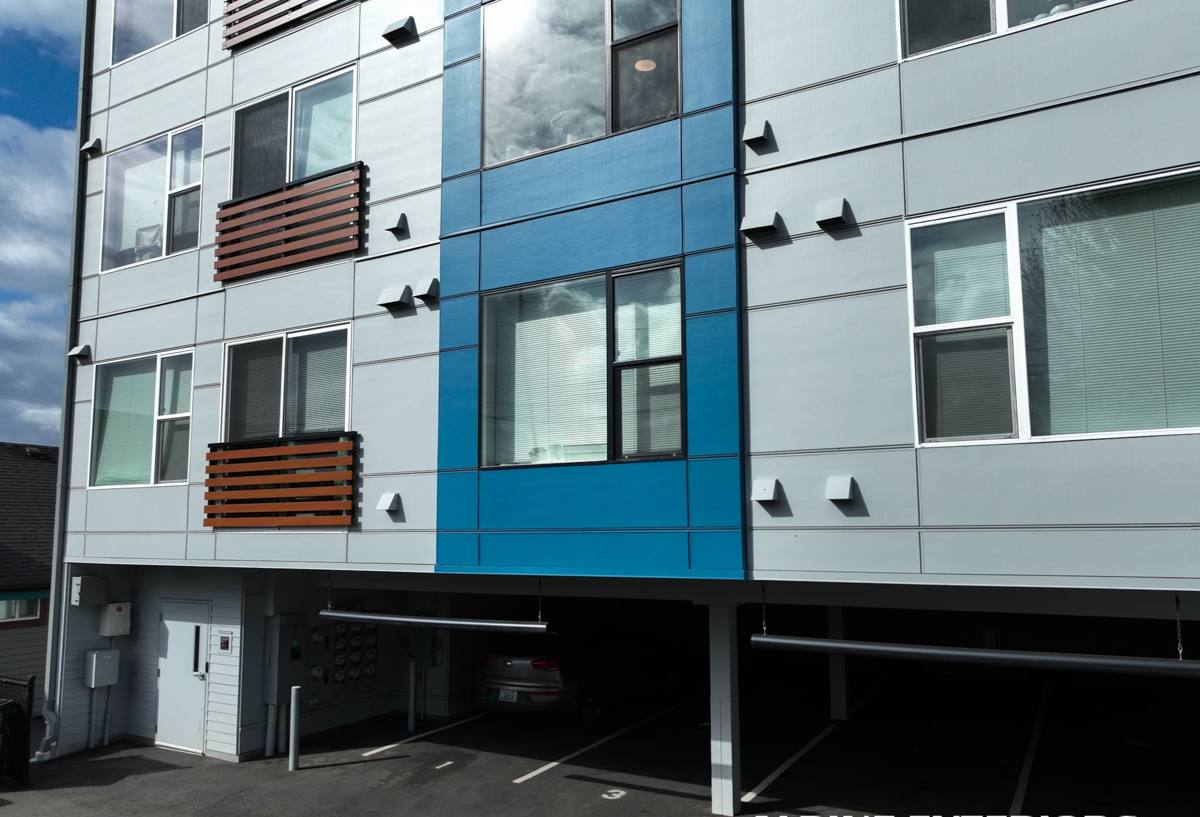
What St. Petersburg's Climate Actually Does to Exterior Siding
Before talking about products, it helps to understand what the exterior of a Roser Park home is actually up against every year. This isn't generic "Florida weather" talk — it's the specific set of stresses that determine whether a siding job lasts fifteen years or fifty.
Hurricane-Force Wind
St. Petersburg homes are built to withstand tropical storms and hurricanes, and siding is part of that structural picture whether homeowners think of it that way or not. Wind doesn't just push against a wall — it gets under loose panels, works fasteners free over time, and turns any gap or weak seam into a failure point during the next big blow. Siding that's rated and installed correctly for wind resistance is a real safety consideration, not just a cosmetic one.
Year-Round UV Exposure
Florida doesn't really have an off-season for sun. Constant UV exposure breaks down the pigments and surface bonds in cheaper siding materials, which is why so many homes end up with faded, chalky, or blotchy exteriors within just a few years. South- and west-facing walls take the worst of it, and in an older neighborhood like Roser Park, you can often see the difference in how unevenly a home has weathered from one side to the other.
Wind-Driven Rain and Moisture
Rain in this region rarely falls straight down. Gulf-fed storms push rain sideways into walls, seams, and trim joints, and that moisture finds its way behind siding that isn't properly flashed and sealed. Once water gets behind a wall system, the damage often isn't visible until it's already serious — soft sheathing, rot, or mold that shows up as a stain or a soft spot years after the water intrusion actually started.
Salt Air
Being close to open water means salt is in the air even on a clear day. Salt is corrosive to metal fasteners and trim, and it accelerates the breakdown of finishes that aren't formulated to resist it. Over years, that steady low-level exposure is part of why older siding in this area ages faster than the same product would inland.
Why We Only Install James Hardie Fiber Cement
We made a deliberate decision years ago to install James Hardie siding and nothing else — no vinyl, no LP SmartSide, no Cemplank or Allura, no primed spruce or cedar. That's not a marketing angle; it's because fiber cement engineered specifically for this climate outperforms the alternatives in the ways that matter most for a coastal Gulf property.
James Hardie's HZ product lines are formulated in different versions for different climate zones, and the version specified for Florida is built to resist moisture, humidity, and the freeze-free but sun-heavy conditions we actually have here. It's non-combustible, which matters for insurance and fire safety, and it doesn't warp, rot, or attract termites the way wood-based products can. The factory-applied ColorPlus finish is baked on under controlled conditions and backed by its own finish warranty — a meaningfully different proposition than field-applied paint that has to cure and bond in Florida's heat and humidity on installation day.
None of this means other siding products are junk. Vinyl is inexpensive and easy to source. LP SmartSide and other wood-strand products have their advocates. But every one of them involves a trade-off — heat distortion, moisture sensitivity, shorter finish life, or a warranty structure with more exclusions — that we're not willing to install on a customer's home and stand behind afterward. We'd rather do one product exceptionally well than offer a menu of options with different weak points.
What a Correct Hardie Installation Involves
James Hardie siding is only as good as the installation behind it. The product itself is engineered well; failures almost always trace back to shortcuts in the install, not defects in the material. A correct job on a Roser Park home includes:
- Removing old siding down to the sheathing so hidden rot, moisture damage, or pest issues get caught and fixed before anything new goes up
- Installing a code-compliant weather-resistive barrier and correctly lapped, sealed flashing at every window, door, and penetration
- Maintaining Hardie's specified clearances from rooflines, decks, and grade so water has somewhere to go instead of wicking into the bottom edge of the siding
- Using corrosion-resistant fasteners, driven to the manufacturer's exact spacing and depth — over-driven or under-driven nails are one of the most common causes of premature failure
- Properly caulking and sealing joints with products rated for Hardie panels, not generic caulk that breaks down under UV
- Following Hardie's specific installation guide for the region, including panel gapping that accounts for local humidity and temperature swings
Every one of these details is inspectable, and a homeowner is entitled to ask a contractor to walk through exactly how each one will be handled before work starts.
Matching Hardie's Siding Profiles to Roser Park's Character
One thing we hear from Roser Park homeowners is a concern that fiber cement will look "too modern" against an older home's character. That's usually not an issue once people see the range of profiles available. Hardie makes traditional lap siding in several exposures, shingle-style panels for gable ends or accent sections, and trim boards that replicate the look of traditional wood casing and fascia — all without the maintenance burden of the materials those older homes were originally built with.
For a lot of the older, more traditionally styled homes in this part of St. Petersburg, a smooth or cedar-textured lap profile in a historically appropriate reveal width tends to be the closest match to the original look, with shingle accents reserved for gables or dormers where the original construction likely used them. We can walk a specific home and talk through which profile and reveal will read correctly against its existing trim and rooflines.
Our Process, Start to Finish
Because we work exclusively in fiber cement, our process is built around doing this one product correctly rather than juggling multiple systems.
- On-site assessment. We inspect the current siding, sheathing condition, trim, and any problem areas — soft spots, past water intrusion, or wind damage — and take measurements for an accurate estimate.
- Product and profile selection. We go over Hardie's lines, colors, and profiles and help match one to the home's style and the homeowner's budget.
- Written proposal. A clear scope of work, materials list, and price — no vague allowances or surprise change orders for standard conditions.
- Tear-off and prep. Old siding comes off, sheathing gets inspected and repaired as needed, and the weather barrier and flashing go in before a single new panel is hung.
- Installation to Hardie's specification. Panels, fasteners, gapping, and sealing all follow the manufacturer's published requirements for this climate zone.
- Final walkthrough. We inspect the completed job with the homeowner, cover care and maintenance, and provide documentation for the applicable warranties.
What Drives the Cost of a Hardie Siding Project
Every home is different, but the same handful of factors drive most of the cost variation we see on jobs in and around St. Petersburg.
| Factor | Why It Matters |
|---|---|
| Extent of tear-off and sheathing repair | Older homes with hidden moisture damage or rot behind the original siding need that structure repaired before new siding goes on, which adds labor and materials |
| Siding profile and texture | Smooth lap, cedar-textured lap, and shingle-style panels carry different material costs and installation time |
| Color and finish | Factory ColorPlus finishes cost more up front than primed panels painted on-site, but they eliminate a paint job and come with their own finish warranty |
| Trim and detail work | Homes with more windows, dormers, gables, or decorative trim require more precise cutting and flashing, which adds time |
| Home size and accessibility | Multi-story sections, tight lot lines, or landscaping that limits equipment access all affect labor time |
Why Hiring a Crew That Already Works in Roser Park Matters
Siding work in an established St. Petersburg neighborhood isn't quite the same as siding a new-construction home in an open subdivision. Older homes in areas like Roser Park often have non-standard framing, settled foundations, or prior repairs layered under the existing siding that only show up once tear-off starts. A crew that's worked on similar homes in the area knows to expect that and prices and plans for it up front instead of discovering it mid-job and improvising.
Local experience also means familiarity with St. Petersburg's permitting requirements and inspection process, and a realistic sense of how weather and scheduling around Florida's storm season affect project timing. And because we only install one product, our crews aren't relearning installation specs for a different material every other week — they're doing the same correct process, job after job, on the same kinds of homes.
Caring for Your Siding After Installation
James Hardie siding installed correctly needs very little upkeep, but a little attention goes a long way toward getting the full lifespan out of it in this climate. Homeowners should periodically check for:
- Cracked, peeling, or gapped caulk at joints, corners, and around windows and doors
- Any staining or discoloration near the bottom of the siding, which can indicate water pooling or a clearance issue with grade or landscaping
- Loose or missing trim pieces after a significant storm
- Chalking or fading that's noticeably uneven from one side of the house to another
- Debris, vines, or mulch that has built up against the bottom edge of the siding over time
Rinsing the exterior periodically to remove salt residue and pollen buildup, and keeping sprinklers from spraying directly on the siding, are two of the simplest things a homeowner can do to protect the finish long-term.
If your Roser Park home's siding is original, aging, or showing storm damage, we're happy to take a look and talk through what James Hardie siding would involve for your specific house — no pressure, no obligation. Use the form below to request a free estimate.