 St. Petersburg Roofing
 Shore Acres Sits Close to the Water — and Its Siding Pays for It
Shore Acres is one of the more exposed residential pockets in St. Petersburg. The canals and open water that make the neighborhood desirable also put homes closer to salt spray, higher humidity, and more direct wind than a house sitting inland in Pinellas County. Over years, that combination is hard on exterior materials that weren't built for it. Siding here doesn't just need to look good on install day — it needs to hold its seams, its paint, and its shape through a decade of Gulf Coast weather.
Four things do most of the damage on a Shore Acres exterior: hurricane-force wind gusts that test every fastener and joint, intense year-round UV that fades and breaks down weaker materials, wind-driven rain that finds any gap in flashing or caulking, and salt-laden air that accelerates corrosion and degrades products not engineered for coastal exposure. None of these are unique to Shore Acres, but the neighborhood's proximity to open water means all four hit harder and more often than they would a few miles inland.
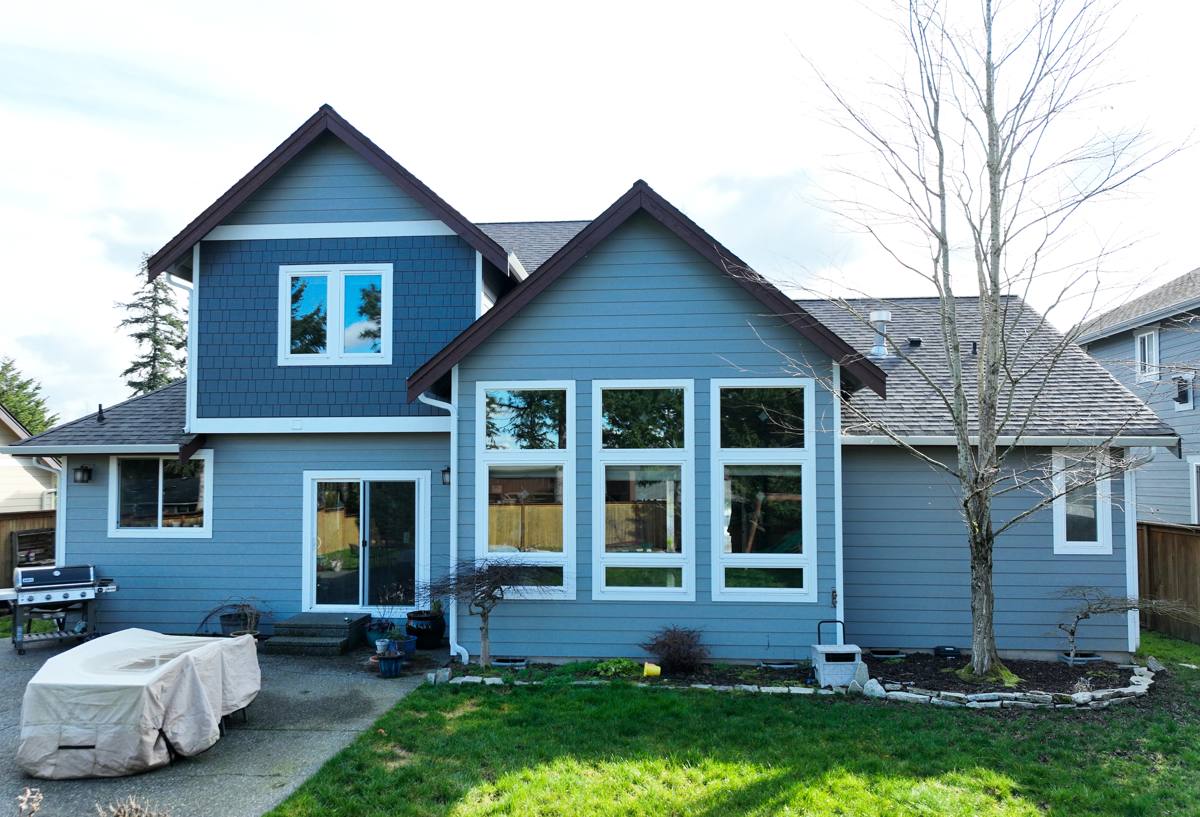
What This Climate Actually Does to Siding Over Time
Wind and Wind-Driven Rain
Tropical systems and seasonal squalls off Tampa Bay don't just push wind against a wall — they drive rain sideways into every lap, joint, and penetration. Siding that isn't installed with correct overlaps, flashing, and fastening will let water behind the panel long before the panel itself fails. Once water gets behind siding, the problem stops being cosmetic and starts being structural.
UV Exposure
Florida sun is relentless on south- and west-facing walls in particular. Paint films chalk, fade, and eventually crack under sustained UV load. Products with a factory-applied, baked-on finish hold color far longer than field-painted materials, which is a meaningful difference in a climate that gets this much sun exposure year-round.
Salt Air
Homes near Tampa Bay deal with airborne salt that settles on every exterior surface. Salt accelerates corrosion of exposed metal fasteners and trim, and it can speed up the breakdown of materials that absorb moisture readily. Siding, fasteners, and flashing all need to be selected with that exposure in mind — not just for what they look like on delivery day.
Humidity and Moisture Cycling
Pinellas County's humidity means siding is rarely fully dry. Materials that swell, warp, or hold moisture against the wall assembly are working against the climate instead of with it. Repeated wet-dry cycling is what causes swelling, cupping, and paint failure on materials that aren't dimensionally stable.
Why We Only Install James Hardie Fiber Cement
We standardized on James Hardie fiber cement siding for every home we side, including in Shore Acres, because it's engineered specifically for the failure modes above. It's non-combustible, dimensionally stable in humidity, and available in HardieZone HZ10 formulations built for exactly the hot, humid, coastal conditions found along the Gulf Coast. Its ColorPlus factory finish is baked on under controlled conditions, which holds up to UV far better than field-applied paint and comes backed by a long, transferable manufacturer warranty on both the substrate and the finish.
That's a deliberate trade-off on our part, not a default. Fiber cement costs more up front than vinyl and requires more installation skill than either vinyl or wood. We accept that trade-off because the alternative — reworking wind-damaged or moisture-failed siding on a coastal home within a few years — costs homeowners far more than the up-front difference.
How the Common Options Compare in This Climate
| Factor | Vinyl Siding | Wood/Primed Spruce | James Hardie Fiber Cement |
|---|---|---|---|
| Wind resistance | Can crack or blow off in high gusts | Depends heavily on fastening; prone to splitting | Rated for high-wind installation when installed to spec |
| Moisture behavior | Doesn't rot, but seams can let water in behind it | Absorbs moisture; prone to rot and swelling | Dimensionally stable; engineered for humid climates |
| UV/fade resistance | Can fade and become brittle over time | Field paint fades and needs repainting | Factory ColorPlus finish holds color longer |
| Salt air durability | Generally tolerant, but trim/fasteners still at risk | Vulnerable without diligent maintenance | Fiber cement substrate is not affected by salt corrosion |
| Fire performance | Combustible | Combustible | Non-combustible |
What a Correct Fiber Cement Install Actually Involves
Fiber cement performs the way it's designed to only when it's installed correctly. A rushed or undersized crew can turn a good product into a problem. On every home, including in Shore Acres, a correct install includes:
- Proper starter strip and flashing at every horizontal joint, window, door, and penetration so wind-driven rain has no path behind the panel
- Correct fastener type, spacing, and embedment for the local wind exposure category — not just "close enough"
- Manufacturer-specified clearances from grade, roofing, and decks so panels aren't sitting in standing moisture
- Properly sized and sealed joints, caulked with a product rated for exterior, UV, and humidity exposure
- A weather-resistant barrier behind the siding, installed and lapped correctly for drainage
- Corrosion-resistant fasteners and trim hardware appropriate for salt air exposure
Skipping any one of these doesn't show up on day one. It shows up two or three storm seasons later, as staining, soft spots, or panels working loose — usually after the workmanship warranty is a distant memory.
Our Process on a Shore Acres Home
Assessment
We start with a full walk of the exterior — checking existing siding condition, water intrusion points, window and door flashing, and any areas exposed directly to wind off the water. Waterfront and canal-adjacent homes often have one or two walls that take disproportionate weather exposure, and that shapes where we pay closest attention.
Tear-Off and Substrate Check
Old siding comes off cleanly, and we check the wall sheathing underneath for hidden moisture damage before anything new goes up. Covering up a compromised substrate with new siding just hides the problem — we address what's underneath first.
Weather Barrier and Flashing
Every penetration, window, and joint gets flashed and sealed before the first panel goes on. This step is where most long-term siding failures actually originate, and it's the step that's easiest to shortcut if a crew is moving too fast.
Installation to Spec
Panels, fasteners, and joints go in per James Hardie's installation guidelines for our wind exposure and climate zone — not a generic national standard. We check clearances, fastener spacing, and caulking as we go, not just at final walkthrough.
Final Inspection
Before we call a job done, we walk the exterior again looking for anything that could become an entry point for wind-driven rain — gaps, missed caulk lines, or trim that isn't tight.
Why It Matters That We Already Work in Shore Acres
A crew that's worked this neighborhood before isn't guessing at what the environment demands — they've already seen how salt air, wind exposure, and humidity behave on homes here. That familiarity matters in a few concrete ways: knowing which walls in a canal-front layout typically take the worst weather, understanding City of St. Petersburg and Pinellas County permitting requirements for exterior work, and not having to relearn coastal wind-rated installation practices on your house for the first time.
It also means fewer surprises during the job. A crew unfamiliar with waterfront neighborhoods may not account for the extra care that flashing, fastener selection, and clearances need this close to the bay. That's the kind of detail that doesn't show up on a quote — it shows up three years later.
Maintenance and What to Expect Long-Term
Fiber cement is low-maintenance compared to wood, but "low-maintenance" doesn't mean "no maintenance," especially this close to the water. A reasonable annual routine includes:
- Rinsing salt residue and grime off exterior walls, particularly on water-facing sides
- Inspecting caulk lines at joints, windows, and doors for cracking or gaps
- Checking for any hairline cracks after major storm events
- Keeping vegetation and sprinklers from holding moisture against the siding
- Watching for chalking or fading on the finish, which can signal it's time for a professional look
Done right, fiber cement siding on a Shore Acres home should go many years between major maintenance needs — far longer than wood, and with better long-term appearance retention than most vinyl.
What Drives Cost on a Job Like This
| Cost Factor | Why It Matters in Shore Acres |
|---|---|
| Home size and wall complexity | More corners, gables, and penetrations mean more flashing and labor |
| Existing siding removal | Tear-off and substrate repair add time if old material or sheathing is compromised |
| Siding profile and finish | Lap width, texture, and ColorPlus color selection affect material cost |
| Wind exposure of the site | Waterfront and canal-facing walls may need additional fastening attention |
| Trim and accessory work | Corner boards, soffit, and fascia integration add scope beyond the field siding |
We don't quote a job without walking it first — a phone estimate on a coastal home is a guess, not a number you should plan around.
Get a Straight Answer on Your Home
If your siding is showing chalking, gaps at the joints, soft spots, or storm damage, it's worth having someone look at it before the next season of Gulf Coast weather makes the problem worse. We'll walk your home, tell you honestly what condition your siding is in, and give you a clear, no-pressure estimate for James Hardie fiber cement siding built for what Shore Acres actually deals with. Use the form below to get started.