 St. Petersburg Roofing
 Why Shore Acres Siding Has to Work Harder Than Most
Shore Acres sits close to open water, and that changes what a home's exterior is up against every single day. Homes here don't just deal with ordinary Florida heat and humidity — they sit in a corridor where salt-laden air moves off the bay, sun exposure is nearly constant, and wind during storm season can hit the siding face-on from multiple directions as weather systems move through. That combination is harder on an exterior wall covering than almost any other climate condition in the country, and it's exactly why we treat siding installation in this neighborhood differently than we would a job fifteen miles inland.
Salt air is the piece people underestimate most. It doesn't just affect metal fixtures and fasteners — it accelerates the breakdown of paint films, softens caulk and sealant joints faster than normal, and gives mold and mildew a foothold on any siding material that holds moisture at the surface. Add in year-round UV that fades and embrittles lesser materials, and wind-driven rain that gets pushed sideways and upward under laps and trim during storms, and you have a short list of conditions that expose weak siding fast — often within a few years instead of a decade or more.
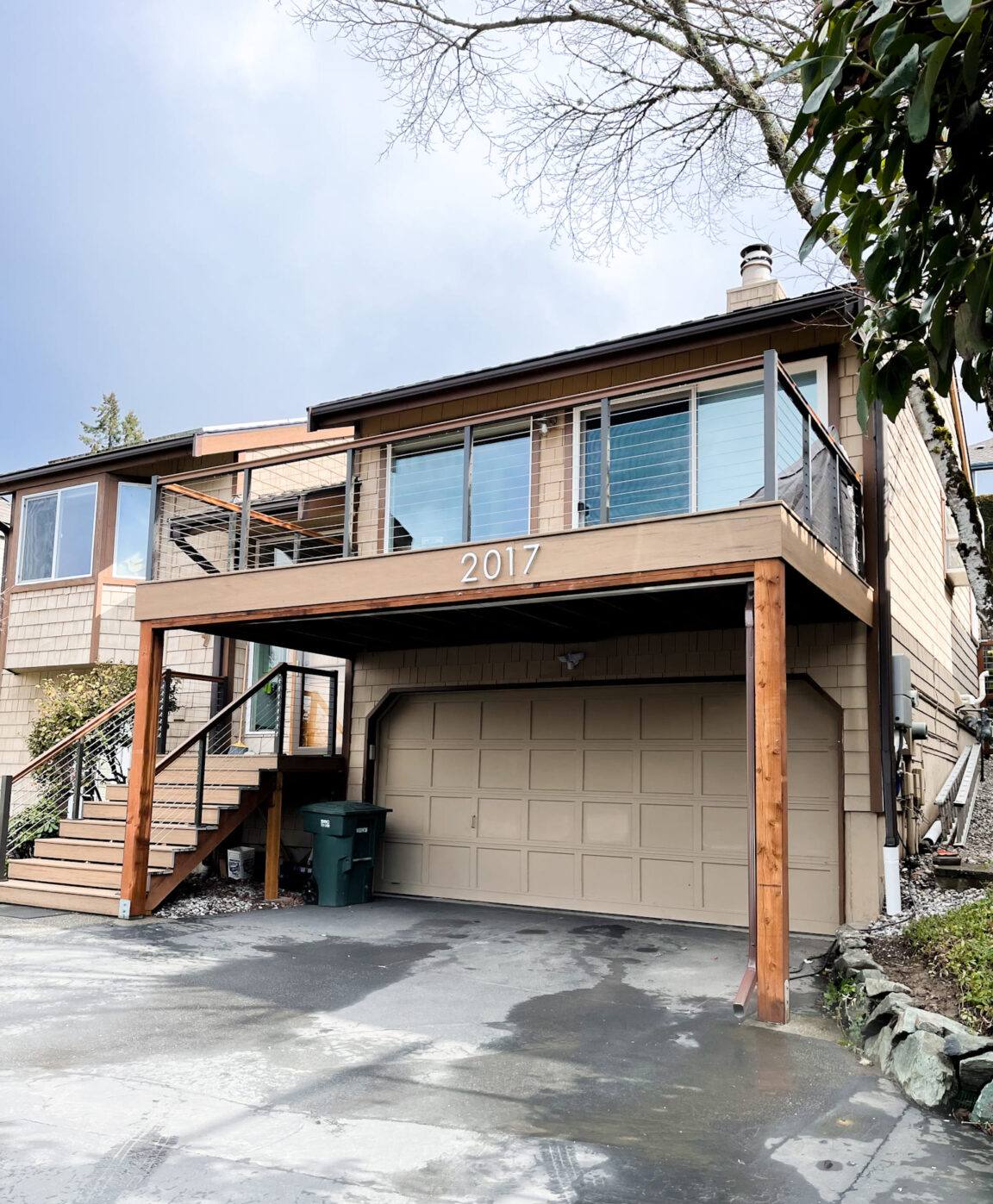
What Correct Siding Installation Actually Involves
Siding failures in this area are almost never about the material sitting flat on a wall — they're about what's happening behind it and around its edges. A correct installation is really a system of small decisions, each one designed to keep water out and let any moisture that does get in escape again.
Moisture Barrier and Flashing
Every square foot of wall gets a water-resistive barrier before a single piece of siding goes up. Flashing at windows, doors, roof-to-wall intersections, and any penetration has to be layered correctly — laps shingled so water sheds downward and outward, never trapped behind the next course. On a home exposed to wind-driven rain, a missed or backward flashing detail is the single most common cause of hidden rot years later.
Fastening for Wind Resistance
Florida Building Code sets wind pressure requirements based on your specific location, and Pinellas County's coastal exposure puts homes in this area at meaningfully higher design pressures than inland construction. That means fastener type, spacing, and embedment depth aren't optional details — they're the difference between siding that stays put in a tropical storm and siding that peels off panel by panel.
Clearances and Drainage
Siding needs to sit above grade, roofing, and any horizontal surface by a specific minimum clearance, and it needs a drainage gap behind it so water that gets past the outer face can drain and the wall can dry. Installers who rush this step — or who don't know the clearance requirements for a humid, storm-exposed climate — set a home up for moisture problems that won't show up until the damage is already done.
James Hardie: The Only Siding We Install, and Why
We install James Hardie fiber cement siding exclusively. That's not a marketing preference — it's a standard we set after weighing how different siding materials actually perform in a climate like this one over the long run.
Vinyl siding is affordable and easy to install, and in milder climates it can do a reasonable job. But vinyl softens and can warp under sustained high heat, becomes brittle with age under intense UV, and its wind resistance depends heavily on installation quality and panel gauge — thinner vinyl products simply aren't built for a coastal wind zone. LP SmartSide, Cemplank, Allura, primed spruce, and cedar each have their own trade-offs, whether that's moisture sensitivity at cut edges, coating maintenance burdens, or performance that depends on near-perfect field conditions to hold up. None of them changed our minds enough to put them on a home we're putting our name behind.
James Hardie's fiber cement is non-combustible, dimensionally stable in heat and humidity swings, and its ColorPlus factory-applied finish is baked on under controlled conditions rather than field-painted — which matters enormously in an environment where UV and salt air are working against paint adhesion every day. Hardie also engineers specific product lines for different climate zones; the HZ5 formulation used in this region is built around resistance to moisture and humidity cycling rather than freeze-thaw, which is the correct engineering priority for a Gulf Coast property. The warranty backing it is transferable and substantial when the installation is done to Hardie's specification — which is also exactly why installation quality matters as much as the material choice itself.
Our Installation Process
The work follows the same sequence on every home, adjusted for the specific wall conditions and exposure of the property.
- Inspection and tear-off. We remove the existing siding and inspect the sheathing underneath for rot, soft spots, or prior water intrusion — issues that are common to find once old siding comes off in a humid coastal neighborhood.
- Sheathing repair. Any compromised sheathing gets replaced before anything else happens. Installing new siding over damaged sheathing just locks the problem in.
- Water-resistive barrier and flashing. A continuous moisture barrier goes on, with flashing detailed at every window, door, and penetration.
- Layout and fastening plan. Panel layout is planned around the home's wind exposure and Florida Building Code requirements for this location, not a generic default.
- Installation. Hardie planks or panels go up with correct clearances, fastener spacing, and joint treatment per manufacturer specification.
- Trim, caulking, and final detail. Trim and caulking at joints and penetrations are finished with materials rated to hold up under salt air and UV exposure.
- Final walkthrough. We walk the finished exterior with the homeowner before calling the job complete.
Signs a Shore Acres Home Needs New Siding
Older siding — whatever the material — tends to show trouble in this climate in a fairly predictable order. Catching it early is almost always cheaper than waiting.
- Visible warping, buckling, or panels pulling away from the wall
- Cracking or splitting, especially near corners and trim
- Paint that's chalking, peeling, or fading unevenly across the wall
- Soft spots when pressed, which often signal moisture behind the siding
- Rising energy bills that suggest the wall assembly is no longer performing
- Visible mold, mildew, or dark staining that keeps returning after cleaning
- Gaps opening up at seams, corners, or around windows and doors
What Drives Cost on a Siding Installation Job
Every home is different, but the same handful of factors move the price up or down on most jobs in this area.
| Factor | Why It Matters |
|---|---|
| Home size and wall complexity | More square footage and more corners, dormers, and trim details mean more labor and material |
| Sheathing condition | Rot or water damage found during tear-off requires repair before new siding can go on correctly |
| Siding profile and accessories | Plank width, trim style, and accessory pieces affect material cost and install time |
| Color and finish selection | Factory ColorPlus finishes vary in cost by color and coating tier |
| Access and site conditions | Canal-facing walls, tight lot lines, and landscaping can affect staging and labor time |
We don't quote a price without seeing the home — anyone who does is guessing. But understanding these factors ahead of time helps homeowners have a more useful conversation with any contractor they're evaluating.
Why Local Installation Experience in This Neighborhood Matters
A crew that already works in and around St. Petersburg understands the wind exposure and building code requirements that apply to this specific location — not a generic statewide assumption. They know what Pinellas County's permitting and inspection process expects, they've already seen how salt air and coastal humidity affect fastener choice and trim materials over time, and they're not learning those lessons on your home for the first time. That experience shows up in the details that don't get inspected on day one but matter five and ten years later: flashing laps, clearance heights, fastener corrosion resistance, and how the whole assembly is expected to dry out after a heavy rain.
It also matters for something more practical — being available when storm season creates a rush of exterior repair needs across the bay area. A contractor who's established in the community isn't starting from zero when severe weather hits and homeowners suddenly need siding assessed or repaired quickly.
Caring for Hardie Siding After Installation
Fiber cement siding is low-maintenance compared to most alternatives, but "low-maintenance" doesn't mean "no maintenance" in a salt-air, high-UV environment.
- Rinse the exterior periodically to clear salt residue, pollen, and airborne grime before it builds up
- Inspect caulking at trim, windows, and joints yearly and re-caulk anything that's cracked or pulled away
- Keep sprinklers and irrigation from spraying directly on the siding for extended periods
- Trim back landscaping so foliage isn't holding moisture against the wall
- Have any impact damage from storms or debris inspected and repaired promptly rather than left open to moisture
Done right, this is a small amount of upkeep for a siding system that's engineered specifically for a moisture- and humidity-heavy coastal climate — which is a large part of why we standardized on it.
If you're weighing a siding replacement or repair for a home in Shore Acres, we're happy to take a look and walk you through what we find — no pressure, no obligation. Use the form below to request a free estimate.