 St. Petersburg Roofing
 Crescent Lake Siding Has to Work Harder Than Siding Almost Anywhere Else
Crescent Lake is one of St. Petersburg's older, tree-shaded neighborhoods, built around the lake and park that give it its name. A lot of the housing stock here dates back decades, which means a lot of original siding, trim, and soffit material is well past the point where a fresh coat of paint fixes anything. Whatever goes on these homes next has to survive Pinellas County's climate for the long haul: intense UV exposure nearly twelve months a year, sudden downpours that come in sideways during summer storm season, salt-laden air drifting in off Tampa Bay and the Gulf, and the real possibility of hurricane-force wind loading during the June-through-November season.
None of that is unique to Crescent Lake specifically, but the neighborhood's mature tree canopy and older home styles change what "correct installation" looks like in practice. Shade and humidity retention around tree-covered lots mean moisture sits against a home's exterior longer than it would on an open lot. Older wall assemblies were often built without today's water-management detailing. Siding installed here needs to shed water aggressively, resist swelling and rot in damp, shaded conditions, and hold its color and shape through UV and salt exposure without constant upkeep.
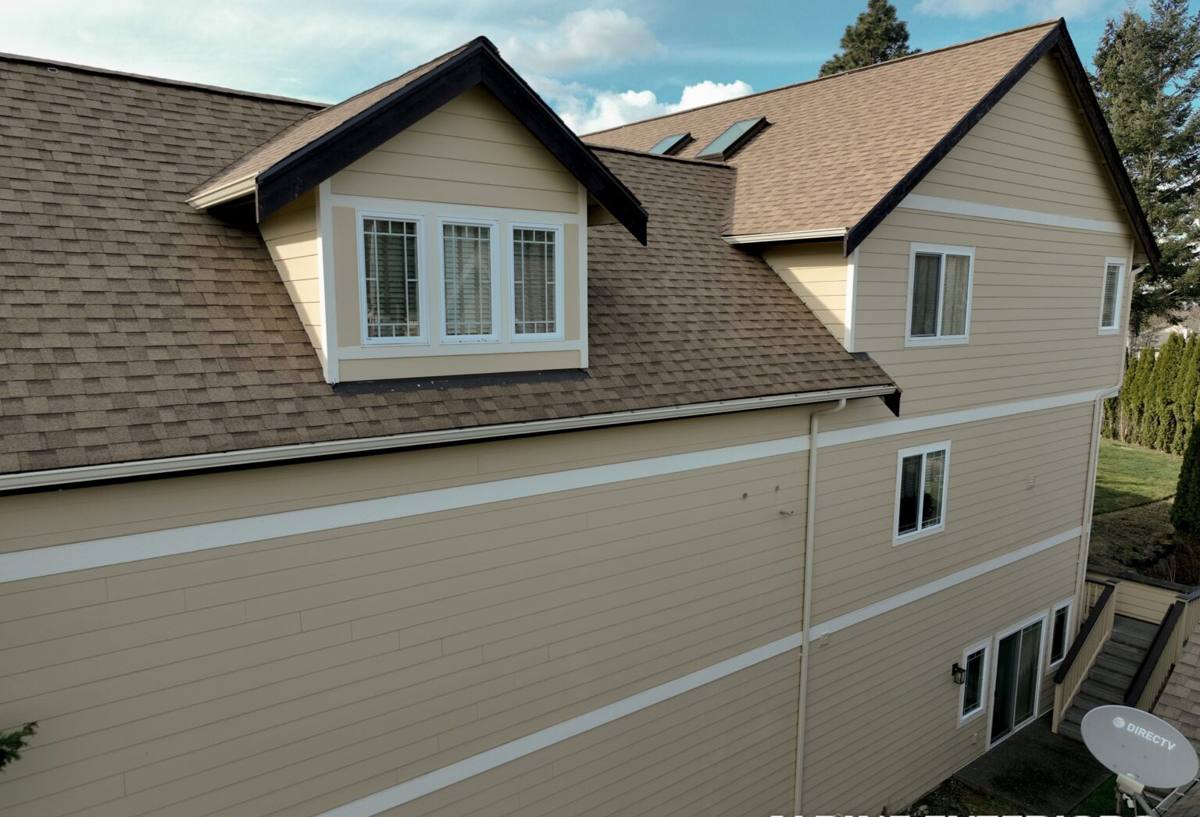
What Local Homes Are Actually Up Against
Sun and Heat
St. Petersburg gets some of the most consistent sun exposure in the country. Siding materials with any organic content — wood, wood-based composites, or products with a film-based finish — are prone to fading, chalking, or breaking down faster here than in milder climates. UV degradation is cumulative and doesn't announce itself until the finish is already gone.
Wind-Driven Rain
Pinellas County storms rarely fall straight down. Wind pushes rain sideways and up under laps, trim, and penetrations. Siding that isn't installed with the right overlaps, flashing, and sealant detailing will let water behind the cladding — and once that happens, the sheathing and framing behind it are at risk long before anyone sees a stain on the outside.
Salt Air
Even a few miles inland from the bay, airborne salt accelerates corrosion on fasteners, trim, and any metal components in a wall assembly. It also breaks down certain finishes faster than fresh-water climates would predict.
Hurricane Wind Loading
Products and fastening schedules that pass in calmer parts of the country don't automatically meet what a Gulf coast wall system needs. Siding here has to be installed to hold under sustained wind pressure and wind-borne debris impact, not just look good on a calm day.
Why Age and Architecture in Crescent Lake Matter for This Job
Many homes in this part of St. Petersburg are older bungalow and mid-century styles, often with original wood siding, aging composite siding from a prior remodel, or trim that's been patched more than once. That history matters for a siding project in a few concrete ways:
- Original sheathing and framing may need inspection and repair once old siding comes off — you can't quote a fair price for the job sight-unseen.
- Older homes sometimes have non-standard wall dimensions or trim profiles that require more custom cutting and fitting than a newer subdivision home.
- Existing moisture damage, especially around window and door openings, is common on homes that have gone years between full siding replacements — this needs to be addressed before new siding goes on, not covered up.
- Matching the character of an older streetscape often matters to homeowners here, which is one reason a factory-finished product with a wide, durable color range is worth the upgrade over field-painted alternatives.
What a Correct Siding Installation Actually Involves
Siding is a system, not just a face material. A crew that does it right handles every layer:
- Tear-off and inspection. Old siding and trim come off, and the sheathing and framing underneath get checked for rot, insect damage, or prior water intrusion — especially around windows, doors, and any spot where past leaks were likely.
- Repair before cover-up. Any compromised sheathing or framing gets replaced. Covering damaged wood with new siding just hides a problem that keeps getting worse.
- Weather-resistive barrier. A properly lapped and sealed water-resistive barrier goes on before any cladding, giving the wall a second line of defense against wind-driven rain.
- Flashing and integration. Windows, doors, hose bibs, vents, and any other penetration get flashed correctly so water is directed out and away from the wall, not into it.
- Fastening to spec. Fastener type, spacing, and embedment follow the manufacturer's requirements for our wind zone — this is where a lot of poor installs fail long before the material itself would have.
- Trim, caulking, and finish details. Corners, joints, and butt seams get treated correctly so the finished wall sheds water instead of collecting it at the seams.
Skip or shortcut any one of these steps and the siding itself almost doesn't matter — water will find its way in eventually, especially in a climate that throws this much wind-driven rain at a house every year.
Why We Install James Hardie Fiber Cement and Nothing Else
We made a decision a long time ago to install one siding system: James Hardie fiber cement. We don't install vinyl, LP SmartSide, Cemplank, Allura, or primed wood species like spruce or cedar. That's not a marketing angle — it's because of what we've seen these products do, and not do, in exactly this climate.
Vinyl softens, warps, and can be blown off the wall in sustained high wind, and it has no real fire resistance. Wood-based composite products like LP SmartSide rely on engineered wood strand cores that are vulnerable to moisture intrusion at cut edges and seams — a real liability in a climate this humid and this exposed to wind-driven rain. Primed cedar and spruce require an ongoing paint and caulk maintenance schedule that most homeowners underestimate, and any lapse lets moisture in fast under year-round UV and salt exposure.
James Hardie fiber cement is non-combustible, doesn't support pest damage the way wood does, and its ColorPlus factory-applied finish is baked on and warrantied against fading — a real advantage under Florida's UV load. Hardie also builds a product line, HZ5, engineered specifically for high-humidity, hurricane-prone climates like ours, with moisture and impact performance tested for exactly these conditions. It comes with a strong transferable limited warranty, which matters both for peace of mind and for resale in a neighborhood like Crescent Lake where homes change hands regularly.
How the Main Siding Options Compare Here
| Factor | James Hardie Fiber Cement | Vinyl Siding | Wood-Based Composite (LP SmartSide) |
|---|---|---|---|
| Wind resistance | Engineered and rated for hurricane-prone regions (HZ5) | Prone to cracking or blow-off in high wind | Moderate; seams vulnerable under sustained wind pressure |
| Moisture behavior | Fiber cement core resists rot; correct install sheds water | Doesn't rot, but traps moisture behind panels if installed poorly | Engineered wood core swells and deteriorates if moisture reaches it |
| UV / fade resistance | Factory ColorPlus finish warrantied against fading | Fades and chalks over time, especially in dark colors | Field-applied paint fades and needs recoating on a set schedule |
| Fire performance | Non-combustible | Combustible, can melt or deform near heat sources | Combustible engineered wood product |
| Maintenance | Low — occasional wash, no repainting on the standard schedule | Low, but limited repair options once damaged | Higher — periodic repainting and edge sealing required |
Our Process for a Crescent Lake Project
Every project starts with an honest, in-person look at the home — not a phone estimate. We walk the exterior, check the condition of the existing siding, trim, and any visible moisture damage, and talk through what the homeowner actually wants out of the finished look. From there:
- We give a written scope and price based on what we actually find, including an allowance for any sheathing repair that turns up once old siding is off.
- We schedule around Florida's rainy season realistically — we don't leave a wall open and exposed overnight if a storm is in the forecast.
- We handle tear-off, repair, weather barrier, flashing, and Hardie installation as one continuous, in-house process rather than handing pieces off to subcontractors who weren't part of the original plan.
- We walk the finished job with the homeowner before calling it done.
What Affects the Cost of a Siding Job Here
| Cost Factor | Why It Matters in Crescent Lake |
|---|---|
| Amount of hidden sheathing repair | Older homes with a history of moisture intrusion often need more substrate work than newer construction |
| Home size and wall complexity | Bungalow and older architectural styles often have more corners, gables, and trim detail than a simple modern facade |
| Siding profile and accessories | Lap width, trim boards, and soffit/fascia work all add labor and material beyond the flat wall area |
| Access and site conditions | Mature trees and tighter older lots can affect staging, disposal, and material handling |
| Color and finish selection | Factory-finished ColorPlus options vary in cost slightly by color and coordinating trim package |
Signs Your Crescent Lake Home May Need New Siding Soon
- Paint that's peeling, bubbling, or needs recoating more often than every few years
- Soft spots, visible warping, or delamination anywhere on the siding or trim
- Visible gaps at seams, corners, or around window and door trim
- Persistent moisture, mildew streaking, or a musty smell near exterior walls
- Siding that's original to a home built decades ago and has never been fully replaced
- Rising cooling costs that suggest the wall assembly isn't performing the way it should
Why It Matters to Hire a Crew That Already Works This Neighborhood
A crew that regularly works Crescent Lake and the surrounding St. Petersburg neighborhoods has already seen how this area's tree cover, home age, and coastal exposure interact — what tends to be hiding behind older siding, how shaded lots hold moisture longer, and what fastening and flashing details actually hold up through a full Pinellas County storm season. That local pattern recognition is worth more than a generic install crew showing up with a one-size-fits-all approach. It shows up in fewer surprises mid-project, and in a finished wall system built for the conditions it actually has to survive.
If you're weighing a siding replacement on a Crescent Lake home, we're glad to come take a look, walk you through what we see, and put together a straightforward, no-pressure estimate — just fill out the form below.