 St. Petersburg Roofing
 Why Siding in Disston Heights Has to Work Harder
Disston Heights is an established residential neighborhood inside St. Petersburg, and like the rest of Pinellas County, it sits in a climate that is genuinely tough on exterior building materials. Homes here deal with hurricane-force wind events, sustained wind-driven rain during the wet season, intense year-round UV exposure, and salt-laden air that travels well inland from Tampa Bay and the Gulf. None of that is unique to any one street or block — it's the baseline every home in this part of Florida is built into. What is specific to a neighborhood like Disston Heights is the housing stock: a mix of homes built across different decades, many of them with siding or trim that's aged past the point of just needing paint.
Siding replacement in this environment isn't a cosmetic upgrade. It's the layer standing between your framing and sustained moisture intrusion, wind-driven debris, and UV degradation. When it's done wrong — wrong materials, wrong fastening, wrong flashing details — it fails faster here than it would in a drier, calmer climate. When it's done right, it's one of the more durable investments you can make in the house.
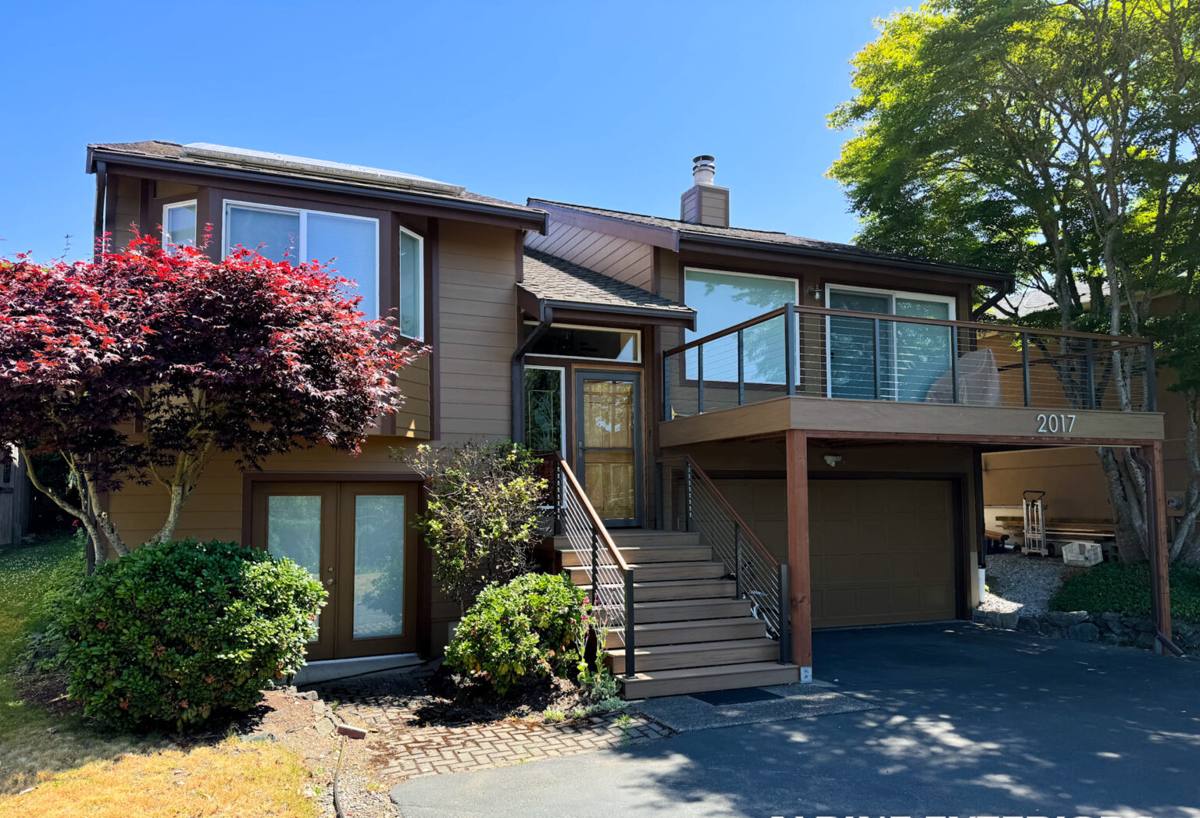
Signs Your Disston Heights Home Needs Siding Replacement
Florida's climate accelerates certain failure patterns. Before assuming a repair will do, it helps to know what actual replacement-level damage looks like versus what's still fixable.
- Soft or spongy spots when you press on the siding, especially near the bottom courses or around window and door trim
- Visible bowing, buckling, or panels that have pulled away from the wall line
- Persistent peeling or bubbling paint that keeps coming back within a year or two of repainting
- Cracked or crumbling panels, particularly on the sides of the house that take the most direct sun or wind-driven rain
- Rot or discoloration at seams, corners, and anywhere trim meets siding
- A musty smell or interior wall staining that suggests moisture is getting behind the exterior cladding
- Visible fastener corrosion or nail heads working loose from the surface
One or two of these in isolation might be a repair. Several at once, or damage that keeps returning after patching, usually means the underlying material and installation have reached the end of their useful service life.
What a Correct Siding Replacement Actually Involves
A siding replacement is only as good as what happens before the new panels ever go up. Rushing the tear-off and substrate inspection is the single biggest reason siding jobs fail early in coastal Florida.
Substrate and Moisture Barrier
Once the old siding is off, the sheathing underneath needs to be inspected — not glanced at — for soft spots, rot, or prior water damage. Any compromised sheathing gets replaced before anything else happens. A proper weather-resistant barrier goes on next, lapped and sealed correctly at every seam, window, and door opening. In a climate with regular wind-driven rain, the quality of this barrier and its flashing details matters as much as the siding itself, because it's the layer that actually keeps water out if wind ever forces moisture past the cladding.
Fastening and Wind Resistance
Fastener type, spacing, and placement are not cosmetic details — they're what keeps siding attached during a wind event. Pinellas County sits in a high-velocity hurricane zone, which means fastening patterns and clearances need to match manufacturer specifications engineered for those wind speeds, not generic guidelines pulled from a milder climate. Correct clearances at the ground, roofline, and any penetrations also matter, since gaps that are too tight trap moisture and gaps that are too loose invite pests and wind intrusion.
Why We Install Only James Hardie Fiber Cement
We standardized on James Hardie fiber cement siding and don't install vinyl, LP SmartSide, or other engineered wood or fiber cement alternatives. That's a deliberate call based on how these products actually perform over years of Gulf Coast sun, humidity, and storm exposure — not a sales preference.
Fiber cement is non-combustible, holds its shape in high heat and humidity without warping the way some engineered wood products can if a moisture barrier detail is ever imperfect, and it takes a factory-applied finish that's formulated to resist fading under sustained UV exposure — a real factor in a state that gets strong sun essentially all year. It also carries a strong, transferable manufacturer warranty when installed to specification, which matters to homeowners who plan to sell within the warranty period.
The HZ5 Product Line Built for Climates Like This One
James Hardie engineers its siding in different formulations for different climate zones, and the HZ5 line is the one built for humid, hurricane-exposed regions like the Gulf Coast of Florida. It's engineered to resist moisture-related damage in high-humidity, high-rainfall conditions — exactly the profile Pinellas County sees for a large part of the year. Installing a formulation built for a drier, colder climate on a St. Petersburg home defeats part of the purpose of choosing fiber cement in the first place, so the climate-matched product line is what goes on every job.
Our Siding Replacement Process
- Inspection and assessment — we evaluate the existing siding, trim, and visible substrate condition, and talk through what we're seeing before any work starts
- Tear-off and substrate repair — old siding comes off, sheathing is inspected, and anything compromised is replaced
- Weather barrier installation — a new moisture barrier goes on with correct lapping and sealing at every penetration
- Hardie installation — panels are installed to manufacturer fastening and clearance specifications, matched to the local wind zone
- Trim, caulking, and finish detail — seams, corners, and transitions are sealed and finished to shed water correctly
- Final walkthrough and warranty registration — we review the completed work with you and register the manufacturer warranty in your name
Every step exists because skipping it is exactly where Florida siding jobs tend to fail first — usually at the substrate or the flashing, rarely at the visible panel itself.
What Drives the Cost of a Siding Replacement Project
Every home is different, which is why we quote each job individually rather than by a flat per-square-foot rate. That said, a few factors consistently move the price up or down.
| Factor | Why It Matters | Typical Effect on Cost |
|---|---|---|
| Extent of substrate damage found at tear-off | Rotted or soft sheathing must be replaced before new siding goes on | Increases |
| Home size and wall complexity (dormers, angles, multiple stories) | More cuts, more trim work, more labor hours | Increases |
| Amount of trim, fascia, and soffit work bundled in | Often replaced alongside siding for a consistent, sealed exterior | Increases |
| Existing siding type and how it comes off | Some materials remove cleanly; others require more careful, slower removal | Varies |
| Color and finish selection | Factory ColorPlus finishes come in a range of standard and premium options | Varies |
| Access and site conditions | Tight lot lines, landscaping, or fencing can add labor time | Increases |
The only way to get an accurate number for your specific home is a physical inspection — anything quoted sight unseen is a guess.
Why a Crew That Already Works This Neighborhood Matters
Siding replacement in St. Petersburg isn't generic exterior work. A crew that regularly works in and around Disston Heights and the rest of Pinellas County already understands the local wind zone requirements, the permitting process with the city, and the kinds of substrate issues that tend to show up in homes of a certain age once the old siding comes off. That familiarity shows up in fewer surprises mid-project, tighter timelines, and installation details that are actually built for the wind and moisture loads this specific area sees — not adapted from a spec sheet written for a different climate. It also means faster response if a storm damages siding between now and your next scheduled maintenance check.
Maintaining New Siding in a Coastal Climate
Correctly installed fiber cement siding is low-maintenance, but "low" isn't "zero" in a salt-air, high-UV environment. A periodic rinse to clear salt residue and airborne debris, prompt attention to any caulking that starts to crack at seams or trim, and keeping an eye on areas where sprinklers or landscaping keep siding consistently damp will all extend the life of the installation well past the years covered by the manufacturer warranty.
If you're seeing warning signs on your siding, or it's simply reached the age where replacement makes more sense than another round of patching, we're happy to take a look. Request a free, no-pressure estimate and we'll walk your property, explain exactly what we find, and give you a straight answer on what it would take to do the job right.