 St. Petersburg Roofing
 New-Construction Windows in Crescent Lake: What the Term Actually Means
"New-construction windows" refers to a specific installation method, not just a window that happens to be new. These are flanged (nail-fin) windows installed directly into a framed rough opening, down to the studs, with the window's nailing flange integrated into the wall's weather-resistive barrier and flashing system before siding or stucco goes back on. That's different from an insert or "pocket" replacement, where a new window is fitted inside the frame of the old one without disturbing the surrounding wall.
In Crescent Lake, this method comes up most often on additions, second-story build-outs, garage conversions, rebuilds after storm or fire damage, and full renovations where exterior walls are already open. It's also the right call any time the existing rough opening is out of square, rotted, or undersized for the window you actually want. Because the wall is open, a new-construction install gives us full access to the framing and sheathing — which matters a lot in a neighborhood this close to Tampa Bay.
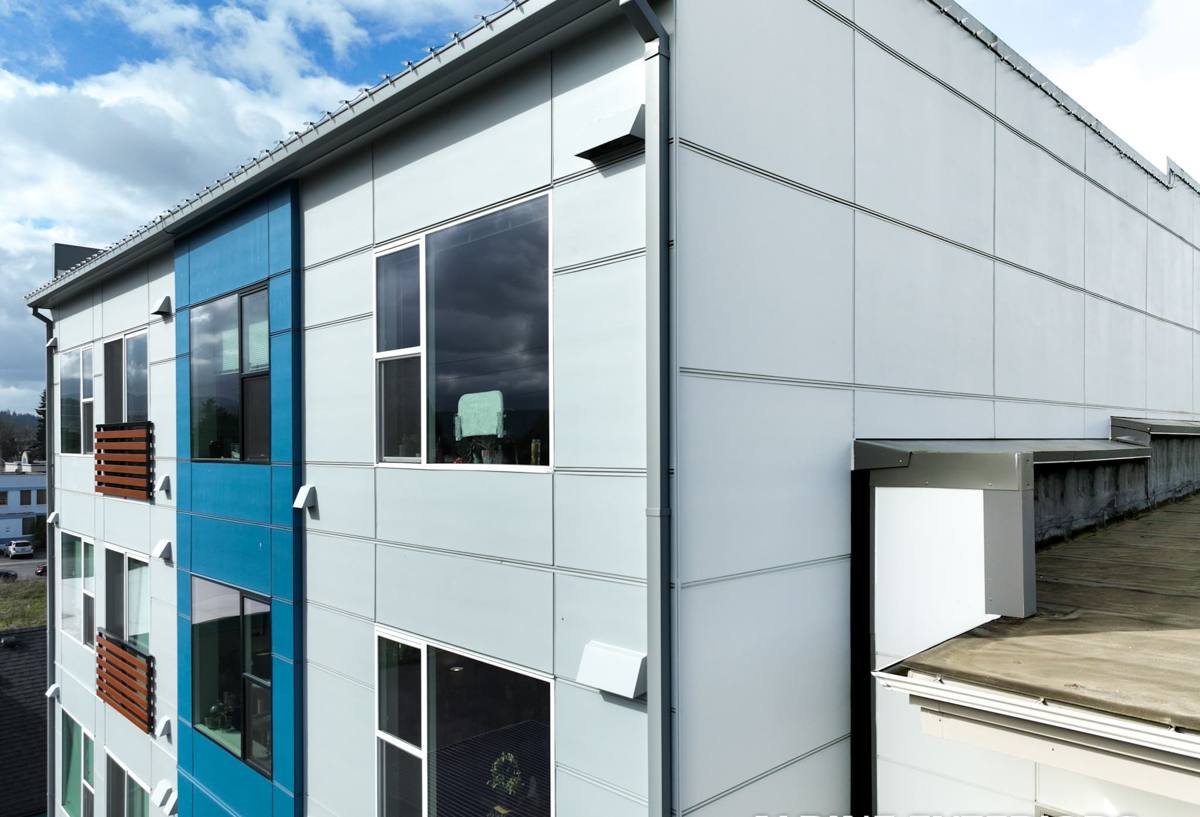
Why This Matters More in Crescent Lake Than It Would Inland
Crescent Lake sits close enough to the water that St. Petersburg's coastal exposure is a real factor in how a window opening should be built out, not just which window brand you pick. A few things stack up here that don't show up the same way twenty miles inland:
- Hurricane-force wind loads: Pinellas County sees direct exposure during tropical systems, and wall openings are one of the first places a building envelope fails if flashing or fastening is done wrong.
- Wind-driven rain: Florida storms don't just drop rain — they push it sideways into any gap in the flashing. A window that looks watertight in dry weather can still leak under wind-driven rain if the sill pan and flashing laps aren't sequenced correctly.
- Intense, near-year-round UV: Vinyl, sealants, and even some fiberglass finishes degrade faster under Florida sun than they do in most of the country. Product selection and sealant choice matter more here.
- Salt air: Even set back from the immediate waterfront, St. Petersburg's air carries enough salt to accelerate corrosion on cheap hardware, fasteners, and screen frames over the years.
Crescent Lake's housing stock is also a mix — older bungalow and mid-century construction alongside newer infill homes and additions — so the framing we open up varies more than in a subdivision built all at once. That's part of why experience with this specific neighborhood's building patterns, not just general Florida experience, makes a difference.
New-Construction vs. Insert Replacement
Homeowners renovating in Crescent Lake often ask why we'd recommend the more involved new-construction method instead of a simpler insert replacement. Both have a place — the table below lays out the honest trade-offs.
| Factor | New-Construction (Flanged) | Insert (Pocket) Replacement |
|---|---|---|
| Best used when | Wall is already open, opening is damaged, or you're resizing the window | Existing frame is sound and square, wall stays closed |
| Flashing access | Full access to re-flash and seal the opening from scratch | Relies on the condition of the existing frame and flashing |
| Glass area | Can maximize glass size for the opening | Slightly reduced, since new frame sits inside the old one |
| Exterior work required | Siding, stucco, or trim disturbed and must be repaired | Minimal exterior disruption |
| Typical timeline | Longer per opening — more steps, more trades | Faster, often one day per window |
Our standard is to recommend the method that fits the actual condition of the wall — not the one that's easiest to sell. If we open a wall on a Crescent Lake job and find deteriorated sheathing or an old flashing job that was never right, we'll tell you before we close it back up.
Florida Building Code and What It Means for This Job
Pinellas County falls under the Florida Building Code's windborne debris region, which sets minimum requirements for window pressure ratings and impact protection based on your home's design wind speed and exposure category. That means new-construction window installs here aren't just a carpentry job — they're a permitted, inspected part of the building envelope.
Practically, this means:
- Windows must carry a product approval rating (Florida Product Approval or Miami-Dade NOA) matching your home's wind zone.
- You'll need either impact-rated glass or an approved opening protection system (shutters or panels) to satisfy windborne debris requirements, depending on your home's exposure.
- A building permit and inspection is required for new-construction window installs in St. Petersburg — this isn't optional paperwork, it's what protects your insurance coverage after a storm.
- Flashing and water-resistive barrier integration must follow manufacturer instructions and code, since this is what an inspector is actually checking for.
We pull permits and coordinate inspections as a standard part of the job. If a contractor offers to skip the permit "to save time," that's a red flag — it usually means the work won't hold up to inspection, and it can create real problems if you ever file a wind-damage claim.
What a Correct Installation Actually Involves
The window itself is only part of what makes a new-construction install perform well. The sequence of work around the opening is where most long-term problems either get prevented or built in.
The install sequence, step by step
- Frame the rough opening square, level, and to the correct dimensions for the window.
- Install a sloped sill pan flashing so any water that gets past the window drains back out, not into the wall.
- Integrate the window's flange with the wall's weather-resistive barrier in proper shingle-lap order — this is the step that determines whether wind-driven rain stays out.
- Set the window plumb, level, and square, then shim and fasten per the manufacturer's approved pattern (this is what the wind rating depends on).
- Seal and back-seal per manufacturer specs — not just a bead of caulk around the outside trim.
- Insulate the gap between the frame and rough opening with an appropriate low-expansion product, avoiding gaps or over-packing.
- Reinstall interior and exterior trim, and repair siding or stucco to match.
- Final inspection to confirm flashing, fastening, and sealant meet code before the wall is closed for good.
Skipping or rushing any one of these steps is how you end up with a window that looks fine for a few years and then starts showing water stains on the drywall below it during the next big blow.
Choosing Materials for Sun, Salt, and Wind
Frame material and glass package both affect how a window holds up in this environment over time.
Frame materials
Vinyl frames are common and cost-effective, but lower-grade vinyl can warp or yellow under sustained Florida UV exposure — we specify UV-stabilized vinyl or aluminum/fiberglass options where a homeowner wants a longer service life or a darker exterior color, since dark colors absorb more heat and stress cheaper vinyl faster. Aluminum frames handle heat and structural loads well but need a quality thermal break and corrosion-resistant hardware given the salt air. Fiberglass costs more up front but resists warping, fading, and corrosion better than either option.
Glass and hardware
Impact-rated laminated glass is worth strong consideration in this area — beyond satisfying windborne debris requirements, it also blocks a significant amount of UV and cuts outside noise. Low-E coatings help manage solar heat gain, which matters for cooling costs given how much direct sun Pinellas County gets most of the year. On hardware, we favor stainless or corrosion-resistant fasteners and locks over standard-grade hardware, since salt air will find and degrade the weak link over a few seasons.
Our Process on a Crescent Lake Job
Every new-construction window job we take on in Crescent Lake follows the same basic path:
- On-site assessment: We look at your framing, existing wall condition, and what the project actually needs — addition, rebuild, or renovation.
- Product and code review: We match window selection to your home's wind zone and your goals for glass, style, and budget.
- Permitting: We handle the permit application and schedule required inspections with the city.
- Installation: Framing, flashing, window setting, sealing, and insulation, done in the sequence above.
- Exterior repair: Siding, stucco, or trim restored to match the surrounding wall.
- Final inspection and walkthrough: We confirm everything passes and walk you through care and warranty details.
Why Local Experience in Crescent Lake Specifically Matters
Crescent Lake's tree-lined streets and mature canopy are part of what makes the neighborhood desirable, but they also mean job sites here often have tighter access, mature root systems near foundations, and a mix of older and newer construction on the same block. A crew that's worked this neighborhood before knows to check for things like older, non-standard framing dimensions on original construction, and to coordinate around tree cover and street parking that a subdivision job wouldn't involve. Some properties in and around Crescent Lake may also fall under local design review or historic guidelines — if yours does, we'll flag it early so window style and exterior appearance get sorted out before, not after, the permit is pulled.
If you're planning an addition, rebuild, or renovation in Crescent Lake that involves new-construction window installation, we're happy to take a look and give you a straightforward, no-pressure estimate — just fill out the form below.