 St. Petersburg Roofing
 Siding in Pinellas Park Has to Work Harder Than Siding Almost Anywhere Else
Pinellas Park sits inland enough to feel like it's tucked away from the water, but it isn't spared from what makes Pinellas County tough on a house's exterior. The same tropical storms and hurricane-force wind events that hit the coastline push inland with plenty of force left, and the salt-laden air off Tampa Bay and the Gulf travels further than most homeowners assume. Add in Florida's year-round UV load and the kind of sideways, wind-driven rain that shows up in nearly every summer thunderstorm, and you've got a climate that will find every weakness in a siding product within a few years, not a few decades.
That's the backdrop for every siding conversation we have with Pinellas Park homeowners. This page is specifically about fiber cement siding for homes in this area — what the climate demands, what a correct installation actually involves, and how our process works from first estimate to final walkthrough.
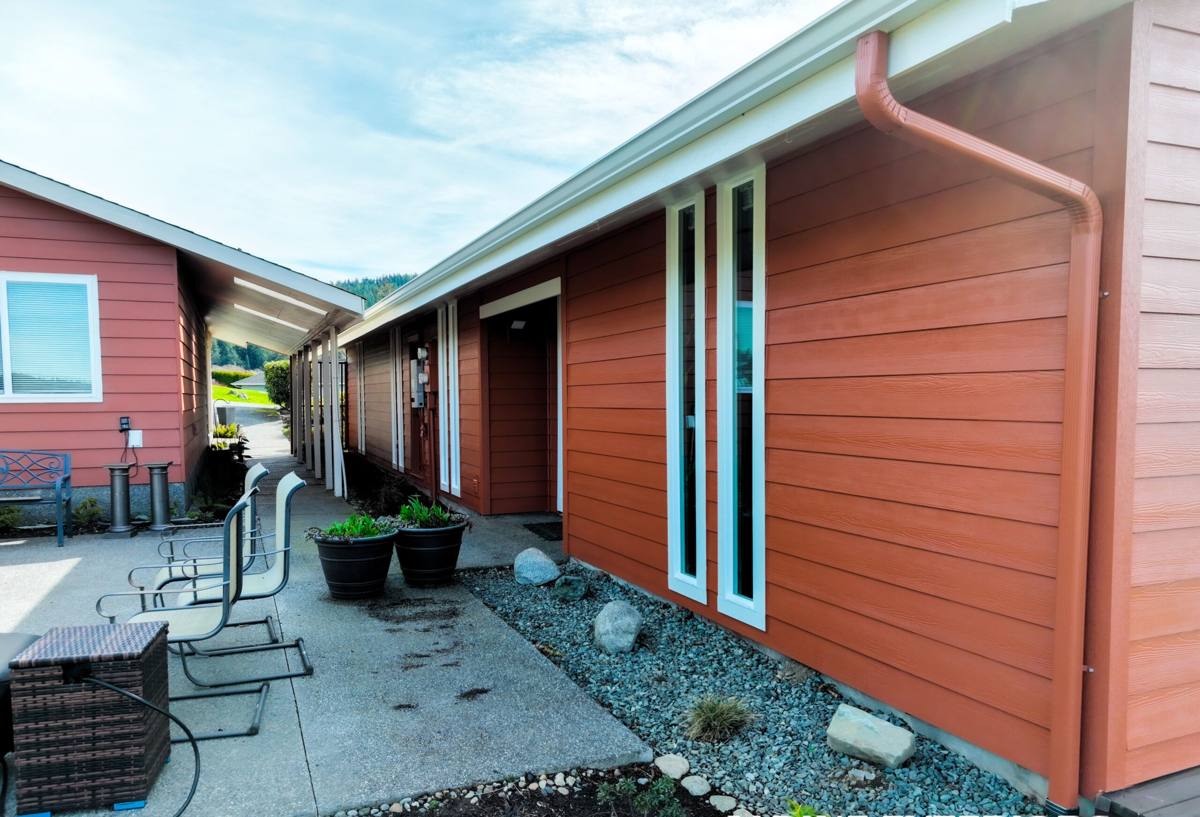
What Wind-Driven Rain and Salt Air Do to the Wrong Siding
Most siding failures we see in this part of Florida aren't dramatic. They're slow — moisture finding its way behind panels through wind-driven rain, humidity keeping wall cavities damp longer than they should stay damp, and salt air accelerating corrosion on anything metal that wasn't chosen or protected correctly. Add intense UV exposure and you get fading, chalking, and surface breakdown on top of the moisture problems.
Wood-based and wood-adjacent siding products are especially vulnerable here. Even with factory treatments, exposed edges, cut ends, and fastener points are entry points for moisture, and once a wood-based panel starts absorbing water it doesn't dry out fast in Florida's humidity. Vinyl siding handles moisture fine on its own, but it softens and can deform in sustained heat, and it isn't rated for the wind speeds this region can see. Homeowners in Pinellas Park deserve a straight answer about what actually holds up here, not just what's cheapest to install.
Why We Install Only James Hardie Fiber Cement Siding
We made a deliberate decision as a company: we install James Hardie fiber cement siding, and nothing else. Not LP SmartSide, not vinyl, not Cemplank, not Allura, not primed spruce or cedar. That's not a marketing position — it's a standard we hold because of what we've seen this climate do to homes over years of working in Pinellas County.
Fiber cement itself — a mix of cement, sand, and cellulose fibers — is non-combustible and dimensionally stable in a way wood-based products can't match. It doesn't swell, warp, or rot the way wood siding can when it takes on moisture, and it holds paint and factory finishes far longer than vinyl holds its color. James Hardie is the manufacturer we've standardized on within that category because of three things that matter directly to Pinellas Park homes: their ColorPlus factory-baked finish (which resists the fading our UV load causes faster than field-applied paint would), their HZ product engineering built specifically for humid, storm-prone climates, and a warranty structure that's transferable if you sell the home.
HZ5: Built for Exactly This Climate
James Hardie doesn't make one generic siding product for the whole country — they engineer regional formulations, and the HZ5 line is designed for Gulf Coast and humid, high-moisture climates like ours. That matters more than most homeowners realize. A siding product engineered for a dry, low-humidity climate can perform very differently once it's installed on a home in Pinellas County dealing with near-constant humidity, salt air, and heavy seasonal rain.
HZ5 panels are formulated to resist moisture-related damage and hold up against the freeze-thaw non-issue we don't have, but more importantly against the humidity and biological growth issues we do have. Paired with correct installation — proper clearances, flashing, and fastening — it's a system built to handle exactly the conditions Pinellas Park sees every year: wind, rain, sun, and salt, in that rotating order, sometimes all in the same week.
What "Climate-Engineered" Actually Means Day to Day
- Resists moisture absorption that leads to swelling, cracking, or rot in humid conditions
- Factory-baked ColorPlus finish resists UV fading better than field-painted siding
- Non-combustible material composition
- Engineered thickness and density to hold up under wind-driven rain impact
- Compatible with proper flashing and drainage details that keep moisture from getting trapped behind the panel
What a Correct Fiber Cement Siding Installation Involves
Fiber cement siding is only as good as its installation. This is the part homeowners often don't see discussed until something goes wrong — and in a climate like ours, installation shortcuts show up as problems within a few storm seasons, not decades.
A correct installation isn't just nailing panels to the wall. It includes a proper weather-resistive barrier behind the siding, correct flashing at every window, door, and penetration, the manufacturer-specified clearances from rooflines, decks, and grade, and fastening patterns that account for wind load in a hurricane-exposed region. Skipping any one of these steps is exactly how moisture gets behind siding that's otherwise a good product — and once that happens, the siding gets blamed for what was actually an installation failure.
What to Expect From a Properly Installed Job
- House wrap or weather-resistive barrier installed and sealed correctly before any siding goes up
- Flashing integrated at every window, door, and penetration point — not caulk used as a substitute for flashing
- Correct clearance gaps maintained at rooflines, decks, patios, and grade level
- Fastener spacing and placement that meets manufacturer specs for wind resistance
- Joints and butt seams treated to shed water rather than trap it
- Factory-finished panels handled and cut in ways that protect the ColorPlus coating
Our Process, Start to Finish
We keep the process straightforward because homeowners in Pinellas Park don't need it complicated — they need it done right.
1. On-Site Assessment
We walk the exterior with you, look at the current siding condition, check for underlying moisture or structural issues, and talk through what your home actually needs — not a generic package.
2. Honest Estimate
You get a clear, written estimate that spells out the scope of work, the Hardie product line and profile recommended for your home, and a realistic timeline.
3. Prep and Removal
Old siding comes off, the substrate gets inspected for hidden damage, and any repairs needed underneath are addressed before a single new panel goes up.
4. Weather Barrier and Flashing
This is the step that determines whether the siding performs for 30+ years or fails in five. We install the weather-resistive barrier and flashing system to spec, every time.
5. Siding Installation
Hardie panels, trim, and accessories go up following manufacturer clearance and fastening requirements, engineered for this region's wind exposure.
6. Final Walkthrough
We inspect the finished job with you, cleanup included, before we consider the project done.
What Fiber Cement Siding Typically Costs to Install
Costs vary based on the size of the home, the current siding condition, trim and detail complexity, and whether repairs are needed to the underlying structure. The table below outlines the general factors that move the price, without pretending there's a single number that fits every home.
| Cost Factor | Why It Matters |
|---|---|
| Home size and wall area | More square footage means more material and labor hours |
| Removal of existing siding | Tear-off, disposal, and any substrate repair add time and cost |
| Siding profile and texture | Lap, shingle, and panel styles vary in material and installation complexity |
| Trim and architectural detail | Homes with more corners, windows, and trim work take longer to fit correctly |
| Underlying moisture or structural damage | Rot or water damage found during removal must be repaired before new siding goes on |
We provide a specific, written number after seeing the home in person — not a rough phone estimate that changes once we get on site.
Why a Crew That Already Works in Pinellas Park Matters
Siding installation isn't one-size-fits-all across Florida, let alone across the country. A crew that regularly works in Pinellas Park and the surrounding St. Petersburg area already understands the local permitting process, the wind-load requirements tied to Pinellas County's building codes, and the way this specific stretch of Gulf Coast climate behaves through hurricane season. That local familiarity shows up in details — knowing which flashing details actually hold up to the wind-driven rain this area gets, and not treating every job like it's a generic install pulled from a national playbook.
It also means faster response if something needs attention after a major storm, and a crew that isn't learning the local code requirements on your project.
Caring for Hardie Siding After Installation
One advantage of fiber cement over wood-based alternatives is how little ongoing maintenance it demands. It doesn't need repainting on the schedule wood siding does, and it isn't vulnerable to the rot and insect damage that come with organic materials sitting in Florida humidity. That said, a few basics keep it performing well for its full service life:
- Rinse off salt residue and grime periodically, especially on homes closer to the coast
- Keep gutters and downspouts clear so water isn't running down or pooling against siding
- Inspect caulking at trim and penetration points every year or two and have it renewed if it's cracking
- Address any impact damage from storm debris promptly rather than letting it sit exposed
Fiber cement siding done right, on a home in Pinellas Park, should be one of the lowest-maintenance parts of the exterior — not one you're thinking about every season.
If your Pinellas Park home needs new siding or you're planning ahead for a replacement, we're happy to walk the exterior with you and give you a straight, no-pressure estimate. Use the form below to get started.