 St. Petersburg Roofing
 Siding That Has to Work in Seminole, Not Just Look Good
Seminole sits close enough to the Gulf that salt-laden air, wind-driven rain, and long stretches of direct summer sun are simply part of owning a home here. Add Pinellas County's exposure to hurricane-force wind events, and you have a climate that is genuinely hard on exterior building materials. Siding in this part of St. Petersburg isn't just a design decision — it's a weather barrier that gets tested every year, sometimes several times a season.
We install James Hardie fiber cement siding exclusively. That's not a marketing angle — it's a standard we hold because we've seen what holds up in coastal Pinellas neighborhoods like Seminole and what doesn't. This page walks through what local homes actually need from their siding, what a correct Hardie installation looks like, and how we approach the job from first look to final walkthrough.
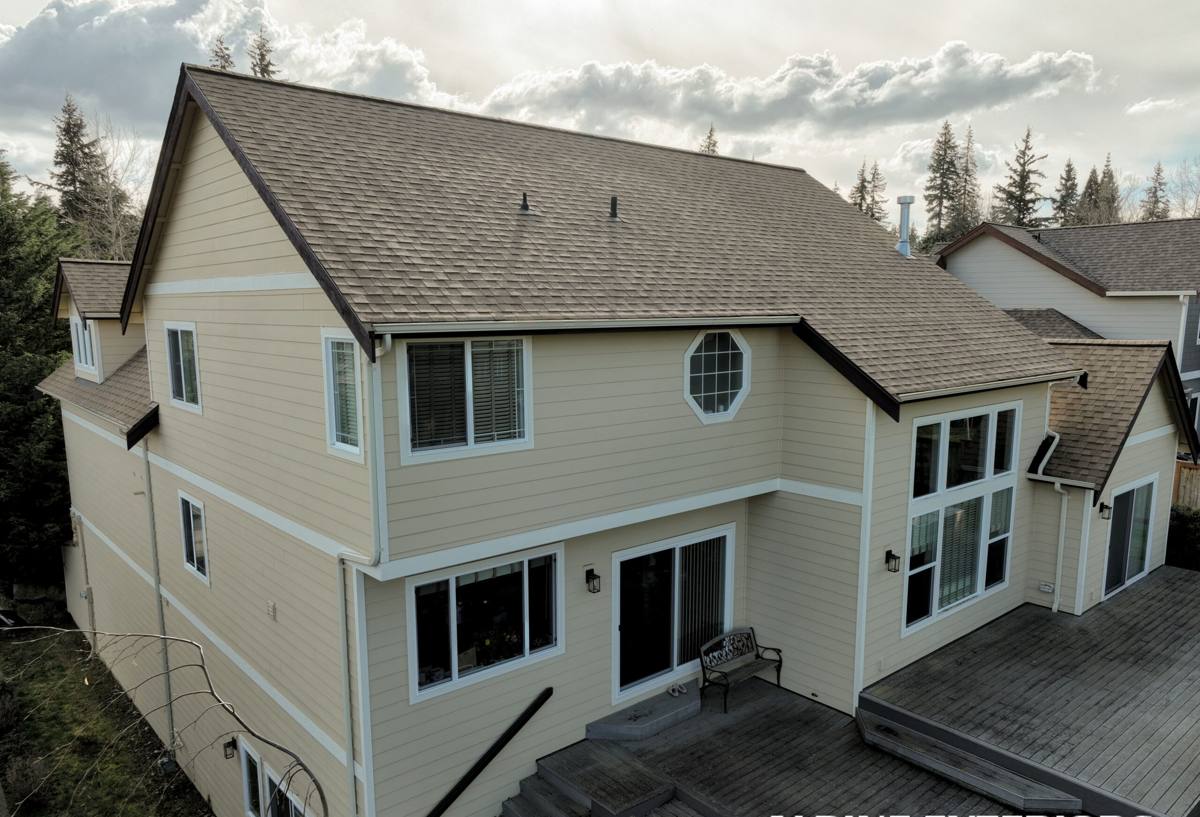
What Seminole's Climate Actually Does to Siding
Before talking about the product, it helps to be specific about the stresses involved. Four things drive most of the siding failures we see in this area:
- Wind-driven rain: Storms here don't just fall straight down — sustained onshore wind pushes rain sideways into wall assemblies, seams, and trim joints, testing every flashing detail and seam.
- Hurricane and tropical-storm wind loads: Even a near-miss storm can put sustained high wind and gusts on exterior walls for hours, stressing fastener patterns and panel edges repeatedly over a season.
- Salt air corrosion: Proximity to the Gulf means airborne salt settles on every exterior surface, accelerating corrosion of exposed metal fasteners and degrading materials that aren't formulated to resist it.
- Intense, near year-round UV: Florida sun breaks down pigments and surface coatings faster than in most of the country, which is why paint and lower-grade finishes chalk, fade, and crack well ahead of schedule here.
None of these stresses are dramatic on their own. It's the combination — and the fact that they repeat year after year without a real off-season — that separates siding materials that last in Seminole from ones that don't.
Why We Only Install James Hardie
James Hardie fiber cement is engineered specifically to resist the failure modes above. It's non-combustible, which matters for wildfire and ember exposure in dry stretches, and it's manufactured with a HardieZone system that includes an HZ5 product line built for hot, humid, coastal climates like ours — denser formulation aimed at moisture and climate resistance rather than a one-size-fits-all national product.
The factory-applied ColorPlus finish is the other half of the equation. Instead of a field-applied paint job that starts degrading under Florida UV almost immediately, ColorPlus is baked on in a controlled factory process and backed by its own finish warranty — typically holding color and integrity far longer than site-applied paint on wood, vinyl, or unfinished fiber cement ever does under this sun.
We don't install LP SmartSide, vinyl, Cemplank, Allura, or primed wood siding. Each of those has legitimate uses somewhere, but in a coastal wind-and-salt environment like Seminole, we've made the professional call that the trade-offs — moisture sensitivity, shorter finish life, warranty structure, or long-term maintenance burden — aren't worth putting on a home we're standing behind.
What a Correct Hardie Installation Actually Involves
Fiber cement siding is only as good as the installation underneath it. Hardie's own warranty terms require installation to their specifications, and in a high-wind, wind-driven-rain climate, skipping steps is exactly what causes callbacks a few years down the line.
Water Management Comes First
Before a single piece of siding goes up, the wall needs a correctly lapped weather-resistant barrier, properly integrated flashing at every window, door, and penetration, and a rainscreen or drainage gap where conditions call for it. This is the layer that actually keeps wind-driven rain out of the wall assembly — the siding itself is the second line of defense, not the first.
Fastening for Real Wind Loads
Fastener type, spacing, and placement all change based on local wind zone requirements. Panels need to be fastened per Hardie's engineering data for the applicable exposure category, using corrosion-resistant fasteners suited to a salt-air environment — not whatever is fastest to run through a nail gun.
Joints, Gaps, and Caulking
Every butt joint, corner, and trim intersection needs the correct gap and sealant treatment. Hardie is explicit about which joints should be caulked and which should be left to shed water naturally — get this backwards and you trap moisture instead of shedding it.
Clearance and Grade Details
Siding needs proper clearance from the roofline, grade, and any adjacent hardscape. In a humid coastal climate, tight clearances are one of the most common causes of moisture problems at the bottom courses of a wall.
Our Process for a Seminole Siding Project
| Step | What Happens | Why It Matters Here |
|---|---|---|
| Assessment & measure | We inspect the existing wall assembly, sheathing condition, and current siding/trim for hidden moisture or rot before quoting. | Salt air and humidity can hide damage behind old siding that needs addressing before new panels go up. |
| Product & profile selection | We walk through Hardie plank, panel, and shingle profiles and ColorPlus finish options suited to the home. | Profile and exposure choices affect both appearance and how the wall sheds wind-driven rain. |
| Water barrier & flashing | Weather-resistant barrier, flashing, and drainage details are installed or verified before siding begins. | This is the layer that actually stops intrusion during wind-driven rain events. |
| Installation to spec | Panels are fastened, gapped, and finished per Hardie's engineering guidance for our wind zone. | Correct fastening is what keeps siding intact through hurricane-season wind loads. |
| Trim, caulk & final detail | Corners, trim, and joints are finished with the correct sealant approach at each location. | Improper caulking is one of the most common causes of trapped moisture in coastal installs. |
| Walkthrough | We review the finished work with the homeowner and go over care and warranty registration. | Registered warranties protect the investment long after the crew leaves. |
Why Hiring a Crew That Already Works Seminole Matters
Fiber cement installation isn't complicated in theory, but the details that make it hold up here are learned by doing it in this exact climate, not by reading a spec sheet once. A crew that regularly works Pinellas County homes already knows the local wind-zone fastening requirements, understands how quickly Florida UV and salt exposure expose a shortcut, and has seen firsthand what happens to jobs that skip flashing or clearance details in a wall that will see wind-driven rain every summer.
That local repetition is also what keeps a crew honest about material choice. Contractors who install whatever's cheapest that week don't have to live with callbacks in a coastal wind environment the way a crew that's built its reputation on James Hardie work does. We install one product because we can stand fully behind how it performs here — not because it's the only option on the market.
Maintenance: What Owning Hardie Siding Actually Looks Like
One of the real advantages of fiber cement with a factory finish is how little upkeep it demands compared to wood or field-painted alternatives. That said, "low-maintenance" isn't "no-maintenance," especially near the Gulf.
- Rinse the exterior periodically to clear accumulated salt residue and airborne debris, especially on walls facing prevailing wind.
- Inspect caulked joints annually and have any cracked or separated sealant addressed before rainy season.
- Keep irrigation heads and sprinklers from spraying directly on siding — repeated wetting from an avoidable source ages any exterior material faster than it should.
- After a major wind event, do a quick visual check for loose trim, displaced panels, or damaged caulk lines.
- Trim vegetation back from exterior walls to maintain airflow and reduce trapped moisture at the siding surface.
Cost Factors Worth Understanding Up Front
Every home is different, so we won't quote a number without seeing the project, but a few factors consistently move the price on Hardie installations in this area:
| Factor | Why It Affects Cost |
|---|---|
| Existing wall condition | Rot, hidden moisture damage, or an outdated water barrier behind old siding adds repair scope before new siding can go on. |
| Profile & product line | Plank, panel, and shingle profiles carry different material and labor costs; HZ5 formulations are priced for the added climate engineering. |
| Home size & complexity | Corners, dormers, and multiple wall planes add cutting, fitting, and flashing labor beyond simple flat elevations. |
| Trim & accessory scope | Fascia, soffit, and trim replacement alongside siding changes total project cost and timeline. |
| Color & finish selection | ColorPlus finishes are priced within the panel cost; custom field-painting after install is a separate consideration we generally discourage under this UV load. |
Signs Your Seminole Home May Need a Siding Conversation Sooner Than Later
You don't need visible storm damage to justify a siding assessment. Watch for:
- Soft or spongy spots when you press on wall surfaces, especially near the base of walls or window trim
- Persistent paint failure or chalking that returns within a year or two of repainting
- Visible gaps, warping, or separation at seams and corners
- Rust streaking from fasteners bleeding through the surface
- A noticeable jump in humidity or musty smell along interior walls that share an exterior line
Any of these are worth a look before the next storm season, not after.
Let's Take a Look at Your Home
If you're in Seminole or elsewhere around St. Petersburg and thinking about siding, we're happy to come take a look, answer questions honestly, and give you a straightforward assessment — no pressure, no pushy sales pitch. Use the form below to request a free estimate.