 St. Petersburg Roofing
 Siding That Has to Work in Crescent Lake, Not Just Look Good
Crescent Lake is one of St. Petersburg's older, established residential pockets — a mix of home ages and styles under mature tree canopy, close enough to the bay that every exterior surface deals with salt-laden air on top of everything else Pinellas County weather throws at it. Siding here isn't a cosmetic decision. It's the layer standing between your framing and hurricane-force wind gusts, wind-driven rain that gets pushed sideways under eaves and around corners, and UV exposure that runs nearly year-round instead of tapering off in winter like it does farther north.
That combination is hard on siding. Vinyl gets brittle and can deform in high heat, then crack under wind load. Wood-based products absorb moisture at cut edges and joints and start to swell, delaminate, or invite rot if they're not maintained on a strict paint schedule. Salt air accelerates corrosion on fasteners and trim and dulls finishes faster than inland climates. Any siding job in this neighborhood has to be specified and installed with all of that in mind from day one — not patched around later.
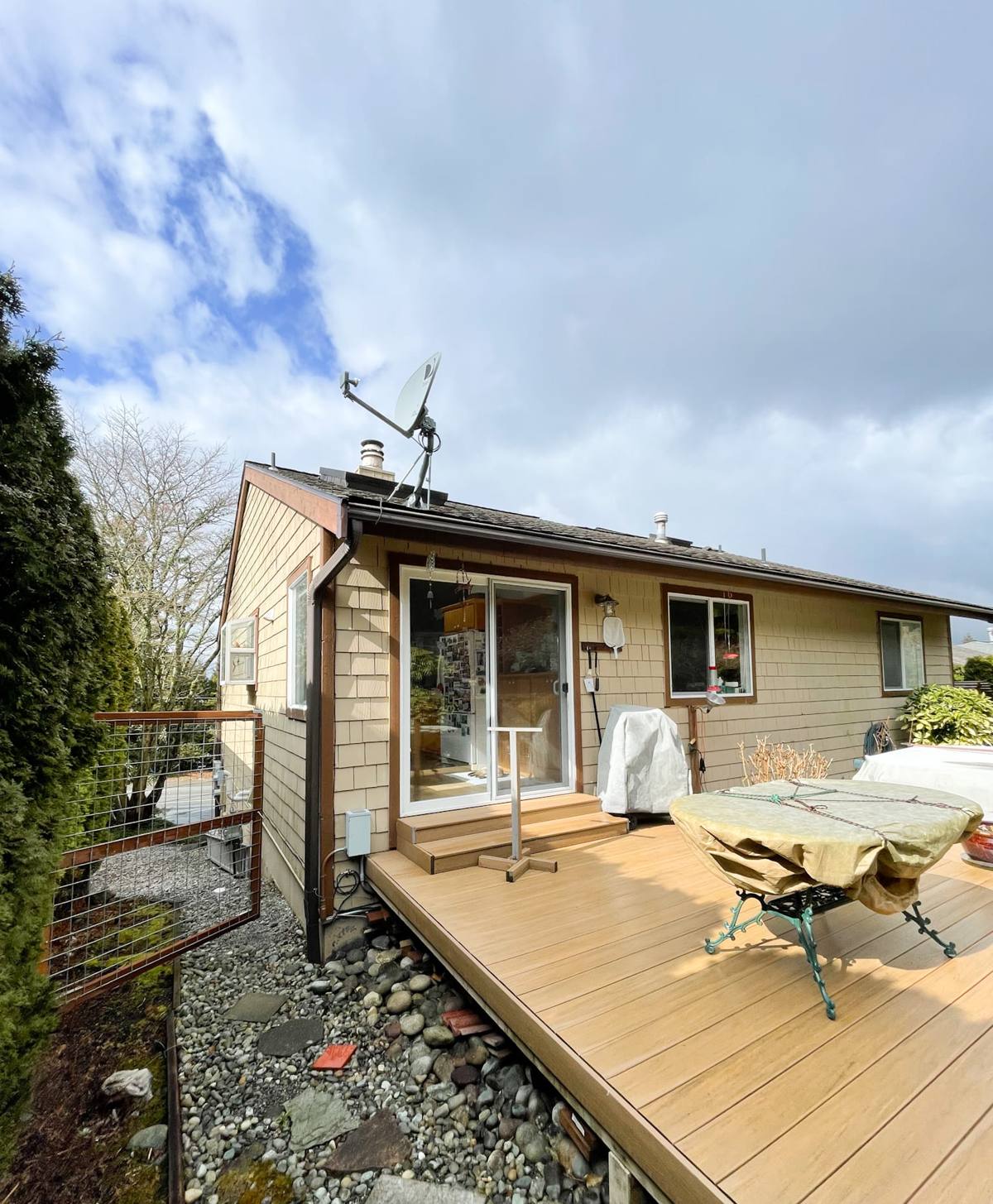
Why We Standardized on James Hardie for Jobs Like This
We install James Hardie fiber cement siding exclusively. We don't offer vinyl, LP SmartSide, primed wood, cedar, or other fiber cement brands as alternatives, and that's a deliberate call, not a sales limitation. Fiber cement in general resists the two things that do the most damage to siding on the Gulf Coast: sustained moisture exposure and UV breakdown. James Hardie specifically engineers products for exactly this climate — its HZ5 line is formulated for high-humidity, high-heat regions like ours, and the factory-applied ColorPlus finish is baked on and cured to resist fading and cracking far longer than field-applied paint holds up in constant Florida sun.
It's also non-combustible, which matters for insurance conversations in Florida even outside of wildfire-prone areas, and it carries a strong transferable warranty backed by a manufacturer with decades of track record in coastal markets. We'd rather install one product correctly, to spec, every time, than offer five options and hope the cheaper ones hold up. On a home in Crescent Lake, that discipline is the difference between siding you replace once and siding you're patching every few years.
What a Correct Installation Actually Involves
Prep Work Most Crews Skip
The siding itself is only part of the system. A correct James Hardie install starts with what's underneath it:
- Inspecting and repairing or replacing damaged sheathing before anything new goes up — covering rot or soft spots just traps the problem
- Installing a code-compliant weather-resistant barrier, lapped correctly so water sheds outward at every seam
- Flashing every window, door, and penetration so wind-driven rain has nowhere to track behind the new siding
- Confirming proper clearance between the siding's bottom edge and the ground, roofline, decks, and patios — Hardie specifies minimum gaps for a reason, and skipping them is one of the most common causes of early moisture damage
Fastening and Fit
James Hardie is unforgiving of shortcuts at the fastening stage. Nails or screws have to be the corrosion-resistant type Hardie specifies (especially important this close to the water, where standard fasteners corrode faster), driven at the correct spacing and depth — not overdriven, not underdriven — and into framing, not just sheathing. Joints need to be staggered and either caulked with a compatible sealant or covered with proper trim, and cut edges (which lose their factory finish when cut) need to be primed and sealed before installation, not after. None of this shows once the job is finished and painted-looking, which is exactly why it matters who's doing it.
Matching the Product Line to the House
James Hardie isn't one product — it's a system, and the right configuration depends on the home's style and exposure. For a typical Crescent Lake project we're usually choosing between a few core options:
| Product | Best Fit | Why It Works Here |
|---|---|---|
| HardiePlank Lap Siding | Most single-family homes, traditional or bungalow-style exteriors | Classic horizontal profile, widest color and texture range, proven long-term performance in humid coastal climates |
| HardiePanel Vertical Siding | Accent walls, gables, modern or mixed-material facades | Clean vertical lines, often paired with lap siding for visual contrast on additions or garages |
| HardieTrim | Corners, fascia, window and door surrounds | Matches the siding's fade and moisture resistance so trim doesn't become the weak point in the system |
| HZ5 Climate Engineering | All of the above, specified for our region | Formulated for high-humidity, coastal, and high-UV conditions rather than a generic national spec |
We'll walk through which combination fits your home's style and exposure during the estimate — a west-facing wall that takes the brunt of afternoon sun and storm-driven rain may warrant different detailing than a shaded, tree-covered elevation on the same house.
What Actually Drives the Cost of a Job Like This
Every Crescent Lake home is a little different, and quotes should reflect that rather than a flat per-square-foot number. The factors that move the price most are:
| Factor | Why It Matters |
|---|---|
| Condition of existing sheathing | Hidden rot or water damage found during tear-off adds repair work before new siding can go up |
| Home's architectural complexity | More corners, gables, and trim details mean more cutting, fitting, and flashing labor |
| Siding profile and finish selected | Plank width, texture, and ColorPlus color all carry different material costs |
| Access and site constraints | Mature landscaping, tight lot lines, or limited driveway access can slow staging and material handling |
| Scope of trim and accessory replacement | Full trim replacement versus reusing sound existing trim changes both labor and material totals |
We give a written, itemized estimate before any work starts, so you know exactly what's driving the number rather than getting a vague lump sum.
Our Process, Start to Finish
- On-site assessment — we walk the exterior, check existing siding and sheathing condition, and note anything specific to your home's exposure (shade, drainage, prior water intrusion)
- Written estimate — itemized scope, product selections, and timeline, no pressure to sign on the spot
- Tear-off and sheathing repair — old siding removed, substrate inspected and repaired as needed before anything new is installed
- Weather barrier and flashing — installed and inspected before siding goes up, since this layer is invisible once the job is done
- Hardie installation — fastened, sealed, and trimmed to manufacturer spec
- Final walkthrough — we go over the finished job with you before calling it complete
Signs Your Current Siding Is Already Failing
A lot of siding problems in this climate stay hidden until they're expensive. Worth checking for:
- Soft spots or visible give when you press on the siding, especially near the bottom courses
- Peeling, bubbling, or chalky paint that keeps recurring in the same spots year after year
- Visible gaps or separation at seams and corners
- Warping, buckling, or panels that no longer sit flat against the wall
- Staining or discoloration that tracks down from window and door trim
- A musty smell or humidity issues in rooms along an exterior wall
Any of these is worth a professional look before it turns into a sheathing or framing repair, which costs a lot more than the siding itself.
Why It Matters That We Already Work This Neighborhood
Crescent Lake homes vary enough in age and construction that a crew unfamiliar with the area is working from a generic playbook instead of local experience. A contractor who's already done siding work around St. Petersburg has a feel for which elevations take the worst of the wind-driven rain in a squall, how tree cover affects drying time and moisture retention on a given wall, and what condition to expect from sheathing on homes of a certain era before the tear-off even starts. That translates into a more accurate estimate up front and fewer surprises mid-project — not a guarantee against every hidden issue, but a real head start on catching them.
It also means we're not disappearing after the job. A siding system installed to spec should perform for decades, but a local crew is the one who'll actually be reachable if a warranty question comes up five or ten years down the road.
Living With Hardie Siding Once It's Installed
Part of the appeal of fiber cement is how little it asks of you afterward. There's no repainting schedule to keep up with — the ColorPlus finish is warranted against fading and is far more durable than field-applied paint. Routine care is simple: an occasional rinse to clear off salt residue and airborne debris, a visual check after major storms for any impact damage or lifted trim, and prompt attention to caulking around windows and doors if it ever starts to crack or pull away. That's a meaningfully lower maintenance burden than wood-based siding demands in this climate, where skipping a repaint cycle can mean real moisture damage within a season or two.
If your siding is showing its age, or you're planning ahead of a full renovation, we're happy to take a look and give you a straight answer — no pressure, no upsell to a product we don't stand behind. Reach out for a free estimate using the form below.