 St. Petersburg Roofing
 Building Decks That Hold Up on Snell Isle
Snell Isle is one of St. Petersburg's older waterfront neighborhoods, and homes here sit closer to open water and salt air than almost anywhere else in Pinellas County. A deck built to a generic spec — the kind you'd see in a big-box how-to guide — does not last long under these conditions. Between hurricane-force wind loads, wind-driven rain that finds its way behind ledger boards, intense year-round UV that bakes finishes and fades color, and salt air that works on metal fasteners around the clock, a Snell Isle deck needs to be built differently from a deck fifteen miles inland.
This page covers what that actually means: material choices, structural details, permitting, and the day-to-day realities of building and maintaining a custom deck in this part of St. Petersburg.
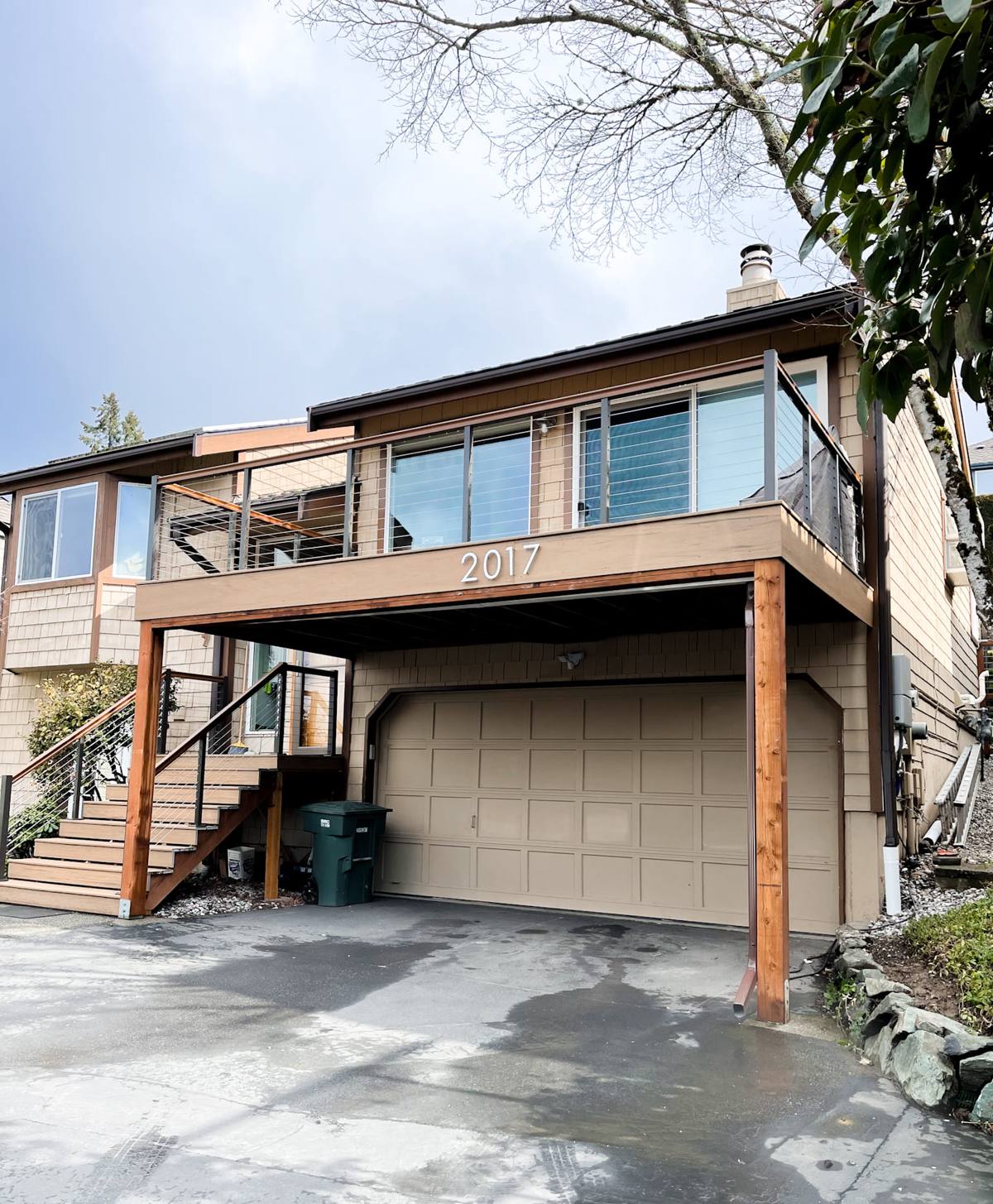
What Coastal Conditions Do to an Ordinary Deck
Salt Air and Corrosion
Airborne salt from the surrounding water settles on everything, including the deck itself. Standard zinc-coated fasteners and hardware corrode faster here than in a landlocked suburb. Once a fastener starts rusting, it weakens, stains the decking around it, and eventually needs to be dug out and replaced — often after the surrounding wood or composite has already been damaged.
Sun and UV Exposure
Florida sun is intense for most of the year, not just in summer. UV breaks down wood fibers, dries out natural oils, and fades stains and sealers well ahead of the schedule printed on the product label. Composite and PVC decking resist this better than wood, but even those materials vary widely in how well their color-fastness holds up over a decade of full Florida sun.
Wind and Wind-Driven Rain
St. Petersburg sits in a hurricane-prone wind zone, and deck structures — railings especially — need to be built to resist real uplift and lateral loads, not just support foot traffic. Wind-driven rain also pushes water sideways and upward, which means flashing at the house connection has to do more work than it would in a milder climate. A ledger board that isn't properly flashed is one of the most common ways water gets into the structure of the house itself, not just the deck.
Humidity and Moisture Cycling
Pinellas County's humidity keeps wood damp longer after every rain, which accelerates rot in untreated or poorly ventilated framing. Decks that trap moisture underneath — low clearance, poor airflow, no gaps between boards — age faster than decks built with drainage and ventilation in mind from the start.
Choosing the Right Decking Material
There's no single "best" decking material — the right choice depends on budget, how close the home is to the water, and how much upkeep the owner wants to do. Here's how the common options compare for a Snell Isle property:
| Material | Upfront Cost | Maintenance | Coastal Durability |
|---|---|---|---|
| Pressure-treated wood | Lowest | Annual sealing/staining recommended | Fair — needs consistent upkeep to resist rot and UV graying |
| Tropical hardwood | High | Periodic oiling to maintain color | Good — naturally dense and rot-resistant, but still needs UV protection |
| Composite decking | Mid to high | Occasional washing | Very good — resists rot and insects, fade resistance varies by product line |
| PVC decking | Highest | Minimal — washing only | Excellent — fully synthetic, unaffected by moisture or insects |
We don't push one material on every job. Wood costs less up front but asks for real annual maintenance to survive this climate. Composite and PVC cost more initially but shift that cost into fewer maintenance hours over the life of the deck. For a home directly on the water, the extra durability of composite or PVC is usually worth the difference; for a home a block or two back, quality pressure-treated wood with a proper finish schedule is still a sound, budget-conscious choice.
Structural Details That Matter Here
Framing and Fasteners
We build frames with hardware rated for coastal, high-humidity environments — stainless or heavy-duty coated fasteners and joist hangers instead of standard-grade hardware that corrodes within a few seasons in salt air. Every connection, from the ledger board to the post bases, is chosen with corrosion resistance in mind, not just up-front cost.
Ledger Attachment and Flashing
Where the deck attaches to the house, proper flashing is non-negotiable. This is the single most common failure point on decks that were built quickly or by crews unfamiliar with wind-driven rain — water finds the smallest gap and works its way into the house framing over time, causing damage that's expensive to trace and repair.
Wind Load and Railings
Railings and guardrails are engineered to meet Florida Building Code wind and load requirements, not just local minimums for handrail height. This matters more on elevated decks and decks near open water, where wind speeds run higher than in a sheltered inland yard.
Post Footings
Footing depth and sizing account for local soil conditions and the wind uplift a coastal structure needs to resist. Undersized footings are one of the most common shortcuts on cheap deck jobs, and they're the hardest problem to fix after the fact because it means pulling the deck apart.
Our Custom Deck Process
- On-site assessment — we look at the home's elevation, existing structure, drainage, and how the deck will be used before recommending anything.
- Design and material selection — we walk through material trade-offs honestly, including what each option will actually cost to maintain over time.
- Permitting — we handle the permit application and any documentation the City of St. Petersburg requires for the scope of work.
- Framing and structural work — ledger flashing, joist layout, footings, and hardware selection are done to coastal-grade standards, not the minimum code allows.
- Decking, railing, and finish work — boards, railings, and any trim are installed with proper spacing and fastening for drainage and long-term movement.
- Final walkthrough and inspection — we review the completed deck with the homeowner and make sure it passes any required municipal inspection.
Permits and Waterfront Considerations
Most deck construction in St. Petersburg requires a building permit, and elevated or waterfront-adjacent structures can carry additional requirements tied to flood zone designations and setback rules. Snell Isle's proximity to the water means these details come up more often here than in many other St. Petersburg neighborhoods. We handle the permitting process as part of the job rather than leaving it for the homeowner to sort out, and we flag early if a property's flood zone or setback situation is going to affect the design.
Maintaining a Deck in a Hot, Salt-Air Climate
- Rinse off salt spray and debris periodically, especially after storms
- Check fastener heads and hardware yearly for early rust or staining
- Reseal or restain wood decking on a consistent schedule — don't wait until it looks dry and gray
- Keep the area underneath the deck clear for airflow and drainage
- Inspect railings and post connections for looseness after major wind events
- Watch for soft or spongy spots in wood decking, a sign moisture has gotten underneath the surface
None of this is complicated, but skipping it is exactly how a deck that should last two decades starts needing major repairs after five or six years in this climate.
Cost Factors to Expect
| Factor | Why It Affects Price |
|---|---|
| Decking material | Wood, composite, and PVC carry different material costs and installation labor |
| Deck height and footings | Elevated decks near the water need deeper footings and more structural framing |
| Railing style and code requirements | Wind-rated railings and custom designs cost more than basic code-minimum railings |
| Permitting scope | Waterfront or flood-zone properties can require extra documentation or engineering review |
| Size and layout complexity | Multi-level decks, built-in seating, or irregular shapes add labor time |
Every property is different, and we'd rather walk a specific site and give a real number than quote a broad range that doesn't reflect the actual scope of work.
Why a Local Crew Matters for This Job
A crew that regularly works in Snell Isle and the surrounding St. Petersburg waterfront neighborhoods already knows which hardware holds up in this air, which flashing details actually stop wind-driven rain, and what the City of St. Petersburg's permitting process expects for a property this close to the water. That familiarity shows up in fewer surprises during the job and a deck that's built to handle Pinellas County conditions from day one, not retrofitted after the first few storms expose a shortcut.
If you're considering a new custom deck or need to replace one that hasn't held up to the coastal conditions here, we're happy to take a look and talk through honest options. Reach out for a free, no-pressure estimate using the form below.