 St. Petersburg Roofing
 Building a Deck That Actually Holds Up in Coquina Key
Coquina Key sits on filled land laced with canals in southeast St. Petersburg, and most of the neighborhood is built right up against water. That's a big part of why the area is popular — but it also means decks here take a beating that decks a few miles inland don't. Salt-laden air off the canals, full sun exposure most of the year, sudden wind-driven downpours, and the threat of hurricane-force gusts all work on a deck at the same time, every year, without a break. A deck built to a generic national spec will show its age in Coquina Key years before it should. A deck built for this specific environment won't.
This page covers what actually matters for a deck in this part of Pinellas County: the materials that hold up, the structural details that keep a deck attached to your house and standing through a storm, and what our process looks like from first call to final inspection.
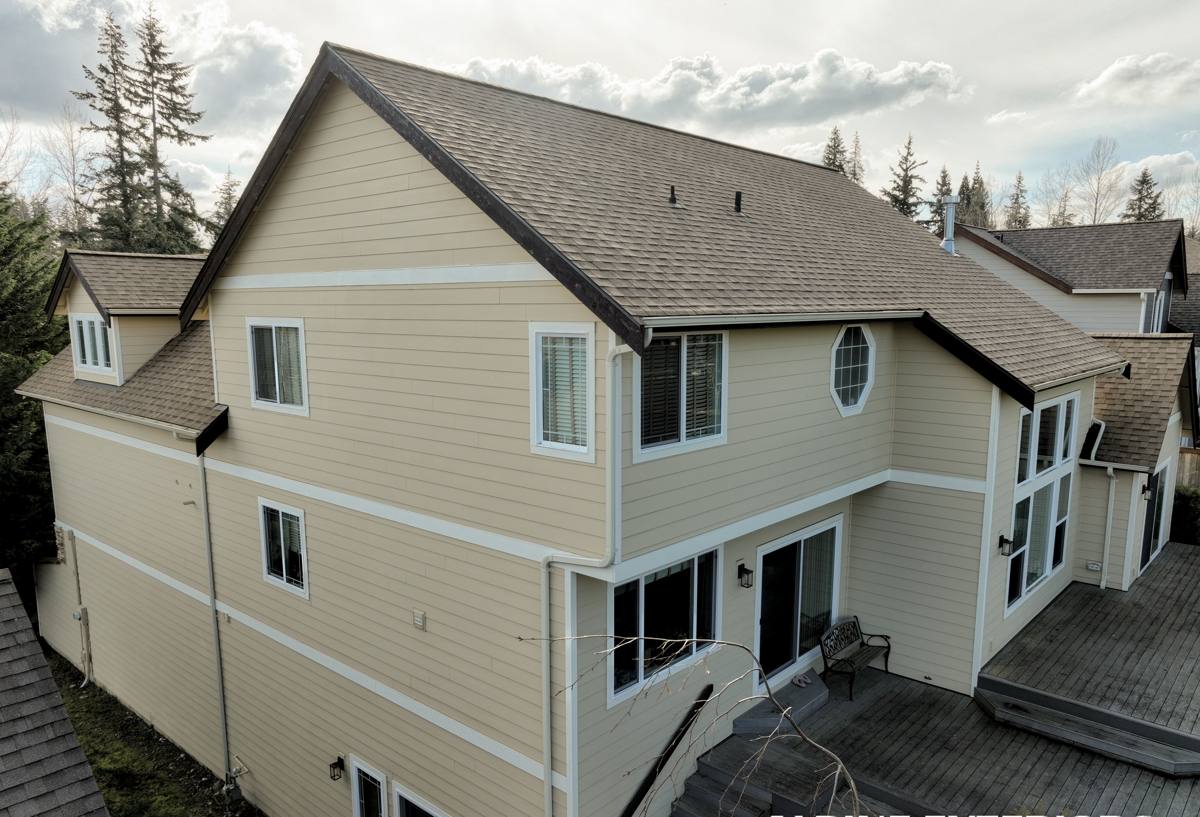
What Coquina Key's Waterfront Setting Does to a Deck
Being surrounded by canal water isn't just a nice view — it changes how a deck needs to be built and maintained.
Salt Air and Corrosion
Even homes that aren't directly waterfront in Coquina Key sit close enough to brackish canal water that salt-laden humidity is a constant. Salt air accelerates corrosion on anything metal — fasteners, joist hangers, post bases, railing brackets — far faster than it would inland. A deck that looks fine on the surface can be failing at the connections you can't see, simply because the hardware wasn't rated for this exposure.
Flood Zone and Permitting Considerations
Much of Coquina Key falls within flood zones tied to its canal frontage, which can affect footing depth, minimum elevations, and how a deck attached to the house is permitted. This isn't something to guess at — it's worth confirming for your specific lot before design work goes very far, and it's part of what we check before we ever pull a permit.
Humidity and Wood-Destroying Organisms
Florida's combination of heat, humidity, and proximity to standing water is ideal for termites and wood rot. Untreated or poorly protected wood near grade or near a canal doesn't stand a chance over time. Framing choices and ground clearance matter more here than they would in a drier climate.
Decking Material Options for This Climate
There's no single "best" decking material — there's a best material for your budget, your maintenance appetite, and how close you are to the water. Here's how the common options actually perform in a Pinellas County coastal environment.
| Material | UV/Sun Performance | Salt Air/Moisture | Maintenance | Typical Lifespan |
|---|---|---|---|---|
| Pressure-treated pine | Fades and grays without regular finish | Needs sealing to resist moisture; hardware must be corrosion-rated | Annual cleaning, refinish every 2-3 years | 10-15 years with upkeep |
| Tropical hardwood (e.g., ipe) | Very good; naturally dense and UV-resistant | Excellent natural moisture resistance | Periodic oiling to maintain color; low structural maintenance | 20-25+ years |
| Capped composite | Good; UV-stabilized cap resists fading | Excellent; won't rot, doesn't absorb moisture | Occasional washing, no sealing or staining | 25-30 years |
| PVC decking | Very good; fully synthetic, minimal fade | Excellent; impervious to moisture and salt | Lowest maintenance of any option | 25-30+ years |
For homes directly on the water in Coquina Key, we lean toward composite or PVC for the decking surface specifically because they don't absorb moisture or feed rot the way wood does. That said, plenty of homeowners prefer the look and feel of real wood and are happy to keep up with the maintenance — that's a legitimate choice too, as long as it's installed and finished correctly from day one.
A Note on Fastener-Grade Hardware
Whatever decking material you choose, the hardware holding the frame together matters just as much. Standard galvanized fasteners are fine for most inland Florida construction, but for a deck within a few blocks of canal water, we recommend stepping up to stainless steel or heavy-duty coated fasteners rated specifically for coastal and treated-lumber corrosion. It costs more up front. It's cheap insurance against hardware failure at year eight instead of year twenty.
Structural Requirements: Building for Hurricane-Force Wind
Pinellas County sits in a high-wind design zone under the Florida Building Code, and a deck is a structure — it has to be engineered and connected accordingly, not just nailed together to look right.
Ledger Attachment
The ledger board — where the deck bolts to your house — is the single most important structural connection on the whole project, and it's also the most common point of failure on decks that weren't built correctly. It needs proper lag or through-bolting into structural framing, not just the siding or sheathing, along with flashing that keeps wind-driven rain from getting behind it and rotting the house's own framing.
Footings and Post Connections
Footings need to be sized and set to the depth required for the soil and load conditions on your lot, with post bases and hurricane ties that mechanically connect the deck frame from the footing up through the beams and joists. In a storm, wind doesn't just push sideways — it creates uplift, and connections that aren't rated for uplift are exactly where decks come apart.
Permits and Inspections
A deck of any real size requires a permit through the City of St. Petersburg, with inspections at the footing, framing, and final stages. We handle that process as part of the job — it's not an optional extra, and skipping it is how homeowners end up with an uninsurable structure or a headache at resale.
Protecting Against Sun and Wind-Driven Rain
UV Exposure
Florida sun is intense and nearly year-round, and it doesn't just fade decking — it breaks down finishes, dries out wood fiber, and can make dark composite or metal surfaces uncomfortably hot underfoot. UV-stabilized capped composites and PVC hold their color far longer than uncapped products or unfinished wood, which is worth factoring in if low maintenance matters to you.
Wind-Driven Rain
Rain in this part of Florida rarely falls straight down — it comes in sideways during storms, which means water finds its way into gaps and connections that would stay dry in a calmer climate. Proper flashing at the ledger, correctly sloped and spaced decking boards, and drainage planning underneath the deck all matter more here than in a drier region. This is also where a lot of cut-rate deck work fails first — the surface looks fine, but water intrusion behind the ledger or around posts starts rot you won't see until it's serious.
What a Correct Deck Build Involves
A deck done right isn't complicated, but every step matters and skipping one shows up later.
- Site evaluation, including soil conditions, drainage, and flood zone or elevation requirements specific to your lot
- Engineered footing and framing plan sized for the deck's actual load and Pinellas County wind requirements
- Permit pulled with the City of St. Petersburg before any construction begins
- Ledger board properly bolted and flashed to keep water out of the house structure
- Corrosion-rated fasteners and connectors throughout, not just at visible points
- Decking material matched to your maintenance preferences and proximity to the water
- Code-compliant railing height and baluster spacing if the deck height requires it
- Final inspection passed and documented for your records and future resale
Our Process
1. On-Site Consultation
We walk the property, look at how the deck will attach to the house, check soil and drainage conditions, and talk through what you actually want to use the space for. This is also when we flag anything specific to your lot — flood zone status, canal setback, existing structural issues — before any design work starts.
2. Design and Material Selection
We put together a plan sized and engineered for your home, with material options and a clear breakdown of trade-offs so you're choosing based on real information, not guesswork.
3. Permitting
We prepare and submit the permit package to the City of St. Petersburg and handle the back-and-forth so you don't have to.
4. Construction
Footings, framing, decking, and railing go in with corrosion-rated hardware and flashing details built for this climate, not a generic spec sheet.
5. Inspection and Walkthrough
We schedule the required inspections and walk the finished deck with you before we consider the job done.
Why It Matters That We Already Work in Coquina Key
A contractor who's worked in Coquina Key already knows the flood zone patterns, the soil, and the way salt air and canal humidity chew through standard hardware faster than it does a few miles inland. That's not something you learn from a spec sheet — it's something you learn by building decks in this specific neighborhood and seeing, a few years later, what held up and what didn't. That experience shows up in the small decisions: which fastener grade we default to, how we detail the ledger flashing, where we set footing depth for a canal-adjacent lot. None of it is dramatic, but it's the difference between a deck that needs real repair work in eight years and one that's still solid in twenty-five.
If you're planning a new deck or replacing one that's showing its age, we're happy to come take a look, walk you through what your specific lot needs, and give you a straightforward, no-pressure estimate. There's a form below — reach out and we'll get you scheduled.