 St. Petersburg Roofing
 Roser Park's Homes Face a Tougher Climate Than Most Siding Is Built For
Roser Park is one of St. Petersburg's oldest platted neighborhoods, and its rolling terrain and mature tree canopy set it apart from most of flat, sun-scorched Pinellas County. That character is worth protecting — but it doesn't shield the siding on these homes from what Tampa Bay throws at exterior surfaces every year: hurricane-force wind gusts, wind-driven rain that gets pushed sideways into every seam and joint, UV exposure intense enough to chalk and fade lesser materials within a few seasons, and salt-laden air drifting in off the Gulf and Tampa Bay that accelerates corrosion and rot on anything not built to resist it.
Siding in this neighborhood isn't just cosmetic. It's the first line of defense for houses that, in many cases, are 80-100+ years old and were never built with modern wind-load or moisture-management standards in mind. When we talk about siding for Roser Park, we're talking about a system that has to survive Florida's climate without babying, because most homeowners here don't want to be back on a ladder inspecting caulk lines every summer.
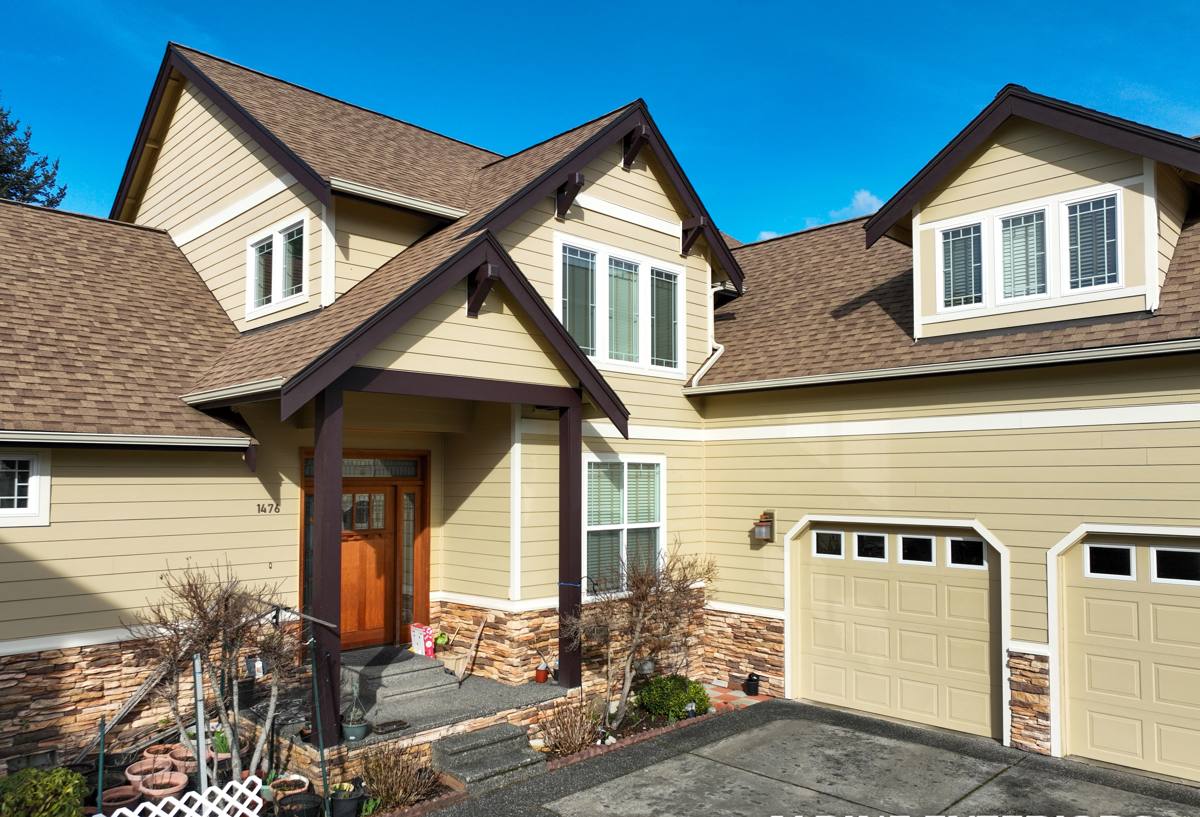
Why We Only Install James Hardie Fiber Cement
We install one siding brand: James Hardie. Not vinyl, not LP SmartSide, not Cemplank or Allura fiber cement, not primed spruce or cedar. That's not a marketing gimmick — it's a standard we hold because of what we've seen happen to each of those materials on Gulf Coast homes over time.
Vinyl siding is affordable and low-maintenance in mild climates, but it softens and can distort in intense heat, and in a hurricane-force wind event it's the material most likely to crack, warp, or pull loose from its fasteners. LP SmartSide is a wood-strand product with an engineered resin coating — a legitimate product in drier, cooler climates, but wood-strand substrates are inherently more vulnerable to moisture intrusion at cut edges and fastener penetrations than cement-based siding, which matters a great deal in a place that sees wind-driven rain and high humidity year-round. Primed spruce and cedar require the most upkeep of all: regular repainting, sealing of end cuts, and vigilant moisture control, or rot sets in.
James Hardie fiber cement is a blend of cement, sand, and cellulose fiber. It doesn't burn, it doesn't rot, it doesn't feed termites, and it holds paint and factory finish far longer than wood-based alternatives because it doesn't expand and contract with humidity the way wood products do. That stability is exactly what a coastal Florida house needs.
What Hardie Gets Right — and What It Costs You
We won't pretend fiber cement is the cheapest option up front — it isn't, and it's heavier and more labor-intensive to install than vinyl. Cutting it correctly requires dust-control equipment because of the silica content, and it demands more precise fastening and flashing than lighter materials. That installation sensitivity is real, and it's exactly why a rushed or inexperienced install can undercut the product's durability. Done correctly, though, it's a system built to be installed once and left alone.
James Hardie Product Lines Built for This Climate
James Hardie engineers its siding by climate zone, and Pinellas County falls in the HZ5 zone — the line formulated for the humid, high-moisture Southeast rather than the drier HZ10 formulation used out west. That matters because the cement formulation and moisture-management engineering differ by region; a product mis-matched to climate is one of the quieter mistakes homeowners make when they shop siding online instead of through a local installer.
| Product | Best Use on Roser Park Homes | Notes |
|---|---|---|
| HardiePlank lap siding | Standard replacement for wood clapboard on bungalow and craftsman-style homes | Most common choice; wide range of textures and reveals to match historic profiles |
| HardieShingle | Accent gables, dormers, or full facades on homes with a shingle-style original look | Mimics cedar shake without the maintenance burden |
| HardiePanel | Porches, garages, or modern additions | Vertical panel look, often paired with battens |
| HardieTrim | Fascia, corner boards, window and door surrounds | Keeps trim details consistent with the home's original character |
All of these are available with ColorPlus Technology — a factory-applied, baked-on finish that resists Florida's UV exposure far better than field-applied paint, and carries its own finish warranty separate from the substrate warranty. For a neighborhood where sun exposure is constant nearly twelve months a year, that finish durability is one of the more practical reasons to specify it over standard primed siding that still needs a paint job after installation.
What a Correct Installation Actually Involves
Fiber cement is only as good as the install behind it. Most siding failures we get called out to inspect — on any brand — trace back to installation shortcuts, not the material itself. On a Roser Park home, a correct job includes:
- Removing existing siding down to the sheathing and inspecting for hidden rot, moisture damage, or pest activity before anything new goes up
- Installing a code-compliant weather-resistive barrier (house wrap or building paper) as a secondary moisture line behind the siding
- Proper flashing at every window, door, and roofline intersection — the points where wind-driven rain finds its way in first
- Correct fastener type, spacing, and penetration depth per James Hardie's published installation specifications, not "close enough"
- Minimum clearances from grade, roof lines, and decking so the siding never sits in standing water or trapped moisture
- Factory-mitered or properly caulked joints, with the right sealant — Hardie voids its warranty over improper caulking
- Field-cut edges sealed per manufacturer spec if any panel isn't factory-finished on all edges
Skip any one of these steps and you can end up with a product rated to handle hurricane winds and coastal humidity that still fails early — not because the material was wrong, but because the installation was.
Fiber Cement vs. the Alternatives, By the Numbers That Matter
| Factor | James Hardie Fiber Cement | Vinyl | LP SmartSide / Wood |
|---|---|---|---|
| Wind resistance | Engineered and rated for high-wind zones | Weakest link in hurricane-force gusts | Moderate; fastener pull-out risk |
| Moisture / rot resistance | Cement-based, does not rot | Doesn't rot but can trap moisture behind panels | Vulnerable at cuts and fasteners without diligent upkeep |
| Fire resistance | Non-combustible | Melts/deforms under heat | Combustible substrate |
| Finish longevity in Florida UV | 15 years on ColorPlus finish | Fades, can become brittle over time | Repainting cycle typically every 5-8 years |
| Upfront cost | Highest | Lowest | Mid-range |
| Long-run maintenance cost | Low | Low, but shorter service life in storms | Higher — recurring paint and sealant work |
The upfront cost gap is real, and we tell every homeowner that plainly rather than downplay it. Where fiber cement earns that gap back is in the years it doesn't spend needing repainting, resealing, or storm-damage patchwork — costs that show up quietly over a decade of ownership rather than on day one.
Our Process for a Roser Park Siding Job
1. On-Site Inspection and Estimate
We walk the exterior, check the current siding and sheathing condition, note any moisture or pest issues, and measure for material. This is also when we talk through product line, color, and profile options that fit the home's existing character rather than fight it.
2. Tear-Off and Substrate Check
Old siding comes off and we inspect what's underneath before covering anything back up. On older Roser Park homes this step sometimes turns up sheathing that needs attention — better to find it now than after the new siding is sealed over it.
3. Weather Barrier and Flashing
House wrap and flashing go in at every penetration and transition point. This layer is invisible once the job is done, but it's the difference between siding that sheds wind-driven rain and siding that eventually lets it in.
4. Installation to James Hardie Specification
Fastening, spacing, joint treatment, and clearances are all installed to Hardie's published guidelines — the same guidelines that keep the manufacturer's warranty valid and the product performing as engineered.
5. Final Walkthrough
We walk the finished job with the homeowner, check every elevation, and address anything that isn't right before we consider the job done.
Living with Fiber Cement Siding in St. Petersburg
One of the real advantages of switching to James Hardie is how little upkeep it asks for afterward. That said, "low-maintenance" isn't "no-maintenance," especially with salt air in the mix. A simple annual routine keeps it performing for decades:
- Rinse the exterior with a garden hose once or twice a year to clear salt residue and pollen buildup — skip the pressure washer, which can force water behind panels and joints
- Walk the perimeter after major storms and check caulk lines around windows, doors, and trim for cracking or separation
- Keep mulch, soil, and landscaping pulled back from direct contact with the bottom edge of the siding
- Trim back tree limbs and shrubs that stay in constant contact with siding panels
- Have any impact damage from debris inspected promptly rather than left through another storm season
Why a Crew That Already Works Roser Park Is Worth Choosing
A lot of siding problems on older St. Petersburg homes come from installers treating them like new-construction tract houses. Roser Park's housing stock skews older, with original framing, varied wall assemblies, and architectural details worth matching rather than covering over with a generic profile. A crew that has worked in this neighborhood and others like it in Pinellas County already knows how to sequence a tear-off around mature landscaping, how to handle older sheathing that new-construction crews rarely encounter, and how local wind-load and building code requirements apply to an exterior re-clad versus new construction. That familiarity shows up in fewer surprises mid-project and a finished result that respects what the house already looked like.
It also matters for something less visible: accountability. A contractor who plans to keep working in this community has every reason to install correctly the first time and stand behind the warranty afterward, rather than treat any single job as a one-off.
If your Roser Park home is due for new siding, we're happy to walk the exterior with you, look at what's there now, and talk through what a James Hardie system would look like on your specific house — no pressure, no obligation. Reach out for a free estimate using the form below.