 St. Petersburg Roofing
 Shore Acres' Waterfront Climate Is Hard on Siding
Shore Acres sits close to Tampa Bay, and that waterfront position is exactly what makes siding here work harder than siding a few miles inland. Canal-front and near-bay lots see a steady drift of salt-laden air, which is corrosive to fasteners and abrasive to finishes over time. Add in Pinellas County's intense, near year-round UV exposure, wind-driven rain that gets pushed sideways into wall assemblies during storms, and the hurricane-force gusts that come through the Tampa Bay area on a regular cycle, and you have a climate that will find every weakness in a siding system faster than almost anywhere else in the country.
Low-lying, canal-adjacent neighborhoods like this one also tend to hold humidity longer after a storm than higher, inland lots. That matters because moisture that gets behind siding and can't dry out is what actually destroys a wall — not the rain itself, but the rain that lingers. A siding system that isn't installed with that in mind will show problems years before it should.
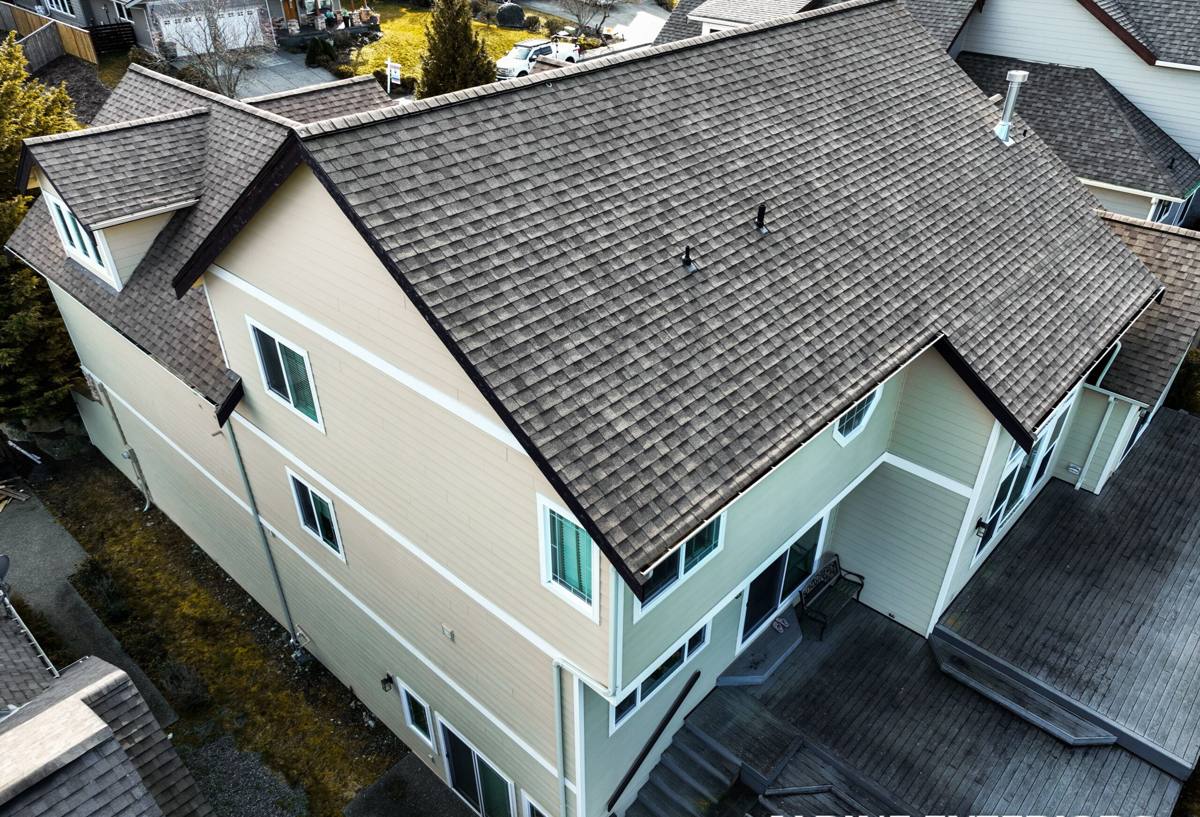
Signs Your Siding Has Reached the End of Its Life
Most homeowners don't replace siding because they want to — they replace it because it's telling them to. On homes near the water, watch for these signs:
- Visible warping, buckling, or waviness in panels or lap boards, especially on the sides that catch the most wind and sun
- Soft, spongy spots when you press on the siding, which usually means moisture has reached the substrate behind it
- Paint that's chalking, peeling, or fading unevenly, particularly on south- and west-facing walls
- Cracked or missing caulk at seams, corners, and around windows and doors
- Rust streaks running down from nail heads or trim fasteners
- A musty smell in interior rooms along an exterior wall, or bubbling interior paint near baseboards
- Visible gaps between siding courses, or boards that have separated from the wall
- Wood rot at the bottom edges of boards or around corner trim
One or two of these on their own might mean a repair. Several of them together, especially combined with the age of the siding, usually means it's time to talk about full replacement rather than chasing individual problem spots.
What a Correct Siding Replacement Actually Involves
Tear-Off and Substrate Inspection
A proper job starts with full removal of the old siding, not installation over it. That's the only way to actually see what's happening underneath — sheathing that's delaminating, framing that's taken on water, or old flashing that was never installed correctly in the first place. On a waterfront home, this step matters more than most, because hidden moisture damage is common even when the siding face looks fine from the street.
Weather-Resistive Barrier and Flashing
Once the wall is exposed, a new weather-resistive barrier goes on, and flashing gets installed or replaced at every window, door, and penetration. This is the layer that actually keeps wind-driven rain out of the wall assembly — the siding itself is the second line of defense, not the first. Skipping or rushing this step is the single most common reason siding fails early in coastal wind zones.
Fastening to Manufacturer and Wind-Zone Spec
Fastener type, spacing, and placement all change based on local wind exposure. Pinellas County's coastal wind zones call for tighter fastening patterns than you'd see inland, and getting this wrong is how siding ends up peeling off a wall in a storm even though the material itself was rated to handle it.
Trim, Caulking, and Finish Work
The last step is where a lot of jobs get sloppy — trim details, corner treatments, and sealing at penetrations. These are small line items, but they're what keep water from finding its way in around the edges of an otherwise well-installed wall.
Why We Install Only James Hardie Fiber Cement Siding
We made a deliberate decision to install James Hardie fiber cement exclusively, and we don't install vinyl, LP SmartSide, Cemplank, Allura, or primed wood species like spruce or cedar. That's not a knock on every homeowner's existing siding — plenty of it is out there doing an adequate job. It's a statement about what we're willing to put our name behind on homes exposed to this specific climate.
Vinyl siding can soften, warp, or blow off in sustained high winds, and it has no fire resistance to speak of. Wood-based products, including engineered wood, depend on an intact factory coating and careful field sealing of every cut edge to resist moisture — miss one edge near the water and rot can start from the inside out. Fiber cement doesn't share those vulnerabilities. It's non-combustible, dimensionally stable in heat and humidity swings, and resistant to moisture-driven rot and insect damage in a way wood products simply aren't. James Hardie's ColorPlus finish is also baked on and warrantied against fading, which matters enormously under Florida's UV load — a factory-cured finish holds color far longer than field-applied paint.
How Siding Materials Compare in a Coastal Climate
| Factor | Vinyl | Wood / Engineered Wood | James Hardie Fiber Cement |
|---|---|---|---|
| High-wind performance | Can crack or blow off in gusts | Good if fastened correctly | Engineered and rated for high-wind zones |
| Salt air / moisture resistance | Doesn't rot, but seams and fasteners corrode | Vulnerable at cut edges and seams | Resists moisture-driven rot and swelling |
| UV / fade resistance | Fades and can become brittle | Depends entirely on paint upkeep | Factory ColorPlus finish, warrantied fade resistance |
| Fire resistance | Low | Combustible | Non-combustible |
| Typical maintenance | Low, but limited repair options | Frequent repainting and edge sealing | Occasional rinse and repaint cycle |
Choosing the Right Hardie Line and Colors for This Neighborhood
James Hardie's HZ5 product line is engineered specifically for the temperature and moisture patterns found in high-humidity, high-heat regions like the Tampa Bay area — it's not a one-size-fits-all board shipped in from a colder climate. For most Shore Acres homes, HardiePlank lap siding is the workhorse choice, with HardiePanel or HardieTrim used for accent walls, gables, and detail work where a homeowner wants a different texture or profile.
On color, ColorPlus finishes are worth the conversation even for homeowners who assumed they'd just paint later. The factory-applied finish is cured under conditions a job-site paint job can't replicate, and it comes with its own finish warranty — a real advantage on a home that's going to spend every day of the year under strong Gulf Coast sun.
Cost Factors in a Shore Acres Siding Replacement
| Factor | Why It Affects Cost |
|---|---|
| Total square footage and home height | More surface area and multi-story access both add labor time |
| Old siding removal and disposal | Tear-off and haul-away volume varies by existing material |
| Hidden sheathing or framing repair | Water-damaged substrate found during tear-off must be replaced before new siding goes on |
| Trim, soffit, and fascia scope | Full trim replacement adds material and labor beyond the field siding itself |
| Product line and finish selection | Panel profile, plank width, and ColorPlus color all affect material pricing |
| Permitting | St. Petersburg and Pinellas County permitting requirements apply to full siding replacement |
We won't quote a number without seeing the house — anyone who does is guessing, and on a waterfront property, guessing usually means someone finds an unpleasant surprise mid-project.
Our Process, Start to Finish
- Free on-site evaluation of your current siding, trim, and any visible moisture damage
- Substrate check where accessible, so hidden problems get flagged before a contract is signed, not after demo starts
- Written scope covering product line, color, trim details, and a firm price — no verbal estimates
- Permitting handled on our end before work begins
- Full tear-off, substrate repair as needed, new weather-resistive barrier, and correct flashing at every penetration
- Installation fastened to James Hardie spec and local wind-zone requirements
- Final walkthrough with you before we consider the job done
Why Local Experience Matters — And Caring for Your New Siding
Local Experience
A crew that regularly works Shore Acres and the surrounding St. Petersburg waterfront already understands the fastening patterns, flashing details, and moisture management that low-elevation, near-bay lots demand — they're not learning those lessons on your house. That familiarity also extends to Pinellas County's permitting process and inspection expectations, so there are fewer delays and fewer surprises between contract and completion.
Caring for Hardie Siding After Installation
Fiber cement is genuinely low-maintenance, but "low" isn't "zero." An occasional rinse to clear salt residue off the surface, a yearly check of caulking at trim and penetrations, and prompt attention to any impact damage will keep the system performing for decades. James Hardie backs the product with a strong, transferable warranty, and ColorPlus finishes carry their own separate finish warranty — worth understanding fully before you sign off on a color and profile.
If your Shore Acres home's siding is showing its age, or you just want an honest read on whether repair or full replacement makes more sense, we're glad to take a look. Use the form below to request a free, no-pressure estimate.